Gyani Loses Pete To Cancer


On Episode 3 of Season 9 of The Surviving Siblings Podcast®, host Maya Roffler is joined by Gyani, a surviving sibling and grief professional, who shares the story of losing his brother, Pete, to cancer, and how earlier loss in his life shaped the path he walks today.
Gyani takes us back to his first encounter with grief at 13, when his father died of cancer. Raised in what he describes as a “Leave It to Beaver” style family. Mom, dad, and five boys—he reflects on how grief rippled through their family system like a bomb, in a time when there were few tools or conversations available to help a young boy process loss.
A few years later, Gyani found his way into meditation, yoga, and wisdom traditions, an unexpected but life-changing shift that became a foundation for everything that followed. Decades later, after building a career in counseling and the corporate world, Gyani felt an internal nudge that it was time for a new chapter. Then came a loss that re-opened the “great beast of grief” in a fresh way: the death of his baby brother, Pete.
Gyani shares how Pete’s cancer moved fast—from a melanoma diagnosis to death within roughly a year—and how helplessness, family dynamics, and the inability to “make people come to the grief table” became part of his grieving process. This conversation is a powerful reminder that grief is not a problem to solve, but an experience that asks to be witnessed—by others, and by ourselves—with compassion, patience, and attention.
In This Episode:
(0:00:00) – Meet Gyani + The Loss That Started It All
Gyani introduces himself, shares that he works in the grief space, and reflects on losing his father to cancer at age 13.
(0:01:30) – Growing Up in a Family of Five Boys
Gyani describes his family system, his place as the fourth of five brothers, and how grief impacted their “sports team” dynamic.
(0:03:30) – A Teenager Finds Meditation + Meaning
Gyani shares how he found meditation, yoga, and wisdom traditions in high school—seeking something “deathless” after losing his dad.
(0:06:00) – Grief Doesn’t Come With a Manual
Maya and Gyani discuss how grief shapes you early, how people cope differently, and why many families lack the tools to process loss.
(0:10:00) – How Gyani Entered the Grief Space Professionally
Gyani explains how his meditation practice and counseling training eventually converged—after years in the corporate world—into grief-focused work.
(0:12:30) – Asking “What’s Next?” + Listening for the Answer
Gyani shares his transition season, spending time in nature and intentionally seeking clarity for his next chapter.
(0:24:30) – Pete: “It’s Powerful to Say His Name”
Gyani introduces his brother Pete, their bond, growing up together, and why Pete was his “rock.”
(0:26:00) – From Melanoma to Loss: A Fast Cancer Journey
Gyani walks through Pete’s diagnosis, how quickly it spread, and the shock of losing a healthy, vibrant brother.
(0:28:30) – Helplessness, Anger, and the Storm of Grief
Gyani reflects on the layers of grief—including the raw helplessness that remains when you realize you can’t change the outcome.
(0:30:00) – Family Dynamics: You Can’t Drag People to the Grief Table
Gyani and Maya discuss how differently siblings and families grieve—and the pain of wanting connection when others shut down.
(0:35:30) – Community as Medicine: Why Grief Must Be Witnessed
Gyani shares why grief + isolation is a “double whammy,” and how community helps thaw shame and soften the nervous system.
(0:43:30) – What Gyani’s Grief Work Looks Like Today
He shares how mindfulness-informed grief counseling helps people gently lean into grief, including working with the body (“issues are in the tissues”).
(0:47:30) – A Closing Reminder: Grief Isn’t a Problem to Solve
Gyani offers a powerful reframe: grief is a sacred opportunity to be embraced—and it changes you into new versions of yourself.
This episode is sponsored by The Surviving Siblings®
Connect with Gyani:
Website: https://ourgriefpath.com/
Connect with Maya:
Podcast Instagram: https://www.instagram.com/survivingsiblingspodcast/
Maya's Instagram: https://www.instagram.com/mayaroffler/
Twitter: https://x.com/survivingsibpod
Website: thesurvivingsiblings.com
Facebook Group: The Surviving Siblings Podcast
YouTube: The Surviving Siblings Podcast
Patreon: https://www.patreon.com/TheSurvivingSiblingsPodcast
Gyani Loses Pete To Cancer- Podcast
===
[00:00:00] I have another incredible surviving sibling with us today. He's a special guest too, because he actually works in the grief space. So Yani, welcome to the show. Thank you so much, Maya. I'm thrilled to be here. I'm thrilled to have you. And today you're gonna be sharing a little bit about your brother.
Peter that you lost. Oh my gosh. Coming up on what? Five years for you? Yeah. Right. Yeah. Next [00:01:00] month. Yeah. Yeah. Oh, next month. Wow. What timing for us to be doing this episode? Yes. That happens a lot. That happens a lot here on the show. Synchronicity. But you also have had other losses that you're gonna take us through as well.
Kind of your inspiration about getting into the grief space that I've read and we've connected on. So take us back in time and tell us a little bit about. Peter, you, your family. Take us back there and tell us that story. Sure. Wow. So we'll have to rewind of many, I was gonna say years, but many decades actually.
So I was introduced to the great beast of grief when I was 13 and my dad died of cancer and I was part of a family, mom, dad, and five brothers. And, you know, as we. All can sort of recognize, if we're on this podcast and we've lost somebody, that when grief occurs in a family system, which it normally does, a lot of things go up and down and sideways.
It's like a bomb that goes off in the family system. [00:02:00] And so I was 13, there was about a 10 year span between me and my eldest brothers, so I was number four. So about, you know, 13 to 23. Um, you know, it's interesting. I look back on that time and that period still, which was, I know I'm dating myself, but that was over, over five decades ago.
And I often wonder when I sort of feel into it, I go, how did I, and how did we kind of braille our way through that landscape? I and I, I don't have a clear, uh, solution. I don't have a clear answers. Like we all somehow did it. Yeah. Not without. Feeling wounded and turned inside out and upside down.
But somehow we all made it with the help of each other. But this was, remember this was the sixties, so it, and we were I sort of characterize our family as like the leave it to Beaver family, right. Mom, dad, , and the boys. Right. And it was sort [00:03:00] of the, and my dad was sort of a alpha cowboy attorney.
Right. Not exactly the sort of kumbaya, let's circle up or. So that didn't happen after my dad died. So we were all not left to our own, but there was no formal sort of venue in which we could process this incredible tragedy. But somehow we, we did each in our own way. And for me personally, what happened was about four or five years after, so that takes us up to, I was still in high school, maybe 17 or 18, I found my way into the world of meditation and yoga and studying the great wisdom traditions of the world.
I didn't know it at the time, but when I look back on that many decades later, I think it was a way that my young psyche, my young soul, was attempting to find something that couldn't be taken because my dad had been taken. And so something deep inside was like. Well, is there anything in existence that can't [00:04:00] be taken?
Again, wasn't thinking of this consciously, but somewhere at the soul of, so I found myself being thrown into this world of meditation and studying all these mystical traditions, sort of like looking for something deathless. So that's sort of started the arc of my life, which I think wow. Uh, began a whole chapter that has sort of informed the last.
Many decades of my life in terms of my profession, in terms of my personal world. I just find that. So I'm like sitting here going, wow, wow. But like I find that, I'm so sorry you lost your dad. It's, I mean, losing your father, losing anyone at that young of an age, like it just shapes you. It really shapes you and our siblings who listen to this show and anyone else, right?
'cause we listen for different support reasons. Um. Some of them have lost at a young age too, like you, right? They've lost their sibling, or they've lost a parent or a loved one, and it shapes you., It changes your life. But what I think is so interesting about what you just shared with us is [00:05:00] you are a guy in high school and you're finding, like you said, subconsciously, you weren't like.
Consciously, you weren't going, I need this because this lives, but you knew and innately you chose this kind of spiritual path at a very young age. I mean, that's kind of advanced for a guy in high school. Yeah, it's kind of odd. I mean,, I'm glad it happened, but it isn't usual. I don't think it's, I mean, I wouldn't have put it that way.
I'm sitting here going, God, that's really inspiring. But yeah. It, it, yeah, I guess you could say unusual, but in a, in a good way. I mean, what I, because normally I would like what I hear from stories, from doing so many of these interviews and connecting with people like you, it, it's usually the story of, well, then I started acting out and drinking and this, and drugs and, you know, there's a lot of those stories.
Yeah. And trust me, we, we all have been there and done things like that, but with you, it's like you took this spiritual path. I think it's really inspiring and it's shaped your life. Yeah, it, it definitely shaped my life and has shaped my [00:06:00] life, I must say in, in, in the, the common parlance, you know, we like to say these days in full transparency, yes.
I don't really feel like I, like, I sort of chose that like this. The 13-year-old Gianni was like, let's see. I could go down the path of. Drinking and drugs and mayhem, or I could pick meditation. Right? There was no formal juncture that way. Right. But I think at a few levels down somewhere beneath my consciousness, it was like, yeah, I think we're gonna wander that way and see what happens.
So I, you know, I'm infinitely grateful that it occurred that way. So. I'm infinitely grateful for you. Yeah. I think it's a really beautiful and uplifting way that, you know, you processed your grief without really knowing, you know? 'cause as you mentioned, your father was, you know, kind of, he's, he reminds me of this like really alpha, like good old boy, the way you're kind of describing him.
Yeah, yeah, yeah. He was a lovely, a beautiful man, a big, big, big heart. But again, subject, his conditioning in the fifties and his how and where [00:07:00] he.
You know, in that particular, universe, uh, he hadn't really connected his heart with his voice as most, or a lot of men haven't. Even still, but he hadn't. And so I could feel it, but I didn't hear it a lot. So, yeah. Uh, I mean, absolutely. So tell us where. This, and I'm sorry, tell us where you were in the family.
'cause five boys, like that was normal then, but now that's such a big family. I'm one of four and sometimes people are like, that's a big family. And I'm like it, but it's, you know. Yeah. So where did you fall in the family? So I was number four. Okay. So there were three older and one younger. Wow. Yeah.
Yeah. When I look back, I feel like I kind of grew up on a sports team or something. I mean, you go into our backyard and there was always football, baseball, there was always so thing to like jump into with all these other dudes or it felt like it was a great way to grow up.
, I had no complaints about that. It was a very. Safe, loving, animated, holding space to, [00:08:00] to grow up as a young guy in the sixties and seventies. Yeah, yeah, yeah. You basically did have a little sports team. That's what it felt like. That's, I can totally envision that as you're talking about it. And I look, I mean, I like the fact that I came from a big family.
I enjoyed it. So I connect with you on that too, and I think that's why we're on this show, talking about the loss of our sibling because it's. You know, it's a unit, it's a family. It's something you came up with. It's a connection.
If you've lost a sibling, trust me. I know exactly how you feel. I'm Maya. I'm the host of the Surviving Siblings Podcast, but I'm also the founder of Surviving Siblings Support. I know that going through this experience is extremely difficult. Whether you've lost a brother like me, a sister, or perhaps more than one sibling, trust me, we know exactly how you feel.
So that's why I started our Patreon account. You can click below to find out more about our Patreon. If you join our Patreon [00:09:00] group, it'll give you just a little bit of extra support that you need along your journey. As a bereaved sibling or as we like to call it a surviving sibling. We offer monthly support groups.
We offer a free copy of our grief guide. That is actually found on Amazon. It's called the Grief Guide for Surviving Siblings. We also offer direct messaging to our community and to me for extra support, and we have incredible events. We have workshops throughout the year that you'll get access to, and you'll also have access to our summit that happens annually and so much more as you'll connect with a community of surviving siblings that understand the journey.
The journey of losing a sibling. You can click below to join us today and also check out some additional VIP features that we offer. I hope to see you in the group and until then, keep on surviving my surviving siblings.
Tell us a little bit about how [00:10:00] this continued in your life, because you work in the grief space, so Yeah, very much so.
So you turn to meditation and more of this kind of spiritual outlet. Yeah. And then, yeah. How did this evolve? Yeah. How did grief counseling show up? Yeah. Yeah. So I always have the opportunity to sort of shrink the story, otherwise it, it becomes too elongated. But the short to medium version would be, I'll talk sort of on a couple levels at once.
Yeah. On one level, I feel like when I was a young boy at 13. There was this, uh, original break, this original heartbreak that of my father. A few years later, four or five years later, there was this, I won't say solution by any means, but there was an opening. So I look back on that early being and the sort of the seeds of grief and meditation or grief and spirituality were sort of planted in the soil, kind of close together.
And at that time they didn't really know each other [00:11:00] really, but. So then as time went on and I continued my practice and so forth, then I went back to graduate school and got a master's degree in counseling psychology. Still very interested in pursuing this career. But as it turned out, this goes back like 30 years as it turns out.
I never used that degree specifically in the field of grief, in the field of grief counseling. I somehow, you know, life takes left turns and right turns and you Oh, yeah. You know, we just kind of go, whoa, let's go this way. So I made a left turn shortly after the. Graduate work and found myself in the corporate world as more of a career counselor, sort of a technology consultant slash career counselor, helping people navigate that world, which has its own, which, which has its own amount of grief and loss and disappointments and all that stuff.
And then I did that for 20 or 25 years. And then a few years [00:12:00] ago, something began to dawn on me inside that said. You know, I think you're kind of done with this. I think you've, you've sort of lived out that identity and you're ready for what's next. And those are always interesting junctures, right?
Because most of the time we don't consciously know what's next. Right. And. You know, like any person, I was a bit like, , oh, this is, this could be dicey. But another part of me was like, oh wow, the mystery, this, I, I like this. It was, it was adventure unknown. So I left that other world of the corporate career counseling and so forth, and for a year or so, I was sort of in this in between.
And what I did to sort of summon, I really took it on as a deliberate like. Okay. Existence. I'm not doing that anymore, so I don't think I'm done with my contribution. I think I got something left in the tank here, but you gotta throw me a bone. I mean, what am I supposed to do?
So I spent a lot of [00:13:00] time in nature. I live in Northern California surrounded by trees and lakes, and so I sort of offered. This, this, uh, question , to spirit, to nature. I was like, what's next for Bani? How am I gonna, how can I give, how can I contribute? And over the course of a year or so, the meditation piece was there.
'cause the practice had always been in place, but I wasn't sure how that was gonna sort of get used. And then sort of out of nowhere in came trickling really, it felt like this. Grief loss. I somehow begin to feel into the vibration of grief and loss, sort of on a more general way, not so much my own, although that was a piece of it, but it was more like, well, we live in an ocean of grief and loss.
I mean, you don't have to scratch the surface much to, to touch into someone's personal grief, the collective grief. And then over time it was like. [00:14:00] Oh, I'm gonna work in that field. I'm gonna use mindfulness meditation practice, my counseling training in the field of grief counseling. So that was, you know, that was fairly recent.
That was just sort of a couple years ago that those two began to come together and produce, bring forward, oh, this is what I'm doing now. So that, I dunno if that was long, short, or medium, but that's sort of how all the tendrils came together. I think it was the perfect length. Okay. Absolutely. Because I think we need to understand the process of when we shift in life, because this show is obviously about losing siblings, but it's also about just loss, right?
And you felt like it was time to leave something behind and explore something different. And I really connect with that as well. As most of you guys who listen to the show know I've gone through different iterations in my own business and my corporate life, and it is you, you. Described it so perfectly, it is this kind of holding two emotions at the same time where [00:15:00] it's like, I know I'm ready to leave something, but I'm ready for something new.
And it's scary. It's scary, but when you feel something in yourself, regardless of what you believe spiritually or religious or whatever it is, like there is something in us as a spirit when we know we're meant to be doing something else. And I think it's interesting because you lost your father at such a young age.
It's kind of built in you, it's built in your life. And whether we consciously know it or subconsciously, you know, it's, it's there and it's kind of just evolved for you. And I like this part of your story too, because I think it's important for people to hear that none of us wanna hear everything happens for a reason.
Right. But the things that happen to us, like when we're dealing with death. The things that do happen to us do shape us into the next thing that we're gonna do and the things we're supposed to be doing, and the things that we're like called to do as a person. And I think your story and the way you described that really helps us understand that, right?
As you've evolved through your life. Like, oh, why was I this [00:16:00] corporate, you know, more corporate kind of counselor and you know, it lived in that space versus, but it's all kind of coming together so that you could have this experience now. Yeah. And I, and I think, uh. I love having these conversations, by the way.
It, it always enlivens me because I, now, I, I feel part of my brain going, oh, I never thought about it that way, but my age, you said, so what I was gonna say was I, I realized that, that as I was describing the arc of my story. That same arc in perhaps in a shorter way, can be applied to as we move through grief and loss.
Because what happens through, as we move through grief and loss hopefully, is that we become more sensitive and we, we begin to develop a place in ourself that trusts something larger than the chaos and the noise that typically. Is the storm inside of us, so there's something bigger that's cooking. And that's so much of what I feel the grief journey is about, is a learning to trust and develop that capacity [00:17:00] to feel held by a larger movement of something.
Um, that over time and with attention produces healing and like that. But it takes attention and discipline and practices doesn't just pop up and go, you're done. It's over. I'm here. You've, it's much slower and more. A tree like a flower. It's very organic that way. Yeah. Oh gosh. I hope that was helpful for you guys to hear, because I think especially those of you who are more newly bereaved to hear something like that, because I wish I had known that.
I wish I did. Because everybody puts so much pressure on you to have these like milestones, right? Like, oh, it's, it's been a year. You should be over it. Like all the things that we've heard for so long about, um, grief, and I love how you described that about grief. Applies to what you mentioned earlier and in your story.
It really, it does, it pushes you in the direction of trusting something bigger than you, whatever that is personally, that you believe [00:18:00] in, or even if it's just yourself and believing in yourself and that you can get through this and you can make it through. And I think. I think it's a big lesson in grief and it's something that I didn't really know.
I didn't deal well with it. For the first five years I did not at all. Um, 'cause I just felt so lost and I think so many people listening to this will relate to what you're talking about because it is an ongoing journey and experience instead of just like an end, like an ending of it's a part of your life.
Yeah. It's there. There's so much in what you just said. Um, you know. Our, our culture, as you well know, is so, um, is so not educated about how to be with grief and loss in a healthy, insane way. There's so many messages and beliefs that we've taken on that we don't even know about it, but the way they show up is often.
The case of these [00:19:00] timelines and these specific stages and all this, and I, I feel personally and also professionally as I work with people, it takes so much courage to attend to the part inside ourselves that can listen to that. You might call it that still small voice. Um, and listen to that piece.
Against the larger noise of what the society tells us to get over it to. And that, that, that takes immense courage. It really does. And that courage is, I find so, um, supported in community, right? I run grief, small grief groups. And there's something about the grief process that, that along with it comes isolation.
And isolation on top of grief is sort of a double whammy. Then we're not only dealing with this thing alone, but we're dealing with the fire and the immensity of it [00:20:00] just by itself. And again, our culture is, I don't know if this comes from the old puritanical conditioning, but we're gonna do it on our own and I don't need anybody.
But yeah, all of that stuff. Gets exploded when grief goes off in your life. But none of us, and there's no shame, no blame here, but we just don't have any training or any education around how to be with that in a way that allows us to go inside to begin to develop capacities that that can over time develop some resilience, some way of holding it, and some way in which we can begin to feel okay.
About reaching out and sharing ourselves in these deeply vulnerable spaces because the isolation on top of grief is so hard, and everyone who comes through the counseling door is carrying some version of that. So a lot of our work has to do about that as well. Yeah. [00:21:00] I mean, I'm sure you hear all the time.
I feel so alone. I feel so alone. I feel so alone. I mean, it's like if you probably had a dollar for every person that was like, I feel so alone. I feel so alone. And I love, like no one has really brought this up on my show. It's. Typically me talking about this on like a TikTok Live or some or some kind of platform.
But what I always say, and I love that you brought up community, because I think I'm always saying therapy counseling, I think it's so important, but I think community's equally as important because as human beings, we want to know that we're not the only, we don't wish this on anybody else, but we also don't.
We wanna know that we're not the only person that's gone through this and we wanna know that other people made it through and did it successfully and can, can and can give us hope. That's what this whole show is about, and I think it's really great that you brought up community because people ask me, they're like, what's the one piece of advice you could go back and give yourself?
And I. I always say it was great that I went to [00:22:00] therapy and I couldn't sit here today and, and be able to talk about all of this kind of stuff without it, but I, it would've changed the whole trajectory of my grief experience if I had been a part of a community. The first five years were so rough for me 'cause I didn't.
Seek out community or find my people. And so I just created it instead. So, you know, here we are, but it would've looked very different. And I watch people in our community, and I'm sure you watch this in your community too, people who find community and connection early in their grief journey. It's very different the experience they have than someone who's been isolated for years.
A decade. Decades, very different. So different, and it's beautiful how you talk about community and, and in my sort of definition, community can just be three, four, or five people in a small little group. Yes, it doesn't have to be on stage with a thousand other grievers, which would be a bit of a overloaded, the beginning anyway, but start small, start with [00:23:00] just a small group because you know, in the, in the grief world, one.
Important mantras, I feel, is that grief needs to be witnessed. You know, we need to bear witness. Yeah. And I see grief, I see the phenomena of grief as being almost like this, this, respiratory phenomena. And it moves between containment and release and ebb and flow and having a community, even a small group of 3, 4, 5 people that can hold the release part, that can hold the flow part.
That's immensely powerful because specifically what that can help do, it can help thaw a lot of the shame and embarrassment and shyness that tends to occur with grief, as we isolate with it and as we open into even a small community, something begins to thaw, something begins to open, and as you said, oh, I'm.
I'm not alone. I'm doing it in my own way in, in my [00:24:00] unique grief way, but I'm doing it alone together, and that is a huge, powerful shift. I feel it's powerful and I couldn't agree with you more because sometimes, you know, like we have. Our events and we have things that we do. We have our support group, and sometimes, you know, that's, that's not for everybody.
They wanna be a part of us. I always say that too. I say the same thing as you. I always go then find a grief buddy. Find a a couple of folks, like if that's your more, your speed or whatever you need to do. But yeah, it really validates your experience and you. Like we do experience life. Ultimately, we are just ourself, right?
But having other people to validate, because when you're, even if you're choosing a small group like that with three or four people, like you mentioned, maybe one person in the group lost the sibling the same way as you, maybe another sibling in the group. You're the same age, so you connect with that maybe another [00:25:00] person in the group.
You both lost a brother and everybody else lost sisters. So there's all these different things that you can connect on and you know, maybe another person in that group has a really complicated, or had a complicated relationship with their loved one and sibling that they lost. So there's different things that you can connect with and I think that's why it is important to have that community as well.
'cause it really, like you said, validates your experience a hundred percent. Yeah. Yeah. So again, you've been doing this work now for a couple years, but in the midst of all of this and kind of this experience when this is happening, you lost your brother. Yeah. Peter, so tell us what happened with Peter.
Yeah, Pete, it's so powerful to say someone's name. Right. It's just the vibration carries so much., Yeah, he was my baby bro. So the family, the family constellation was like, there were the three big boys and they were like, Pete was 11, I was [00:26:00] 13. And then the bigger guys were like 18, 20 and 21, and there was this six year gap and we all got along like kind of crazy brothers do.
But they were the big guys. We were the little guys. And so Pete and I were. Had this very special bond and, uh, you know, we went through school together from zero to college. We went to college together in Santa Barbara on the beach and did all dah, dah, dah. So we were really, really close. Super close. Yeah.
And yeah, he was just, he was such a rock, you know? As you know, you don't realize how much of a rock someone is until the rock decides to. Become disembodied. You're like, I know, I feel I'm here, but I would really act my rock still to be here in visible form, but he ain't right. But what happened with him, five years ago, maybe now six, he, got some skin cancer.
And he went in and got it checked and they did a little operation on his head, like a little melanoma thing, [00:27:00] and six months later he went back and got it checked and he go, yeah, I think we're all good. Well, it wasn't good. Three or four months after that, it had spread to a lymph node. The lymph node expanded.
Long story short, within, I don't know exactly but. 12 to 15 months from diagnosis to departure. It was a very, very quick sort of cancer. And, you know, it, it just, it was so unexpected. I mean, he was just the life of the party. He played tennis, he had his own business. He was the family man, you know, just a guy.
He was 63, super healthy and, the long arm of death reached out and said, I think it's, I think it's your time. And, and I mean, I look back on that and there's so many layers of sort of observation. One is just the personal loss, like the, oh my God, really? Like, couldn't this happen to someone else?
I mean some, yeah. You know, some bad guy and I don't know some other [00:28:00] part of the world, and like it didn't. So one thing I noticed and that I've sort of been with as just as an ongoing meditation is the sense of utter helplessness that we are left with in a situation like this. And. I feel like the seed of helplessness in the beginning was shrouded by a lot of other things as it should be.
Anger, disappointment, just the whole, like how could you, the outrage, all of that, but staying with it over time. Over time. You, I think where one could end up is I just feel com. There's nothing I could do. He got sick, he tried to do it with doctors and chemo and radiation. It didn't work and he frigging died.
And just to sit in that helpless space was, you know, incredibly painful. It just like, and then the other parallel observation, the other part was [00:29:00] to see how the family system dealt with it. Like each of my brothers dealt with it differently. , Most, like I was certainly the most vocal, the most. You know, I was more like, guys, can we talk about this?
I mean, and people, you know, my, my brothers are older. They're old dudes. Well, I'm not young, but they're older than I am. So I call them old like seven times. They're always gonna be the old dudes , they're gonna be the old guys. And so I was really wanting this more intimate family conversation.
And, you know, I'd say with one brother I could kind of go there, but the other sort of reverted to. Sort of this old boys club, not, I could feel they were hurting, but it's such a skill to be able to communicate the depth of your hurt with another human being. That's how we bridge, that's a way that we bridge and we feel our belonging.
And so I felt a little bit Wow. And so then another layer of helplessness. Right? Not only the shock of [00:30:00] losing him and the pain of losing him, but I'd like to have us as a family be able to sort of talk about it. And so that. That, that was another whole kind of piece of work there. Like, yeah. You can't make, you cannot drag people to the grief conversation table.
It's not gonna happen. You can be an opening, you can be a heartful invitation, but at the end of the day, people will arrive or they won't. And to, to sort of hang with that is that, that's a teaching in itself, right? Just to be with Yeah. I would like it to be otherwise. It is not otherwise, I would've hoped that he didn't die, but he did die.
I would've hoped that we could have talked about it more as a family around the time. But it didn't really happen. So, again, thrown back on oneself, right? The age old spiritual practice tossed back into our aloneness and go, well, who am I here? , How do I be with this? How do I hold this in a way?
That keeps my heart soft and open and alive and not [00:31:00] bitter and not closed. And all of those principle spiritual teachings come alive in these situations when someone we loved eyes. Yeah, I think you just hit on two, obviously, probably the two biggest things that people listening to the show, so you guys who listen, talk about very openly in our communities, in our groups, the things we do, because.
You're right. One, it's So thank you for sharing that, your personal experience with it, because one you're struggling with, how could this happen? It should have happened to the bad guy over there. I love how you worded that. It's so true. It's so accurate. But we're, so we're dealing with that. But then.
Especially someone like yourself that's from a larger family, right? And there's all these family dynamics. There's always family dynamics regardless. Like if you lost your only sibling, now you feel all this pressure from your parents. Like there's so many, we could do a whole episode on just that. And I think it's, it is a moment where you.
Have to [00:32:00] realize not everybody grieves like you. And that's so tough. And I could just, like, as you were sharing that part, and I'm sure you guys listening feel this way too, I'm thinking about my own experience because I wanted everybody to do it just like me. I was like, why is everybody not so? 'cause I, mine was angry.
I was so angry. And so I was just so angry, like, how could someone kill my brother? You know, like, how could this happen? And so anger was like, I call it my grief. Drug of choice. Yeah, that was where I stayed, which I'm sure you see a lot with your clients and the work you do. Everyone kind of like, some people get really depressed, some people shut down.
Some people like, you know, you know this better than me. Me, if I were to come see you, you'd been like, oh, Maya, you are angry. That's where I was, but I couldn't understand why everybody else wasn't doing that. Why wasn't everybody else angry? Why are you not fired up about this? Why am I the only one fighting about this?
Why? Are you guys not talking about it? Why did you just shrink off over here and now you don't wanna talk to anybody and you know, why are you saying, you know, we have to let that person be po. Like it just, [00:33:00] and then there was like a reckoning within myself, like you described, that happened, it was about four and a half, five years in right before I started the show.
And I was like, I can't control him. It's not my responsibility to do that. I, like you said, perfectly, I have to be soft and open myself up. I have to release this anger. I'm doing the work on myself and working through this and when they wanna talk about it. And what's interesting is half my family has and half my family hasn't.
Yeah. And I accept that. It's interesting, but they all had their own time and some of them haven't had their time yet. Right. But it's hard. But it's hard. I'm serious. Yeah. Half my family hasn't even really processed it a decade later. Mm. Half of my family has, they, they, you know, my dad came at one point and was like ready to talk about, and now we have a good relationship.
My youngest sister, um. She, it was like clockwork for her when she became older than my brother. She got a tattoo for him. She like, [00:34:00] 'cause that was a moment, right, that you see when you get older than your sibling, which is something I didn't know because I, I'll always be older than my brother. I'm the oldest, but I watched that with her.
So it was very, and then she wanted to talk about all the time. She brings it up to me now. It's fascinating. Yeah. So I just share this to, to say this is something that comes up so much with siblings, so I really appreciate you giving like both of those. Of your grief experience with Pete? Because I think it's, it's something that we struggle to understand.
We're, we're struggling to understand why we lost our sibling, but then now we're struggling to understand why nobody's doing it the way we're doing it. Good or bad. Yeah. Yeah. No, that's a very good point, Maya, to, to, there's something so. Profoundly important, hopefully sooner than later to really get in our heart and our bones that we all grieve so uniquely.
And to be able to honor that in others, even though it doesn't look like or feel like, that's the way they do it. And I think that requires a lot of [00:35:00] self-compassion. That requires a lot of discipline, that requires a lot of awareness. That requires all those spiritual qualities of how to be a human being, where we're just allowing someone to be who they are at a very, very difficult time.
And, yeah, that's a whole part of the path of its own, for sure. Yeah. So after losing Pete again, we're coming up, you know, on five years. Did that just light the fire in you even more with this type of work that you do? And let's talk a little bit more about your work. Like what was that like for you?
I mean, obviously you had to like the two components you just shared so eloquently about processing it. How could this happen? This happened, and then also accepting, you know, everybody's. Grief style, maybe, I don't know. Communication style, right? But where did that take you personally and professionally?
Did this fire you up even more? Did you feel like you were like, oh my gosh, like this makes even more sense why I've been moving in this direction? Yeah. I don't know. You know, it's always interesting to, to look back on our life and see if we can draw these [00:36:00] invisible causal links between A, B, and C
I would prefer if I could look back and go, yeah, A went to B and b went to C and of course it all made sense, right? I dunno if Pete's death sort of catalyzed my journey in that way. It certainly rocked me personally and it gave me, um, you know, since, so my dad died at 13 and then Pete died 50 years after that.
I had friends and other acquaintances and other more remote family members die, but. I think in that period between my dad and Pete, Pete was certainly the then the most powerful, or the most recently powerful, death and grief that I've had to be with. So it it sort of opened that place again that I hadn't visited as deeply as I think I did when my dad died.
I don't know if there were causal lines between moving me into the work that I'm doing, but it certainly erupted things in my own grief body, in my own inner world of, well, certainly at the [00:37:00] end of the day, just again, remembering this is a short life. I mean, let, let's just pair it all down to the nub.
This is a short freaking life, and when someone so close to you who you love so much just evaporates you, you can't help but arrive somewhere in your own way, either through the prism of religion or spirituality, or none of that, just walking in the trees. But somehow I hope it arrives in the spark of a human heart.
We're gone in a frigging heartbeat. So Pete died and it was like, okay, what, where am I postponing that would be another way to kind of frame, right? A new chapter, which is when someone dies and leaves that sort of vacancy. I think, for me I was like, where am I? Where am my life? Am I postponing?
Where am I? Like, oh yeah, some someday. No, dude, you're in your fourth quarter. There's really no someday that day is like today or this year. [00:38:00] So I think it accelerated something in my soul and my psyche that still took a few years to actually arrive in the physical form of, oh, I'm gonna, I'm gonna be a grief counselor.
I'm gonna work with people. But it certainly lit a maybe a. A deep, invisible fire that took a while to sort of, to maybe trickle into the surface and show itself and go, yeah, this, this is, this needs to happen. I love how descriptive you are. I love that. I feel like you, do you have like a writing background or something?
I do. Yeah. I have to ask you that. Yeah. I was like, you definitely do. 'cause I have a degree in, British literature and I also have a degree in creative writing. I'm like. I swear we, like you could be in a creative writing class teaching. I love it. I love it. This is so up my alley. I love it. I have a sub that I write on, so Well, we'll have to put that in the I'll send it over.
Yeah, send it over. We'll put that in the notes so you can read that. Read it guys. 'cause I mean, if you love listening to this episode, I'm sure we're gonna love that. I wanted to ask you too, as you were talking about this, do you feel like [00:39:00] when you lost Pete, do you feel like it brought up. Maybe things that you hadn't processed when you were a young child, a 13-year-old losing your father.
Do you feel like it brought things up again? Because I often find that when people go through a another loss, another significant loss, it brings things up for them again, and that's just something I've observed from interviewing so many people. Yeah.
Whenever I have a long pause like that, it makes me sort of feel like, I'm not sure. Yeah. I know it can certainly occur that way, that a grief can bring up all the undigested ones previous to that. Mm-hmm. I don't know if that necessarily happened with Pete's death. I can't recall.
Um, sort of consciously re sort of unmetabolized parts of my dad's death when the Pete grief wound opened. I don't, it may have, but it was such a fresh break and, uh, [00:40:00] it was such a place in my heart that I I hadn't felt in quite a while in that way, right, in that way. But certainly I, I think certainly whenever the grief wound occurs.
There's the opportunity to complete or not complete wrong word, to reel and re, uh, explore what may have come before it. Yeah, I find it interesting because there's always some, like, something for some people it's very intense. For some people it's, you know, but you've been in this space for a while.
So tell us a little bit about, your work. Tell us what you're doing currently and what you do for the grief space, because I loved your website. Well put it in the show notes and I loved reading about what you do, but share with us where you are now and what you're working on. Sure. I work with clients, with both in person and as well as via Zoom and my practice just because of my personal association with meditation and mindfulness, and that whole world is strongly informed by [00:41:00] that.
And, my work with people is.
When I speak of mindfulness, I don't necessarily mean mindfulness as a formal practice because I don't, that's not something that most people are interested in. But the way I define mindfulness or meditation is a sort of a broader definition, which is really, looking or holding our experience with a perspective of friendly curiosity of kind attention.
Which is the same that occurs when we're sitting on a cushion in a zendo or in it, it's with our eyes closed and like that. But for most people that's not so much their interest, but the spirit, the perspective, the orientation that I work from in my counseling work is helping people develop this way of beginning to lean into their experience to sort of turn toward their experience of grief and loss.
Which is a huge [00:42:00] thing that alone is no small thing because most of us have no training in that. Our default, as we all know, is to turn away. I mean, who wants to go shuffling around in their experience for pain and suffering and grief and muck and all? We don't do that. Life. Life doesn't lead us that way.
As I like to say, when the great beast of grief kicks down your door, you really don't have a choice. You're either gonna go in the direction of, oh, I'm gonna not deal with this now. Or maybe it'll maybe just in time, you know, one of those, one of these misbeliefs like time Heals all. I'm not so sure about that.
I think time and, oh, that's my least favorite one. That's your, that's my least favorite one. Yeah. So I think time and attention. Can begin to heal things, but attention is the dominant, is the important quality. I like that time without attention. I never heard that before. Yeah, I like that one.
Time and attention. Yeah. Okay. Yeah, so the work itself will look like explorative dialogue like you and I are do, we're looking where [00:43:00] people telling their story. I'm bearing witness to your particular loss. We will work with particular attentional tools, mindfulness tools that we can use in that process, we will use the body, grief in the body is.
An incredibly under acknowledged, underserved, underrepresented component of grief work. As someone said wisely, the issues are in the tissues. I know that sounds funny, but I like that though. Grief lives in the body in a big way.
Grief is such a comprehensive experience. It requires a comprehensive approach. So it requires that we hold it with kindness and attention, both mentally, physically, emotionally. It requires all of those ways of holding it to begin to see what's there and to begin to melt and to soften.
That's a little bit about the direction of the work. I love it. Yeah, I think that's great. I love that. I think that's wonderful. And I think it's [00:44:00] also, nice to know too that like you believe in community and groups and like, it's all just very comprehensive in what helps you in your.
Grief experience because it's just a very difficult experience. And I like how you talked about the fact that we have a tendency to turn away from it. So I, that's something I wish someone had told me very early in the grief experience because that was me. I'm such a worker. I'm such a, like, I've gotta be on all the time I've gotta perform.
That's like just my personality traits. Yeah. And so that was my initial. Yes. I was like, I just, I gotta like turn away from this. I can't lean into this. And just for everyone listening, they know this, but I lost a beloved dog of mine a month ago. Exactly a month ago. And I felt even with a decade of experience of losing my brother, guess what?
I leaned back into turning. I was like, I can't feel this. I can't go through this. And it's, I did use my tools though. You'd be proud of me. [00:45:00] And I said, no, I need to lean in. Right. I need to, I'm so glad you brought this up. 'cause I said no, I stopped myself. I was like, no, I need to le lean in. I need to let myself feel it.
And it's still very fresh. It's only been a month. So there are still some days that it's, I mean, there are gonna be days for a long time. She was with me for almost 14 years. That's a long time for a little Dougie. Yeah. Yeah. No pet loss is a big deal. It's a big deal and it's just like sibling laws.
People don't talk about it as much, but it is, they're your little companions and Totally, you know, it's a lot, but I wanted to just double click on that for a minute because I felt myself going back to the old pattern. So it's a constant thing. You have to, like you mentioned earlier in our episode, you have to be mindful of it and you have to be aware of it and how you're reacting to it, and.
What kind of process? Because if I had just turned away from this, I could have been years, you know, not really dealing with even this loss. That pattern to turn away is so deeply baked in us that it doesn't just vanish with some practice. It's something, it's [00:46:00] an ongoing, it's really an ongoing practice and I see grief work as an ongoing spiritual practice.
It really is. I know most people may not hold it that way, but it is really a sacred opportunity if we begin to really turn into it and see what's there. 'cause it reveals. It really reveals just the depth of the human spirit and the depth of the human soul. Yeah. And it takes a lot of courage and curiosity and immense patience and immense self-compassion.
I think maybe self-compassion would be on the subject line and all the other qualities would come down from that. 'cause we can be very hard on ourselves and that's not what we need. What we need is to be very soft and loving with ourselves in terms of. Just the exhale and the inhale and letting ourselves turn away.
Ah, turning back. Oh, I'm turning away. Turning back like a, it's a very mothering sort of energy. I feel like, is the holding energy of grief up back. Oh, you turn, oh, back. Here we go. Just [00:47:00] soft loving. Very hurtful. Yeah. That's a great way to think of it and a great way to put it. And, i, again, didn't do grief in a way that was very productive for a long time, and so this is all just, gosh, I wish I had listened to this episode.
You know, that is, so hopefully this is helpful for you guys, but I don't know if you're into astrology, but I'm a Virgo, so we are very critical and we are very hard on ourselves, and so I always beat myself up about everything, so grief. Is, it is a tough experience for someone like me that's a super critical person on herself.
Yeah. Yeah, because it's, you're teaching yourself to be exactly the opposite. Like it's okay if you can't, and sometimes almost getting really existential, but sometimes I wonder if I go, if I've gone through significant losses in my light to teach myself to be softer to myself, but that's. Podcast episode, you know, but, um, is there anything I haven't asked you that you'd like to share with our incredible surviving [00:48:00] siblings Gianni?
I would say if I could condense so much of what I've found on the grief path into a. Sort of memorable phrase or mantra it would be, I feel it's so helpful to remember that grief is not a problem to be solved, but a sacred opportunity to be embraced. That helps us turn toward it, that helps us remember that there's a opening here for a deep personal transformation to happen.
It's not something just to kind of get over and fix, and then we get back to our 1.0 person. It's actually a 2.0 and a 3.0 and I don't know how many point ohs, but multiple iterations of the new self post grief. So I love that, that that's what I would say. I love that. I couldn't agree with you more. I'm just a decade in and I know there's many, many more iterations and versions of myself, like you said, that I continue to experience.
So tell everyone where they can find you. Yeah. I can be [00:49:00] found at my, my, so my website is www.rgriefpath.com. I also am on Instagram. I have a Substack channel, so if you put my name into both those social platforms, I'll probably pop up. Great, and we'll put all of those links and also your website in the show notes.
And I just wanna thank you for sharing, Pete with us and sharing your family with us and all of your beautiful insight into grief. It's been wonderful having you here. Thank you so much, Maya. It's been a real privilege and I wish you the best as well. Thank you. My pleasure.
Thank you so much for listening to the Surviving Siblings Podcast. If you enjoyed this episode as much as I did creating it for you, then share it on your chosen social media platform. And don't forget to tag us at Surviving Siblings Podcast so that more surviving siblings can find us. Remember to rate, review and subscribe to the podcast.
And don't forget to follow [00:50:00] us on all social media platforms. We're on Instagram, Twitter, and TikTok at Surviving Siblings Podcast. All links can be found in the show notes, so be sure to check those out too. Thank you again for the support. Until the next episode, keep on surviving my surviving siblings.
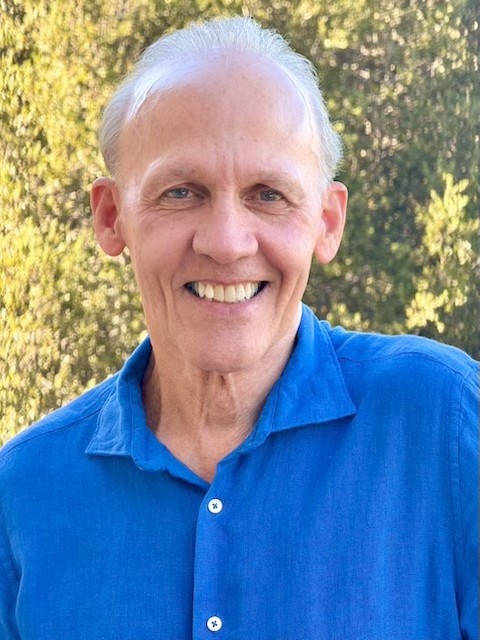
Grief Counselor
Gyani Richards, MA, is a grief counselor who helps people navigate and heal in their journey through grief and loss. His personal experience into this field began quite early when his father died when he was 13. Shortly thereafter, he began exploring meditation and the great wisdom traditions of the world, practices which have defined the last 40 years of his life. He has an M.A. in Transpersonal Counseling Psychology, a second-degree black belt in Aikido, and is a Certified Grief Educator.


