Stephen Loses Stacy To A Car Accident


On episode 1 of Season 9 of The Surviving Siblings Podcast® host, Maya Roffler is joined by Stephen Stott who opens up about the tragic loss of his sister, Stacy, to a car accident 24 years ago.
Stephen was just 16 when his life changed forever. After being "voluntold" to accompany his sister to a cheerleading camp six hours away, he shared a moment of deep personal truth with her the first person he ever came out to as queer. Just days later, on the drive home, they both fell asleep behind the wheel. Stacy didn’t survive. Stephen did.
What follows is a deeply moving story of grief, identity, movement, and healing. Stephen shares how he turned toward dance, breathwork, and somatic healing not only to honor Stacy’s memory but to help others process grief in their own bodies. He also reflects on his decision to found Embrace the Darkness, a platform and resource space that embraces the hard and sacred work of grief, especially for queer siblings and those needing support outside of traditional therapy.
This episode is about so much more than loss. It’s about grief in the body, safe spaces for queer siblings, and what it means to move with your grief instead of away from it.
In This Episode:
(0:00:00) – Meet Stephen and Remembering Stacy
Stephen shares who Stacy was, their sibling bond through movement, and the moment that changed everything.
(0:04:00) – Movement as Medicine: Honoring Stacy Through Dance
Stephen describes how continuing cheer, gymnastics, and dance helped him stay close to his sister and move through grief.
(0:05:00) – Coming Out and Catastrophe: The Last Conversation
Stephen tells the powerful story of coming out to his sister just days before the fatal car accident. It was the first time he told anyone he liked boys.
(0:06:30) – The Car Accident and Immediate Aftermath
He recalls the surreal moment of waking up in the hospital, already knowing deep in his bones that Stacy was gone.
(0:08:00) – Back to School, No Time to Grieve
Just a week after the accident, Stephen was thrown back into high school, sports, and work using distraction to survive.
(0:11:00) – Survivor Guilt, Queer Identity, and Grieving Alone
Stephen reflects on how his queer identity shaped his grief and how he struggled to find representation and resources.
(0:14:00) – Why Queer Grief Spaces Are Essential
Maya and Stephen dive into why queer-specific grief groups matter, and how judgment—even within sibling spaces can create harm.
(0:21:00) – The Turning Point at 21: A Grief Conference Shifts Everything
Stephen’s mother encouraged him to attend a grief conference, where a simple dance skit helped him feel seen and opened a path toward healing.
(0:25:00) – Becoming a Social Worker and Healing Through Service
Stephen shares how his desire to help others evolved into a career in social work and ultimately into his grief-centered platform.
(0:27:00) – Founding Embrace the Darkness
He explains why toxic positivity doesn’t work, and how this powerful name emerged from his belief that we must sit with the dark to truly heal.
(0:43:00) – Parasympathetic Nervous System & Breathwork as Reset
Maya and Stephen discuss how breathwork activates the vagus nerve and helps shift the body from chaos to calm.
(0:47:00) – The Mission Moving Forward
Stephen talks about his workshops, his work with siblings globally, and his dream to bring more somatic healing into the grief world.
About Embrace the Darkness
Stephen is the founder of Embrace The Darkness, a platform that provides breathwork, sibling grief support, and LGBTQ+-affirming spaces for healing.
Stephen is starting a 6-month program and is offering $1,000 off for any surviving sibling.
The unspoken path community discount: https://embracethedarkness.org/surviving-siblings-podcast-special
This episode is sponsored by Embrace The Darkness
Connect with Stephen:
Website: https://embracethedarkness.org/
Connect with Maya:
Podcast Instagram: https://www.instagram.com/survivingsiblingspodcast/
Maya's Instagram: https://www.instagram.com/mayaroffler/
Twitter: https://x.com/survivingsibpod
Website: thesurvivingsiblings.com
Facebook Group: The Surviving Siblings Podcast
YouTube: The Surviving Siblings Podcast
Patreon: https://www.patreon.com/TheSurvivingSiblingsPodcast
Stephen Loses Stacy To A Car Accident- Patreon
===
[00:00:00]
Welcome back to the Surviving Siblings Podcast. I'm your host, Maya ler, and today I have, of course, another incredible surviving sibling. With me, I have Steven Stat with me. Steven, welcome to the show. Hi. Thanks for having me. My pleasure. Today, Steven is going to share his sister Stacy with us and share a little background.
Before we dive into that though, I think a really cool call out is Steven has been a brief sibling for quite some time now, but is also the founder of Embrace the Darkness, which we're gonna talk a little bit more about. And I just really love how your work, Steven, has evolved. From the loss of Stacy. So tell us a little bit about you and Stacy.
Give us some family background. Then of course we'll talk about the worst day ever, and we'll get [00:01:00] a little bit into your work as well. Yeah, of course. Well, it's been, August will be 24 years, so it has been a hot minute since she died. But growing up we weren't necessarily alike. Siblings that talked a lot to each other, but it was more of that emotional connection.
And we did the same sports. So I started in gymnastics. She started in cheerleading a couple years later, then we did the other ones. And then in high school I started dancing 'cause she was dancing. So those things have always kept me close to her because I dance gymnastic throughout college. And so it was a piece where.
She's not there, but it's, we did the same thing. So it was a reminder that yes, grief can be painful, but also like doing the things that we did together, like brings me joy. Even just movement, right? So like when we think about the generic advice of eat and sleep and exercise it, there's truth to it, right?
Because if we stay stuck [00:02:00] in the grief and the depression and the heavy weight, then we stay in it and.
I don't, if it's five minute walk, two minute walk, walk outside the door, come back in. Like these things that help us move grief. And part of that also, although. 24 years ago, I wouldn't expect myself to be working with grieving siblings and being one either. I don't think any of us expect that. Right. But also, somatic breath work was something that I was gonna learn to work with other people in a therapy sense.
But I let go of my license as a social worker to do therapy, and now it's just more about using the practice because I cried from the grief that was being held in my body. And so I know that if. these tools Can be as powerful for me then I know that they can be powerful for other siblings who like don't wanna talk about their loss or can't talk about their loss to make sure that there's an option.
Therapy is great, support groups are great. They work for a lot of people, but not for everyone. So how can we provide these [00:03:00] spaces? And I'm a sibling as well, so it's, there's a connection like I get. my own Pain for sibling loss, and so like, I can't say that I understand your pain or anyone's pain, but there's a similarity to it Sometimes that can bring healing in and of itself.
Oh, of course. As someone who's interviewed so many siblings on this show now, has done these events and seen all these wonderful workshops, which of course we're gonna see yours too. A little teaser there. You're right. Everyone has their own individual experience with loss because every experience is unique, but there is a connectivity and a deep understanding.
The second you find someone that says, I lost my brother, I lost my sister. I like, you're like, oh God, this person is gonna get some aspect of me.
It's interesting, right? It's really interesting. And you also mentioned something interesting too, Steven, about like how you wouldn't have expected yourself 24 years ago when you were going through this loss [00:04:00] very fresh to move your body, but now you know how important it is. It's so interesting you say that because I rem, I was literally flashing back in my head to almost a decade ago when I lost my brother and I didn't wanna get out of bed.
And then earlier this month I lost. A beloved dog of mine, and I didn't get out of bed for a few days, but guess when I started to feel a little, I'm still grieving. I'm mourning, right? But yeah. Guess when I felt better when I got up. I took a walk. Right. Little baby steps. And I'm grateful for my other dog because she makes me get up and go walk.
Right. So that's good. That's really good. And I love this about you too, because it's movement and physical movement has always been something in your life and Stacy's life, so it's a beautiful way for you to keep honoring her as well. But like you said, you didn't expect. To be doing this 24 years later.
So take us back to when you lost Stacy. Take us back to that time. So you guys were, tell us your ages, the dynamic, what was going on with you at that [00:05:00] time? Yeah. I was 16 and she was 18 and had recently graduated high school. And she was working for a company called the National Cheerleaders Association, and so she was a cheerleading instructor, so sometimes there'd be big camps with like a bunch of different teams and like a lot of staff and then there were private camps, and so she had to go to a private camp that was about a six hour drive away.
None of our friends were available, so mom wanted to make sure that she was safe and had someone to go with her. I was voluntold to go with my sister. Another part of my story that I often share because I know how important like visibility is. Like for you doing this for siblings. It's huge because I think when we share our stories, we can connect with, even if it's connecting with one person, like that would be my goal If one person hears this and it like helps them in their grief, like that's the big focus.
And it also relates to grief and loss because being a [00:06:00] part of the queer community. You grow up with a loss of identity to begin with because you don't even know if it's okay to be who you're, because you see these examples of don't be this way, and the slurs and the movies, and the negative stereotypes.
So driving up to the Camp Stacey was the first person that I told that I liked boys, and then unfortunately three days later when we were driving back, we both fell asleep. She died from the car accident and I survived. And it's interesting on how it all, I dunno if it's worked together, if that's the phrase, but my aunt worked at the Lowell Police Department as a dispatcher.
She took the call when the person called because someone had stopped because they saw the car accident. So my aunt got the call and my aunt had to call my mother, but the person who had stopped. Was someone my mother used to babysit when they were [00:07:00] kids. So it was just weird on how those dynamics played a role.
But apparently I was walking around and talking, but I have no memory of that. So I remember the car glass shattering. And then the next thing is waking up in the hospital. And then there's a male nurse who he put a warm blanket on me and then he was like, your mom's outside. She's here. But in my head I was like, I was asking myself like, where's Stacy?
Where's Stacy? But I knew that she had died. Like even though no one said anything yet, it was just like, and my mom had. That says he had died. We cried together, drove back to our house, and the only thing I remember on that too is one of my sister's friends that she chaired with, I remember hugging her and that's it.
I don't remember anyone else. I don't remember talking to anyone like you. It was about the week before [00:08:00] school started. I was gonna be a junior. I remember, I, I took my mattress and brought it down to the basement and slept in there for like a, I wanna say at least a week, if not two. But then I had to say like, jump back on the horse and went to school and did two ity sports and had two part-time jobs.
So I think it was a good distraction. But the other flip side to it is it's also. It's like both, like it's helpful and not because I didn't know like who to talk to and I didn't really get support until like 21 because I didn't know there, there weren't any resources that I was aware of and so it was, you have to figure it out on your own and that's why I think things like this are super important because now there's like a legacy of a place where people can go get support, and even if it's just listening to other stories, sometimes that can be super powerful.
Sometimes we need a story more than we need food, right? To get by. I learned that from an author. I forget [00:09:00] her name, so I'm sorry if you listen to this, please correct me. But it was, I have a degree in English and English literature and creative writing. I know I've done so much with that. Right, Steven. But anyway, she said that to us one time in class and I was like, oh my gosh.
Like that really stuck with me. 'cause sometimes you do, you need a story more than you need anything else to get through something really difficult. And stories like yours are so important. You're right. So I wanna back up a little bit, Steven. So in the car when this happened, was it just the two of you that were in the car or was anybody else with you?
Just the two of you? Yeah, it was just us two driving. Or you were driving. She was. Oh wow. Oh my gosh. Yeah. That's so wild. And you were so young and like she's, and I was a cheerleader too, Steven, so I have a special place in my heart. I did gymnastics. I'm a cheer, so I'm with you guys so I know exactly who she worked for.
That's a big deal if you're a cheerleader. So she was definitely good, right? So yeah, that's really crazy. Like your whole story is really wild because you guys were together. And I think a big thing about your [00:10:00] story too, that will resonate with a lot of the siblings listening. Is that feeling that you probably experienced of survivor guilt?
I get asked about this all the time, Steven. So I would love for you to spend some time with us if you don't mind, and share your experience because all the time I hear from people in our Facebook group or. Listeners or people on TikTok, they're like, I have survivor's guilt, I have survivor guilt. And I always tell them, I'm like, what I've learned from doing this for four years now is that survivor's guilt comes in so many different forms, right?
It can be just because you outlived your sibling. It can be because you got to get married and have kids and they didn't, right? It can be a lot of different things, but for me, when I first learned about the term survivor guilt, I really thought about. Losses like yours where you were both in the same situation and one of you walks away and the other one doesn't.
That's what I thought at first, but obviously as all things grief are, it's more complex [00:11:00] than that. But yeah, tell us, share, if you don't mind sharing a little bit about your experience with that, because you literally experienced what a lot of us have in our minds when we think about literal survivor's guild.
Yeah, this is the interesting part, and this is where for me, like I think identity over overtake that. I had the privilege to be interviewed in, um, like a documentary of different people's experiences with grief and loss and different types of losses, and they wanted a sibling perspective, so I was able to go and share, and it's funny because the person who did like the pre-interview, and I know the couple who were doing it because their child had died and they wanted to give resources just for everyone, parents, siblings, grandparents.
And when I got pre-interviewed, the person was like, I don't believe you. Because like when I said like, I knew that she was dead and not that I was comforted in [00:12:00] that knowing. I'm not sure what the word is, but it's just like I knew and I guess in some ways it doesn. As it does with other people. And that makes me feel a little bit weird because I'm like, I don't hear people saying these things.
Mm-hmm. And so I think when I get back to the queer identity, I think fearing for my life, even though it's not like anyone's gonna really come and attack me, but when you see these things and people have gotten murdered for being queer, I felt like that was scarier than grieving the death of Stacey.
Mm-hmm. So I haven't, that I know of experienced survivor's guilt because I think a part of it is I had some different level of acceptance knowing that she died. But also being queer, it's like I've already lived most of my life hiding from people. Right. And then having heard death was, if I [00:13:00] look back, hindsight, that people generally stayed away from me.
I didn't really have big, deep conversations. And so I think it's, it's all mixed and they're intertwined. There's a needed space for queer sibling support and it's like, that's the exact reason why we need it, is because you're not like the unintentional harm that people do by the words that they say, even if they're not meaning to be harmful.
And it's, when you say that, why would wanna. Not queer. Mm-hmm. And how can they share their grief authentically if they're afraid that they're gonna be judged just for who they're, yeah. Well, I think so. I definitely wanna talk more about this, but I wanna go back to come to this because I think maybe as I'm listening to you, I'm thinking about this, like we talked about before we hit record, we were chatting guys about how cool things can come up as you're having conversations [00:14:00] with different siblings.
Something that kind of hit me too, as we were talking about this survivor guilt topic. I didn't, just a side note, I didn't experience survivor skills either in my situation. And so I am experiencing it very deeply for my dog and it's been explained to me the reason I is, 'cause I'm her caretaker, right?
And so if, even though it's not logical to be experiencing this, so now I know what this feels like and it's not fun. But something that hit me while you were talking, Steven, is just again, how wonderful it was that you got to tell your sister. That you like boys? Yeah. As you say it, right? That you're queer, that you like boys.
I, I liked that when I read your intake. I was like, he told me, he's just told me this in the cutest way because I can envision this like 16-year-old boy being like, Hey, I actually like boys. Like, anyway, it was cute how I read it and anyway, but I wonder if there's a feeling in you, like you're a little bit at peace with it.
Of course, you didn't want your sister to die, but you want to tell her. [00:15:00] Probably the most important thing about you, and I think it this whole, her whole loss probably would've looked a lot differently had you not confided that in her. That's how I hear it from you. When you share this, don't you think?
Yeah. Yeah, no, I think that's, and I think that's the, and the other side to that too is like, oh, like I think we could all wish our slips could be here, because then it's like, where would we be and how would my life look differently? Like, because grief impacts our relationships with each other and even with ourselves.
So I think that obviously it plays a role in like dating and it's like I told my sister, but now I don't have anyone to share those experiences with. Good or bad, right? Like, oh, this guy was an a-hole, or like, he was perfect. Or like just. Things like that. And so it's, I told her and like, and then it was just like nothing.
Like the weekend was the same. We hung out, we watched movies, we ate food. Like nothing changed. And that's how. We want it to be right. That's how should is such a scary word, right? Because it's putting [00:16:00] expectations on things. But it's what I would hope a situation would be. And I think it's really wonderful that you had that experience.
Right? And it's difficult when we say, well, at least you had that. Well, we want a lot more from our siblings. It's not okay. That was, but it is a really. Good and beautiful part of your story that you were able to confide and it's a special thing because it's a part of who you are as a person. Mm-hmm. And so I wanted to double click on that to come back to what you were saying.
So guys, we were chatting just briefly before we recorded, and one of the many things Steven does, which we're gonna get into that as well, is you actually do different support groups as well. And you do somatic work, which we're gonna get into all of that, but we were talking about how you do like specific groups for folks that are gay, queer and so they can feel safe.
Because I think it's important because just as you might experience something differently, like I lost my sibling to a homicide, that experience is very different than losing a sibling [00:17:00] to an overdose or an accident, or it's not that one is worse than the other. It's that you go through different. Things.
And so I like that you do that as well, Steven. Like you kind of tap into your own community because they can relate to you and there's a safe space. And I think it's interesting that people say similar things to you that they say to me where it's like, oh, we need this. It's like they're proving your point.
Yeah, exactly. So even when we think about like larger organizations that support like the whole family, and I think the biggest thing that, you know, a lot of siblings can relate to is when, you know, parents often say like, oh, the death of a child is the worst experience. And yes, I'm mocking parents, so if you're listening to this, then I'm not sorry.
Not sorry. Right. Like because us, it's our sibling. And if you are a sibling and you are a parent, like if you have a child and your child dies, then it's not, again, it's not comparing. And if it's the worst loss for you, then great. But I hate when it's generalized to like the worst [00:18:00] loss in the world is the death of a child to a parent.
If you make it specific to the worst loss is the death of a child For a parent, yes, I'll agree with that because that's more resonating with parents and their losses versus siblings and our losses. That's our worst pain. Right.
A space for like the queer community and so that they can grieve their siblings. Because I feel like sometimes when we say those things, like if you're in a group and a parent says, oh, the worst death is the death of a child, then why would a sibling wanna go back to that group if all of the parents are agreeing?
Right. So one of my silly friends had, and I love. Curious questions like when they're not like, why do you need this group versus like, I'm curious, Steven, I don't, and I hope this has come across wrong, but like what's the difference of having like a queer group versus just having them come to a general grief support group for [00:19:00] siblings?
Right. And I was like, when you look at organizations like if they support like the whole family, then why don't we just have one group for everyone? And then she was like, oh, that makes sense. Because you have groups for parents, you have groups for siblings, you have groups for grandparents, aunts and uncles like, and they go to their different things, even if they have different losses.
Sometimes just that one identity part is what they're looking for. And so this space is for queer siblings. So if your queer and your sibling died regardless of whether or not the sibling who died was queer or not, it's more about. Having the identity, the queerness identity, and having a space where you feel safe that you're not gonna be judged if you're trans or non-binary or, because even in that aspect, even people within the queer community judge each other too.
Really. Do you find that Steven? Really? So you find that too. So is that a challenge that you're up against when you create this safe community for like, you find that and you have to create. This safe space so that there is no judgment. So you find that [00:20:00] as well within it, because obviously I'm not in that community on a daily basis, so I'm curious about that too.
Yeah. So far the people that I've met have are, have been really awesome, but it's just more of like when you step out into like the larger community of, and it's everywhere, right? So like even the siblings who are like, why do you have that group? 'cause of you because of that comment. Yeah. And but that's so wild.
When you told me that, that blew my mind because I'm like, if anyone should understand it should be siblings, because I never give a weird look or a side eye when I see additional like sibling loss come out or even a, when it's more niche or specific. Right? Like we, like if there's a homicide group or if there's a kid group or if there's a, why would this be any different?
You're gonna connect even. Deeper because like you said, it's a part of your loss. It's a part of your identity. It's a part of your experience. So it's, yeah, I get it. I definitely get it. But I think it's really [00:21:00] difficult when people come at you in a judgmental way versus the curiosity way. I love how you worded that.
I think that's really important. Yeah. Well, take us back, because you said at 21 is when you started to get some support and some grief work, so that's. I connected with what you said at 16. You threw yourself into work, school, all of these things. Super busy. I'm very guilty of that too, and like not processing, and I know a lot of you guys listening do that as well.
So what happened at 21? Like did you have a moment? Did you go to therapy for something else? Like what? UN opened this up because that sounds like a turning point for you in this experience. Yeah, so basically it was my mom because she, she did get support soon after because there's more supports for adults than there are even for teens.
Like, and you think there would be more for someone who's 16 because it's not really like a 5-year-old, like, right. So she invited me to one of the grief conferences that she went to, and she was, do you wanna. It can be a [00:22:00] vacation. If you don't, if you don't like it, then you can just hang out at the hotel or you can go to the bar with your aunt, because my aunt was going, and so she's like, if you don't like it, you can go and hang out.
And I think one of the big things that kept me, because I went to the workshops and then I also left them because I didn't connect with the topics. Some of them were like talking about like, um, parenting and your grief. So how do you parent your child after your sibling died? I was 21 and most of them were like mid thirties and forties.
So like I didn't connect to any of the things that they were going through in life. Right. So that kind of ties in with the queerness too, is like you can connect with that on a level and just like. When you get together with siblings, you don't have to talk about your sibling, you don't have to talk about your grief.
And just that is like healing in and of itself. So when about thing, when together, sometimes we're talking about it's [00:23:00] build, you build relationships, right? And it's when you have connectivity and you understand each other, you build relationships. So yeah, I get it. And so one of the things that kept me back was at the end of the conference, they did a little like song and dance.
So they would put like skits together and cheerleading, gymnastics, dance like that was at my alley. So it was like, I have to go back for that. And that was just one little thing at the end. Yeah. Yeah. So, and I think as most people know there, there's more sibling support now than there was back then. Yeah, 24 years.
Yeah, of course. I mean, gosh, there was really nothing. Absolutely. Yeah. Yeah. So I'm grateful for having those spaces because I got to, and again, like whenever I went, now that I go to the conferences, it's more about like leading the breathwork workshops and breathing through grief, because again. Not everyone has the words, right?
And if it's grief, that's like, and the body doesn't talk [00:24:00] right, your arm's not gonna be like, oh, like I'm grieving. You feel it, but how do you move that energy, that tension, that stuckness. Yeah. Absolutely. Yeah, absolutely. I love that you had that experience and you felt like, I don't fit here. I don't fit here.
Okay, I fit here. So that's a turning point for you. And then how do you eventually, so you have a background in social work is what you were sharing? Mm-hmm. Right? Stephen, so you became a social worker, worked in that space, but how did you. Like transition into this, into support groups and leading Your big thing that you do, obviously with Embrace the Darkness is leading the somatic experience.
You do workshops around that. You work one-on-one with people. That's my understanding. You're gonna be able to share it much better than me, but how did that start for you? People are always curious about that, like how do you, did you make that transition and shift into that type of work? That, of course, is honoring your sister and honoring your grief and who you are.
Yeah, I think a big part of it is like I've [00:25:00] always had like an internal working of wanting to help and support people. And even I remember being a teen, and I don't know why I fully remember it, but I was just, I made a friend on mine back in the day on, on Aim, A messaging. Oh yeah. Yep. Good old days for sure.
And someone was going through something and like I reframed and gave him my perspective and he was like, oh, I never thought of it like that. And like that was, to me was like, oh wow, cool. Like I helped someone like see something differently. And then even in high school, like I've always, always intrigued with like the brain and behavior and why people do the things that they do.
And so that kind of got my degree in psychology and dance, um, for undergrad and then went to get my master's degree in social work because it's, for me, it's broad where there's like a lot of different things you can do with social work and not just, I feel like the stereotype is like, social workers are just people who discharge people or they're just caseworkers and like, I'm like, that's like one [00:26:00] role.
They're therapists, they're in hr, they own their own businesses. Like there's a lot of different things that people can do with that. I think that also helped me in my grief because I learned more about trauma and grief and mental health and depression. And so I think on the aspect of talking about things sometimes it's just reading and educating yourself and learning and, and that helps with the healing part as well.
And yeah, and then starting Embrace the Darkness. I wanted something that kind of.
Like the pain that people go through. Without it being the go into the light or think positive, because I think sometimes too much positive is bad. Right. Toxic positivity. And it's like if you're looking at someone and you're like, like I guess the stereotypical thing is like, get over it. Which you can't.
Oh yeah. Oh yeah. Don't we know? Don't we know? Shout out to everyone listening. Who's heard that a million times. Exactly. Yeah. Or if someone's saying like, you should be grateful that you're alive [00:27:00] and you have all this life to live. Or you. Grateful that you have. If you do have, like I have a younger sibling, Taylor, she was two when Sissy died.
Wow. So like, I know people say the things like you should, you at least you have another sibling or at those, all those fun at least things where like they, they try to make the silver linings and like stay positive and be happy. And it's like, no, like let's embrace the darkness. Like embrace that there's a pain that we experience, but also that we can.
Without having to talk about like the pain and the trauma. And that was the click for me because when I got certified, I was just getting certified because it was something that I was like, that spoke to like how I wanted to work with people. And like I said, like it. My body to body express the grief that it was holding onto.
And I wasn't imagining it like 20 years of grief was somewhere hiding in the body. And so it's just amazing to, to be able to have that experience for myself. And then also to when I provide workshops and people get, give feedback of like, wow, [00:28:00] like I had a sibling who said that she had, she didn't know she had guilt, but when she did the breathwork session, she felt the guilt lessen And I was like, cool. And it's like you don't even, you don't have to talk about it. Right. So it's just amazing that That's wild. Yeah. That's wild that she experienced that. Yeah. Well, because you experienced it and that made you wanna get certified and like it brought you to this. Yeah. But I just wanna say before we continue forward, I love your name, like embrace the Darkness.
I love it. So when we connected and I saw that I was like. I love it because you're right, there's a lot of like go into the light and the this and that and I saw your name and I was like, embrace it. I was like, what is this Steven Guy up to? This is so cool. And then we connected of course, and here you are.
But I love that because I think what's interesting for people going through grief and if it, especially their first significant loss, which with us as siblings, it oftentimes is especially someone like yourself, Steven, who lost a sibling at 16. [00:29:00] It's a first like real big shakeup in your life, right? So yeah, it's confusing because.
You learn that you can hold a lot of sadness, but you can also hold joy, like you can still experience. And I think it's really confusing for people. That was confusing for me, Steven. I was like, how can I like laugh at the office but also just feel like I wanna go into a dark hole right now. Right? So the name Embrace the darkness like really resonates with me because it's not forcing us to push away, but it's holding space for it.
I don't know if that's what you intended, but that's how it resonates with me. Yeah, no, you like taking the words outta my brain because I feel like when we avoid grief. I think avoiding grief and distracting ourselves can be helpful tools, but if we get stuck in always avoiding it, it's gonna come back and bite us in the, but, so when we have these moments, when grief comes out [00:30:00] nowhere, it's like, can we sit with that moment?
Can we recognize, sometimes you don't even recognize that it's grief, but can we be like, oh, like maybe it's the.
Yeah, I love that. Again, had to just call that out for you. So take us through what it's like to do this. I'm familiar with somatic and like breath work, and I've done some of those at conferences. Like you mentioned. We missed each other unfortunately, but. Not anymore because you're gonna be at our summit.
There you go, guys. He's coming to our summit. We're very excited. So Stephen tell us what it's like to work with you. Tell us about, 'cause I know you do breath work, you do physical, you do like, there's all these different components to it. So tell us what it's like. Yeah, I definitely like to keep it foundational because, especially with working with people in grief, because if you go and Google or [00:31:00] you on Instagram, you're gonna see a lot people having like.
Intense expressions. So like bawling their eyes out, hitting the ground, screaming someone, holding another person. And for me, that's where I don't take people because we don't need to be stressed. We're already, our bodies are already stressed with the grief that we're carrying with our sibling. We don't need to go there.
And so it's more about like intentional breathing. And I know that I'm gonna acknowledge that people be like, but how does breathing help? Right. I think that's, I think that's the logical part because breathing is what we naturally do, but it's also like a very ancient practice. Like people have been doing forms of breath work for a very long time and now it's resurfacing.
Right? And like athletes are doing it and everyone's doing it. Like I've met so many cool people. Suffered addictions not wanting to be alive, severely [00:32:00] depressed on medications. And I can't say that breath work is a cure or can make those things go away for a person. But for the people who have had like a committed breath work practice, like they've gotten off of their medications, they're no longer depressed, they no longer have thoughts of not wanting to be here.
And so I love those examples because it's like breath work is a simple practice. I'm gonna say, I'm gonna be blunt, and this is probably what you don't say as a business owner is you don't need me. That's the truth. You, if you do breath work on your own, you'll get benefits. It's just you have to put in the practice.
And so I have an example of that is I have a friend who he was very anxious on. Anti anxiety medications. He smoked a lot of pot and just lived a zombie life for a very long time, and he started adopting breath work on his own and started like riding his bike. And he's off of his medications. He's no longer smoking, and [00:33:00] so he has this healthy lifestyle and so I might be like.
I wanna be careful of the words that I'm using too, but kicking myself in the butt by saying People don't need me. But I think that it's more about, for me, it's having a space for siblings if this is of interest to them. Because like you said, and I've said like I've had my own experience with expressing my grief, and I know that it's beneficial to a lot of people being able to now do this workshop at conferences and have people have that same experience that I did for them.
Yeah, I think so too. And I think, again, like you mentioned, it's that connectivity of being and experiencing something that you haven't done. And I do think there's a lot, you're very humble, Steven, but I think there is a reason that we have folks that guide us and things like that. It's just like yoga, right?
It's like we have people to teach us. Right. Like if people aren't educated about it, they might think like, yeah, I don't need help breathing. Thank you. [00:34:00] Well, I do. I'm an asthmatic, so that's a whole other podcast, but yeah, but I, I get what you're saying. It's a natural thing that we do, but it's also really wonderful because what this does, as you mentioned, is it can bring up.
Things for you because the way that you're guiding people in the breath work and somatic experience and all of these things, it can bring things up. So you wanna have someone guiding you because if you do wanna share and you do wanna talk about it, maybe you don't wanna be alone for that, right? Maybe you want that connectivity, you want that guide, which is what you do.
I.
That's really helpful. And also sometimes people, it's like exercise, right? Like sometimes people don't know where to start and you really want a trainer and you want someone that can hold you accountable and also guide you and tell you what's right for you. Like, how can I start small? Because I think things like this sometimes can feel intimidating for people, especially when you're grieving, like reading a book feels intimidating when you're grieving.
[00:35:00] Going for a walk feels intimidating when you're grieving. So trying something new, I feel. Intimidating it can, for sure. Mm-hmm. Yeah. And I think sometimes our biggest challenge is just our brains and our thoughts and like I ha I have some people who will go into a session and they'd be like, oh, I was so in my head and I didn't really go in into it until like you were guiding us out of it.
Yeah. And that just shows you like how much grief really overwhelms our system, that we don't feel safe enough to be in our bodies. I get it. I definitely get it. So, Stephen do you work with people virtually in person? All of the above. Tell us how that works. Yeah, it's a mix of both. I reside all the way over in Richland, Washington, and so I have met awesome people and do groups here and there, but also virtually because it's a great way to connect with people all across the world.
[00:36:00] And one cool thing when for the queer sibling group that I do, I had one sibling that they come in infrequently, if that's the correct word. Like they might come once a year and if that's all they need, cool. But they live in Australia. Wow. And I was like, oh, that's so cool. I'm glad that you found me, because I don't know if they have any supports there for queer siblings and just being able to provide something.
Yeah. And then for breath work, so yeah, it can be done in person, it can be done virtually. So that's really cool that it's versatile. And if it's virtual, then people can be in their homes. And I even tell people, if you wanna, you can lay on the floor, you can be in your bed, you can sit in the on the sofa, like get comfortable.
It's a guided process because I'm watching them for the little movements. So if they're like, if I see them like move their shoulders. Yourself move because some people like feel like, oh, I'm doing breath, but I have to stay really still. It's like mm-hmm. No, the whole point is to express, so you're breathing and you're activating your body and you're getting your blood flow moving.
[00:37:00] And I've had people do this like for 10 minutes and sessions, and sometimes it'll like lift their legs a little bit. And so all of that's welcome because it's a part of the somatic work. It's the body letting go and releasing the the stuck energy. Yeah, I think, again, I didn't really know that before, like doing a session and like learning about it.
But yeah, the whole point is not just for the breathing, it's also how your body is reacting. So I'm glad like you're explaining that because, and it's you holding from what I understand, you're the pro, not me, but from what I understand, it's your body holding like trauma and grief and pain in different, and our body, we're all unique, right?
We all hold stuff in different places. That's how I understand it. Yeah, and it's really cool because I've met other people who do like different somatic work that is more like either dance or more like movement based. And like the, they'll say things like, there's a lot of trauma that gets stuck in your hips.
So like you said, yoga, like people do like trauma informed yoga, and there [00:38:00] are certain positions that they don't go into because they, they feel, makes them feel emotionally overwhelmed because of. Whatever the trauma might have been. And so being able to be guided gently into it helps them to release that trauma that's in the body.
And then the position just becomes another position. And it doesn't impact them, but it allows trauma to be released. And like with somatic breath work, it's almost like you notice it, but it doesn't overwhelm you. Like you can feel the guilt, you can feel the shame. You can feel the grief, but. Intense. And that's what I love about breath work is that it doesn't have to be like this super intense, like not a panic style.
So it's like for me, I just say go as slow as you need. Open your eyes if it becomes too much, because I think that's important, especially working with grief. Like I don't wanna force anything. And then. At the end, optional shares, if you wanna share what came up [00:39:00] or if you just wanna sit with it. Right. So just being flexible about people's unique weaving styles and letting them process and what they do feel is best.
I love that. And that's why I wanted to click on this just a little bit, because this is why. Yes, Steven is coming to the summit, everyone, and for year three, and it's important for us at our event to provide different options for people to process their grief. You nailed it, because that's why I'm excited to have your session because this is gonna be so helpful for the folks that maybe don't know how the sharing sessions are fabulous, but.
We'll always have 'em because we've always got talkers and we've always got listeners. But what about our folks that are not ready to process that way? And that's why we do writing. We do art, we do different things like that. And that's why this is such a beautiful addition this year, and we're really excited to have you, Steven, because I.
Think the group, getting a taste for what you do and doing this together and [00:40:00] doing it in our safe environment is really gonna be wonderful. You can, again, we hope most of you turn your cameras on so Steven can work with you while he's there, but it's gonna be whatever you're comfortable with. And I think there's a beauty in that.
You just really clicked on that everybody processes grief differently and sometimes. People come to different things and they are surprised, and I'm sure you have countless clients that have come to your group or one-on-one and different things that you've done and have been like, I didn't even think I would cry, or I didn't think I would feel a release or feel like, have you had a lot of that?
They're like surprised by the processing that happens. Yeah. It's always interesting when people are skeptical and then they're like. Holy crap. Like that wasn't what I expected at all. And I feel like the way that I guided, it's more of a gentle practice. And so usually if people have any tears, they're just light tears like.
It's again, it's the body [00:41:00] processing the emotions and allowing the release. Sometimes people are vocal, so like I'll tell people if you feel like you wanna like exhale and have like a loud ha or if you wanna scream, you can scream like it's whatever the body is needs without being like, well, I've also had people be like, I'm gonna work on this thing.
But then their body something that they expect trying to. Rational because that could avoid what we wanna work on. But your body's gonna tell you what it wants to bring up. Such a powerful point. Right? Especially our overthinkers in the group. Me right. Or our control freaks. 'cause some of us really try to go in extra like overdrive for controlling, especially when we feel like out of control.
And I think what you do is really important. For those types of people. Right? Because we're probably not paying attention to what's happening to us physically, um, and our grief [00:42:00] experience if we're constantly in the mind. Yeah. And I think that's, and
like when it comes to our nervous system, right? It's throughout our whole body. The vagus nerve is one of the, or it's the longest cranial nerve that goes from your, the base of your skull all the way down to your tailbone, and then it connects to everything else. So when you're able to like use your breath as an anchor.
Parasympathetic nervous, which helps to calm your body because if you're activated in the stress, in the grief, then we wanna be in our heads because in our head space, we're safe in our bodies. We have to feel it. But when you do breath work, it's not about forcing you to feel it. It's just forcing you to focus.[00:43:00]
Allow the body to naturally, I'll say heal with quotes, heal itself. Because when you activate your breathing, you're also getting your blood cells to move, right? And so you're, it's an internal cleanse, if you will, if that helps people like visualize it. And so it's circulating your blood, you're getting good blood flow, and then it's just moving any stuck grief that we hold in our bodies, because we're always keeping it in our heads.
Oh my gosh, that's, I'm sure that's so helpful for you guys to hear that because it's super helpful for me. I needed this kind of reminder today, Stephen, going through, going through it again, and grief is a part of life and so I, I love how you shared that because a little bit of a re I like that. A little bit of a reset and a balance.
And I love the success stories that you share too. People like, it just feels like a lot of people's nervous systems, especially the kind of world we live in today too. Right. We're so overstimulated. I'm sure this is. Resetting. Just that as [00:44:00] well. Yeah. And when you learn to live in that state, it's your comfort zone.
So it's like I live in my life is chaos and I feel safe in the chaos. Yeah. Yeah. I love that you don't have to live in the chaos. Absolutely. Stephen, anything else you wanna share about your grief journey, your experience, anything I didn't ask you before we talk about where it find you and how to work with you?
I think one thing that is connected to it that I'll share it, and it actually came from a grieving mom who was at one of the workshops, and I think this kind of illustrates how grief can really impact the body. Because after her child died, um, she talked about how she went to the doctors. She wasn't feeling good.
She didn't know what it was or like what it could be. So they, over the course of 10 years, she got tests and like it all came back clear and the doctor's like, no, this like, [00:45:00] medically, you're good, you're healthy. There's nothing wrong with you. And then at that point the doctor was like, I think the only reason that you're having all of these like medical issues is because you're holding your breath.
You're stuck in this contracted state, which makes sense because if you, even if you like do shallow breathing, like really like you do that for like a minute or two and you're gonna feel those changes. But what we don't realize is that, yes, our breath is automatic, but if we're shallow breathing or we're doing, we have like a shortness of breath or we're holding our breath, it creates.
A state of tense and stress. Right. And that's gonna make our grief worse because we're already tense and stressed. Absolutely. So it's just piling. So breath work is really like, when I explain it, it's, it helps you to expand internally so that you can make [00:46:00] space for your grief versus having your grief control, your body mic drop.
Way to close that episode on that, Steven. I love it. So again, tell us where you can find you work with you. Embrace the darkness, right? So yes, those are all your socials. That's your website. Embrace the darkness.org. Org. Perfect. You'll be in the show notes as well. And then do you have, of course, he'll, I Shameless blog.
He's gonna be at the summit too. So if you're listening to this in 2026. Come see Steven at the summit. He wants to see you, but do you have some other things going on as well? They can just check your website because they'll listen to this at different times. So your website has updated classes that you're doing virtually.
If they wanna work with you one-on-one, that's all there for them. And Embrace. Embrace the darkness.org. Yes. Yep. It's all up there. Wonderful. We can't wait to have you, and we're super excited to bring you to all of our siblings and thank you for sharing your story with [00:47:00] us. Thank you for sharing Stacy with us.
Thank you for sharing your story about just. Again, telling Stacy that you like boys and coming out as queer and being so brave and open about that on this episode too, that's gonna help a whole plethora of siblings too, that listen to this because we need representation around that as well, like you said.
And is that on your site? Choose Steven. Your group. Is that virtual in person? Sips.
We will need an update on that for sure. Because is it virtual? Can they attend virtually? Yes. Or in person? Yes. Fabulous. Yep. Okay. We'd love to have that resource too, because again, we love our group. Our group is fabulous, right? But we have siblings that come to our group, but they also go to different specific grief groups, and we would love to offer that as a community for them too.
So Steven, thank you so much for being here today and sharing your story. Yeah, of course. Thanks. [00:48:00] I'm super honored and thank you for having me because without you, we wouldn't be sharing these stories. We'd just be in our own world and, but now we can be together even in the pain of the grief and the joy of the grief.
Absolutely. And thank you guys so much for listening to this Survi
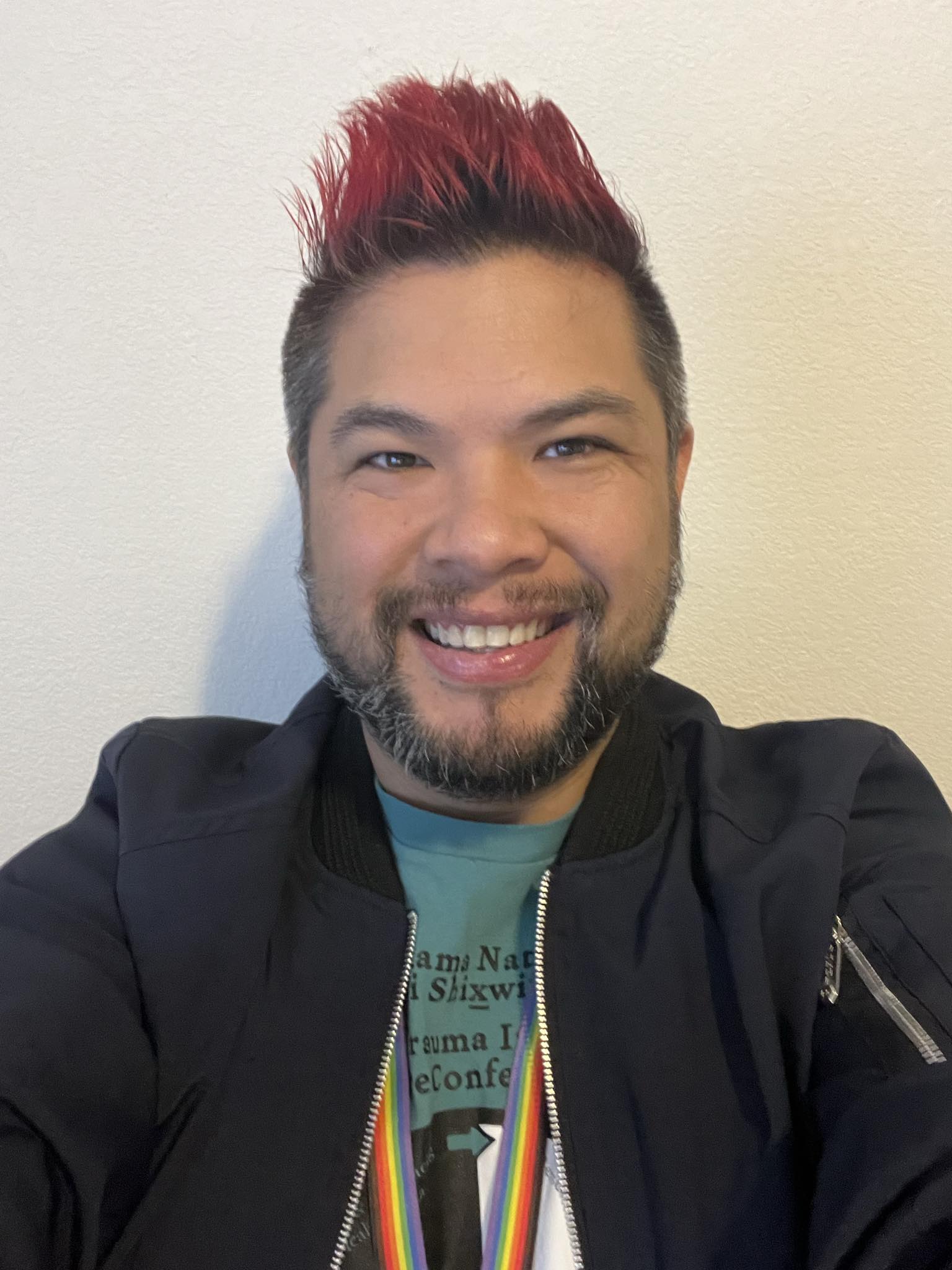
Founder, Embrace The Darkness
Stephen survived the car accident his sister, Stacy, died in.
He now works with grieving siblings to navigate sibling grief without having to talk about it—because sometimes talking can make you feel worse, and sometimes there aren’t words to say, but you still feel the heavy weight of grief.
Even in his own grief journey, one of the things that helped him was sports—something he and Stacy shared: gymnastics, cheerleading, and dance. These aren’t things you “talk through.” They’re things you do. Movement helped Stephen’s body release some of the stress and tension that can come with sibling grief.
Stephen later earned his Master’s in Social Work to gain more tools to support people through grief, crisis, and trauma. He combines both his personal and professional experience to focus on supporting people who’ve experienced sibling loss and are living with sibling grief. And even though Stephen provided therapy in the past, he now works with grieving siblings through body-based techniques—so they can express the grief that feels stuck in the body, even when talking doesn’t help.