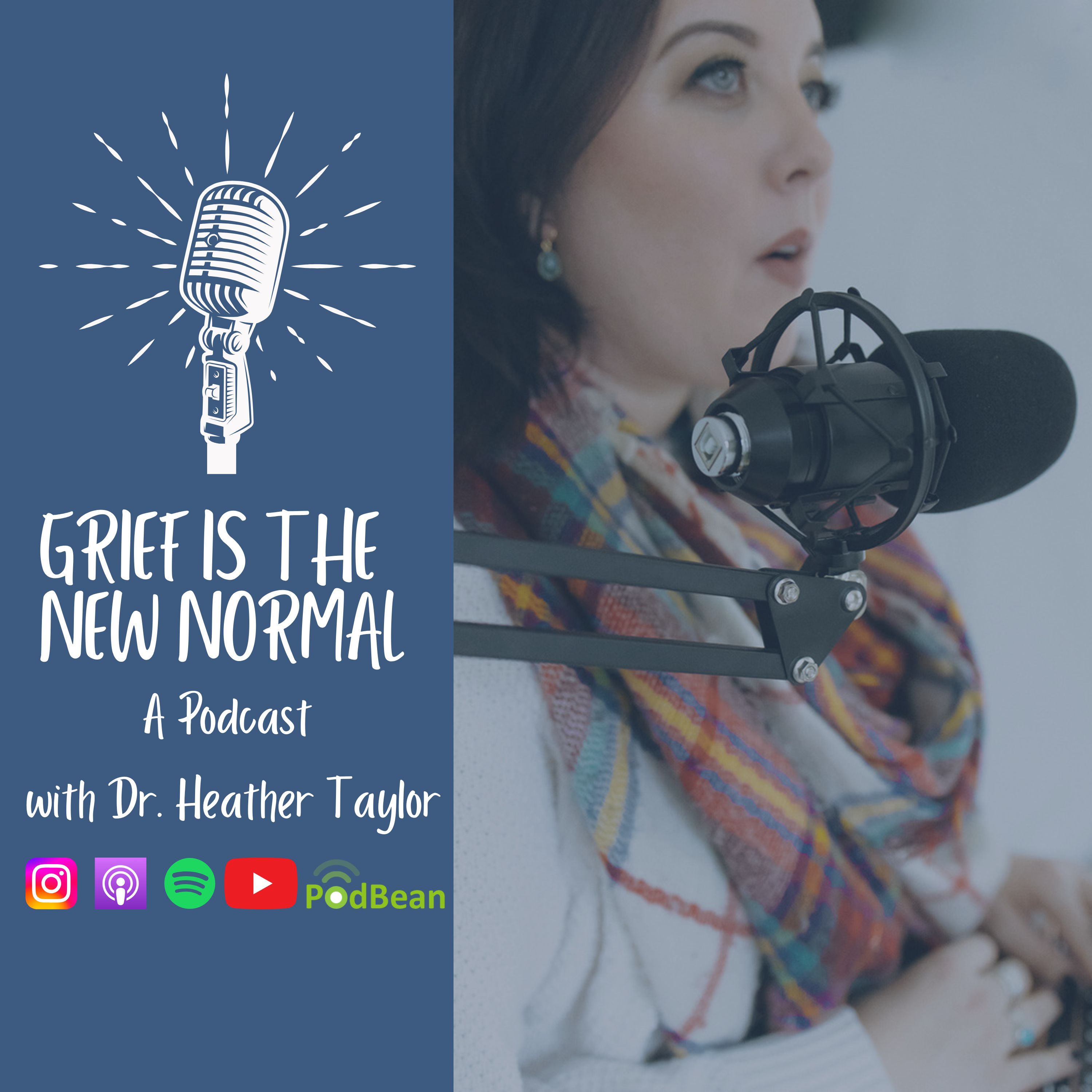
Heather Loses Garrett To Accidental Overdose

 Apple Podcasts
 Spotify
 Castro
 RSS Feed
 On Episode 5 of Season 9 of The Surviving Siblings Podcast®, host Maya Roffler is joined by Dr. Heather Taylor, a surviving sibling, therapist, and grief advocate, who shares the story of losing her brother, Garrett, to an accidental overdose, and how that loss completely reshaped her life, her career, and her mission in the grief space.
Heather takes us back to her childhood growing up in a small town in Washington State, where she and her younger brother Garrett were raised surrounded by nature, imagination, and a deep sibling bond. They were each other’s constant—playing outside, competing in sports, and later maintaining a close relationship into adulthood through what she lovingly calls their “sibling dates.” Garrett was her biggest champion, the voice that reminded her who she was when she doubted herself.
That bond makes what happened next even more devastating.
In November 2009, just one month after a meaningful late-night conversation where Heather reminded Garrett she would love him no matter what, her world shattered. Garrett died suddenly from an accidental overdose after unknowingly taking methadone in combination with other substances. The loss was shocking, confusing, and layered with complicated emotions, especially as the family tried to make sense of what had happened in real time.
Heather shares the raw early days of grief—the shock, the numbness, the need to “do something” (even if that meant cutting out holiday apron patterns just to keep moving), and the surreal experience of planning a memorial while still trying to process the reality that her brother was gone.
What followed was years of unprocessed grief, anger, and searching for support that didn’t exist in the way she needed. After multiple frustrating experiences trying to find a therapist who truly understood grief, Heather made a life-changing decision: she would become the therapist she couldn’t find.
This episode is a powerful reminder that grief is not something to “get over,” but something to live with, integrate, and carry forward—and that healing happens not by rushing the process, but by allowing grief to take up space in our lives.
In This Episode:
(0:00:00) – Meet Heather + Remembering Garrett
Heather shares her childhood, growing up close with her younger brother, and the deep bond they carried into adulthood.
(0:02:30) – Growing Up in Nature + A Strong Sibling Bond
From building forts in the woods to sibling dates in college, Heather reflects on their connection and Garrett’s role as her biggest supporter.
(0:08:30) – The Conversation
A late-night moment one month before Garrett’s death becomes a memory Heather carries with her forever.
(0:10:00) – The Day Everything Changed
Heather describes the moment her parents showed up at her office and how she learned Garrett had died unexpectedly.
(0:13:00) – Understanding What Happened
The family learns Garrett died from an accidental overdose, adding layers of confusion, anger, and heartbreak.
(0:16:00) – Shock, Numbness, and “Doing Something”
Heather shares how early grief felt—and why simple tasks like making aprons became a way to cope.
(0:20:00) – The Memorial + Early Grief Reactions
Planning Garrett’s service, wanting more photos, and navigating overwhelming emotions.
(0:22:00) – Finding a “Grief Buddy”
Heather reflects on how connecting with someone else grieving helped her feel less alone.
(0:31:00) – The Importance of Finding the Right Therapist
Why connection matters more than credentials—and how to know when it’s not the right fit.
(0:36:00) – Grief as the “New Normal”
Heather shares how she built her practice and podcast around redefining grief as something we integrate, not overcome.
(0:43:00) – Grief vs. Trauma
Why not everything needs to be labeled as trauma—and how grief deserves its own space.
(0:47:00) – The “Grief Cyclone” Explained
Heather introduces her powerful metaphor for how grief moves over time—not in stages, but in cycles.
(0:51:00) – Final Advice for the Newly Bereaved
Why grief gets to take up space, why there’s no timeline, and how to move at your own pace.
This episode is sponsored by Grief Is The New Normal
Connect with Heather:
-
Website: https://clinicians.griefisthenewnormal.com/homepage
-
Facebook: https://www.facebook.com/people/Grief-is-the-New-Normal-Psychological-Services/61555887374241/
-
Instagram: https://www.instagram.com/grief_is_the_new_normal/
Connect with Maya:
-
Podcast Instagram: https://www.instagram.com/survivingsiblingspodcast/
-
Maya's Instagram: https://www.instagram.com/mayaroffler/
-
Twitter: https://x.com/survivingsibpod
-
Website: thesurvivingsiblings.com
-
Facebook Group: The Surviving Siblings Podcast
-
YouTube: The Surviving Siblings Podcast
-
Patreon: https://www.patreon.com/TheSurvivingSiblingsPodcast
[00:00:00]
Welcome to the Surviving Siblings Podcast. I'm your host Maya ler as a surviving sibling myself. I knew that I wanted to share my story, my brother's story. I lost my brother to a homicide in November, 2016, and after going through this experience, I knew that I wanted to share my story and his story, and now it's your turn to share your stories.
I have another incredible surviving sibling with me today. I have Dr. Heather Taylor with me. Heather, welcome to the show. Thank you so much for having me. I'm really honored to be here and to get to talk about my brother. Well, I'm so honored to have you, and I'm so thrilled because you're not only getting involved in our podcast, but you're getting involved in our community, and we'll talk about that as we continue on.
[00:01:00] But first, I want you to share with us, take us back so all of our incredible siblings and supporters can get to know you and your brother, Garrett. Take us back and tell us about you guys growing up. What was childhood like? Your connection, take us back there. Oh, yes. So my brother Garrett was, 22 months younger than me, so I was the older sibling, and he was really shy growing up.
My mom makes jokes all the time about, you know, we'd go to restaurants and I would order for him, and I was like always standing up for my little bro. And we just, we got along great. We were close. But there was something, I don't know, we just, we grew up in the woods. So I am from a really small town in Washington state, and I grew up on five acres in the middle of the sticks.
And so we got to get really creative with play, and this was, you know, back in the eighties, early nineties, so there wasn't internet, social media, nothing streaming. And so if it wasn't raining, we were playing outside. And even if it was raining, we were, you know, jumping in [00:02:00] puddles or building forts in the woods or.
Pretending to be Captain Planet Planeteers. We loved , all the classic cartoons, captain Planet, teenage wheat turtles, gummy bears, like all the classics. And yeah, we just, we were both athletes, so we both played basketball and tennis and we're super competitive. My dad even built a, like a court, he poured a slab with a hoop in, part of our property.
And so we'd shoot hoops after school and just, we, we were always really close, very, um, 'cause it was just the two of us on the property and there were some neighbor girls down the street, also in the woods. But really it was kind of just us. And so we were just really close growing up. All the way through college.
, I went to Gonzaga for my undergrad and he followed two years later. Not took Gonzaga, but he went to Eastern Washington University, which is in Chiney, which is this even smaller towne than what we grew up in. And we'd go on sibling dates, which was the best. So I drive out to pick him up in Chiney.
This is so cute. Oh my [00:03:00] God. And then we go into Spokane and we, like, we went to like a pottery painting thing, and I painted a mug and he painted a crunk cup, which I still have. Um, because he thought he was ster. And we go to the movies and get pierced. So we both got our, um, industrials together and it was just, it was fun.
And, you know, we liked each other. We got along really well. It was easy. He was such a champion for me too. I, you know, second guess to myself a lot, you know, recovering people pleasing eldest daughter of the eighties, nineties, yeah. Sucking in your Yes. Right here too. Yes. Yes. Uh, late diagnosed A DHD now in my late, late thirties.
Yeah. I still remember this one time, I graduated from college, didn't know what I was doing, and he goes, Heather, you're a fucking tailor. Like, you're gonna figure it out. You're gonna get through this and you don't have to settle.
And so I think of that now, anytime that I am feeling down on myself or, just struggling with what to do [00:04:00] next, is I can hear, I can still hear his voice in my head telling me that he just was such a champion for me. Heather, I did not realize we had so much in common. So I don't know, I don't know how much you know about my story, but you guys know a whole lot so I'll be brief on this, but my brother, so my brother is three years younger than me to the day we had the same birthday.
So fun. Gosh. Oh my gosh. If you guys haven't heard me talk about that before, wild. So definitely changed my birthday forever, right? But, my brother and I lived in nature. I was such a tomboy growing up and we lived in nature. I dunno if I've talked about this on the show before. So here's another fun connection thing.
Every person that comes on, I have different connections with. So I, so when you're painting this picture of you and Garrett, I so connect with that because I'm the eldest as well. And you know, my brother and I were just so close and I was a tomboy, so I hung with my brother and we were out in nature and it was just such a beautiful.
When I think back about all of our memories and the things we did together, it's just such a beautiful thing. And I hear that as you're sharing your aspect as well. And then also with you sharing that, he's like, come on Heather, you got this. [00:05:00] My brother was the same way. He was my biggest like champion.
I mean, he was critical of me too for sure. I mean, we're Virgos so, you know, we're critical. But he was my biggest champion and I hear that same voice in my head too. Whenever I'm tired or I feel down on myself, I hear him and it's like, Maya, don't you know who you are? You're Maya freaking Ruffler. So it's so funny that you say that.
It gave me chills when you were tell like that. So I like, I did not expect like in the first few minutes to just like go that deep with you. But that's crazy. That's so cra I get it. He is still my cheerleader. And I hope like if you guys don't get anything outta this episode, which I think is so not gonna happen and you're gonna get a lot more out of it, but if you are just coming into this like I hope you can connect with that because.
They don't have to physically be here to still be your like champion. So I just had to insert that there 'cause I That's so cool. And I love that you guys did sibling dates. That's so cool. Oh yeah. It was the best. What a cool memory. I miss those. That was a, that was a fun couple years. I get that.
I [00:06:00] totally get that. So walk us through a little bit of what adult life was like. So you guys, you went off to college, obviously you have your doctorate, your therapist. We're gonna get into that a little bit later. So you did a lot of school, but tell us a little bit about Garrett or did you come back to that later?
So I got my bachelor's in business. Oh, so you did a total flip in life. Oh, I did a massive pivot. Post-loss. Mm-hmm. Massive pivot. Mm-hmm. Um, but I mean, like adult life. Um, he, he ended up dropping out of college about halfway through. He just, he wasn't liking what he was studying and it wasn't a great toll on his mental health.
Like the college he went to was just so removed. It wasn't a great fit. And so he actually ended up moving back with my folks and my dad's an electrician and so he started apprenticing with my dad as his electrical apprentice. And so they worked on jobs together all through Seattle and, the east side.
And I did a gig at Microsoft my very first [00:07:00] year out of undergrad. Hated it. One of the most depressed years of my life. Lived like working in Cube land. And so I loved books. I've always been a avid reader. My brother would tease me all the time about reading my death books because there was this author, lly McDaniel, and she wrote about different types of chronic illness and cancers.
And my cousin and my brother affectionately dubbed them the death books. Which is funny, thinking about what I do now professionally. I was say, what, what foreshadowing I know. I, I know. And so I ended up working at Barnes and Noble, as a bookseller and undergrad. And then I went back and worked as the district assistant as an adult after the Microsoft gig, which was really fun.
And so they'd come and get coffee in the Cafe University Village and I'd meet them and treat them to coffee with my discount. And, I saw him pretty regularly. . He was so funny. Had such a great sense of humor. For Christmas, that last Christmas, I was really directionally challenged.
And he made [00:08:00] me a scavenger hunt for Christmas with a GPS, like, a Garmin thingy in my car, which he, it was a little, Suzuki Swift, a little jellybean car, which he dubbed the Red Dragon. Because it was a joke that Heather always gets lost, and I had MapQuest printouts and all of my vehicles and, um, and so he got me a little like GPS Garin thing for Christmas and he just, he was just, he saw me, he accepted me as I was, so a month to the day before he died, I had been visiting my folks for the weekend. My mom was having like one of those candlelight parties or whatever, and so you go and they get whatever, and he was there because you lived there.
We went out with some friends and cousins that night, and I remember I woke up at like two in the morning to go get some water and he was down there in the living room and I remember, getting to tell him like he had shared something really personal and felt bad about himself, and I was like, you know, I'm gonna love you no matter what.
Right? Like, no matter what you do, I'll always love you. [00:09:00] I know those moments. Right. And this is, and just so you guys know, this is in 2009 when you Yes. This was 2009. Yes. Mm-hmm. Um, October of 2009. Almost to the date a month before you died. So then the morning of, November 18th, I woke up like any other day.
Right. I was getting ready to go to work, and I had the weirdest thought. I was like, today feels like a day for sequin. And I'm a fairly colorful dresser. I like texture and pattern and sparkle. Especially back then and again, this is 2009. There was a, oh, it was a vibe. It was a vibe.
It was a small vibe. It was a vibe. Sure. Like the sparkle belts. Anyways, it was the thing. And so I felt like today was a day for sequence. And so it's maybe 10 in the morning. I'm at work at the office and I get a knock on my door, and it's this office that's kind of tucked away. And I'm like, who's knocking on my door?
Like. Most people don't even know my office exists back here. And I open the door and I see both of my parents. And my first thought is, where's Garrett? [00:10:00] And he had died that the, that in the middle of the night. Both my folks had been at work and they got this call and he had died, from a accidental drug overdose.
And we didn't know he was using again. And it was awful. It was awful. So who, who called them Heather? Who? His girlfriend. So he had been at his girlfriend's house? No, she was at my folks' house with him. They had been at a funeral for one of his best friends from high school who had gotten murdered down in California.
Oh my God. And so the memorial was on the 17th of November. And so he had been home for that. They had stayed at my folks'. And he didn't wake up the next morning. So take us back before we go forward. Talk to us a little bit about Garrett's past relationship with drugs and alcohol. Is this something, 'cause again, I am, it's uncanny how many things we have in common.
I always thought I was gonna get a call. People ask me all the time, they're like, [00:11:00] was it shocking that you're, you lost your brother? I'm like, yes. To a homicide, yes. But my brother struggled with drugs and alcohol for many years. I lost my brother at 27 and so I always feared that I would get a call about something like that.
I never in a million years thought I would get a call like I did. Right. But talk to us about Garrett. What was Garrett's like? You, you mentioned earlier that you didn't know he was using again. So he had had a relationship in the past with. With drugs, alcohol, maybe both. And then he had kind of moved past it.
So this, I mean, again, we hear about this kind of stuff happening all the time, unfortunately. Talk to us a little bit about that to give us context before we move forward, if you don't mind, Heather. Sure. I mean, growing up in a small town, in the middle of nowhere, kids get into shit. I never did. I was always afraid.
I was always afraid. So I've still, to this day, I've never smoked. Just afraid of everything. And you're so the overthinker, oldest eldest daughter? I, [00:12:00] oh, and I remember I had, I think I'd come home, maybe freshman year of college and he was throwing a party at the house. My folks had been outta town and I know there was marijuana at the party and there was drinking happening.
I just kind of locked myself in my room was just like, I'm here to sleep. I have to go do a thing the next day. Like, I won't rat you out. I know that started in high school for him. And I'm not saying like pot's a bad thing, it just like that's, I I know it started that night. Sure it was his first time trying it and out at Cheney.
Thus the university, I know that things escalated to some harder, harder drugs and definitely underage drinking. And he was bullied a bit growing up, which always just pissed me off 'cause he was such a gentle soul. Like always a friend to the underdog. He had this kind of hodgepodge collection of friends and and he just had such a good heart.
Like he [00:13:00] just. All of the younger cousins just loved him. He just was so playful and kind. Um, and the world wasn't necessarily kind to him. And I think he numbed the pain of all of that. 'Cause he could escape from it with different substances. But I, um, I don't know. We were still in relationship when he was using.
He would crash at my apartment sometimes if he needed a landing. But he got sober. My mom, uh, is a recovering alcoholic as well. She's 18 years sober and she Oh, good for her. I know. That's amazing. I know. Was she kind of an inspiration for him where he was? Yeah, so when she started her journey of sobriety, he went to the classes with her and we thought, again, we thought he was doing great and.
Yeah. Yeah. So this brings it, yeah. Thanks for sharing that with us. I think it's really helpful, especially for those of us who have siblings who struggle with addiction and unfortunately lose them this way. It's, [00:14:00] oh, it's so tough. So I know those of you who have, are gonna relate to this episode so much.
So when your parents show, so we'll co will come, kind of come back up to speak here. So your parents show up, I mean, you're at work. I mean, this is so intense. And what happens next for you guys? Like, do you end up, are you, I'm sure you're just like, well, what happened? And what, you know, for me, I was like, I had to know every last detail.
And I know a lot of our sibs are always like, especially the sibs that are in included in our groups. Like, we're kind of the ones who wanna know it all. So I'm sure you were asking a lot of questions, Heather. They're like, well, what happened? What did he take? What was like, what, you know, what was leading up to it?
And so feel free. Yeah. I mean, we were so confused. And then the girlfriend kept. We didn't have a great relationship with her. We found out she had given him her dad's pills. And yeah. So then she's calling us on his phone. So then, oh gosh, his name is flashing up on my phone and I'm like, Garrett's [00:15:00] calling me.
And then it's her. And it's, oh, that was. Super activating, super frustrating. And anyway, so my parents leave 'cause they have to go identify his body. Oh my. And then they start the autopsy and all of that. So they can do blood tests and see what caused it. And that's how we learned it was acute methadone intoxication.
So he had taken oxycodone, that's what he had been using. And then the girlfriend gave him the methadone. And for those of you that don't know, like you can't pop methadone the same way you can pop Oxy. And so we think it just, it just didn't go, it just didn't go how I thought it was going to. And, my folks leave for work super early again.
We lived in the sticks, they commuted to the city. And so my mom still remembers like she heard him getting sick in the bathroom, but like he had been out drinking so she didn't think anything of it. Sure. At like three 30 in the morning. And, I think my dad left around the same [00:16:00] time. 'Cause he wa he knew he wasn't gonna go into work the day after his friend's funeral.
So then they leave and then my, two of my cousins come to get me. 'cause I had bust into work. Because that's what I did. I lived in the city so I bused and we went back to my apartment. I remember throwing my like hamper of dirty clothes. 'cause I'm like, I don't know what's clean.
No idea. Like I just threw the dirty hamper in the back of my car and they rode with me. We stopped at McDonald's and we all got Sprite, and french fries. 'cause like I didn't want food. I just wanted Sprite to try to settle on my stomach. 'cause I just was numb and I needed to, I knew I needed to drive.
I drove a little stick shift at the time and I just wanted to feel in control of something. And so my cousins, Tom and Lauren were in the little. What was it? Kia Sportage two door Kia Sportage car. With the soft top. It was the mullet car business up front party in back. Um, I remember, I remember, I get it.
Uh, her name was Biff. And, so we're like driving down I five to my folks' house and I called my boss and like, I have to [00:17:00] leave, like I have to go. And I had, it was right before the holidays, right? It's a week before Thanksgiving. And we were doing, I remember we were doing this like gift card promotion I'm fairly crafty and so I had volunteered to make like gift card aprons. And so I bought all this holiday fabric and we were gonna cut out an iron on and puff paint decorations on these aprons.
And so I had that in the car too. And this is kind of a funny part of the story. But we get to my house and then all the family starts showing up. Some of his friends show up, the girlfriend comes back, hi and wants to like stay at our house. And we're like, you can't, like you can't be here. Like, no.
Um. Oh, that was a whole thing. But anyway, so we're all sitting around and we're just kind of numb and crying. And friends are coming over, his friends are coming over, just offering sympathies and the family kind of just stays. One of my aunts has a cabin about 15 minutes from where my folks lived that we spent our summers at swimming and climbing trees and all that shit.
And so a bunch of the family goes [00:18:00] and stays there. But then, you know, they're coming back every day for a few days and we're all sitting on the couch cutting out all of these different like Christmas shapes because, you know, I'm grieving, but I'm an overachiever. So like, I still gotta get these gift card aprons done.
You gotta keep working, you gotta keep working. It's the only way we know. Yes, I get it. Oh my God. Mm-hmm. And it was, but it was like also really helpful that we all had something to do with our hands. Yes. Because, I don't know, I don't know about you, but like when we're, when we were grieve in that early acute shock grieving, it's like, I don't know what to do.
I don't have to think, I dunno how to be, but if I can just cut these shapes out. Okay, that's giving me a focus, something that I can latch onto. And that was surprisingly helpful. And so all the aprons got done and cut out and ironed. And we had a whole system. And , my mom's one of five, so her sisters were there, a couple of her brothers.
And, yeah, it was just like this whole group effort to get these gift card aprons done. Yeah. And it, yeah, it was, and then his friends are around [00:19:00] and, we don't plan the memorial or the celebration of life until the first week of December. We just wanted to get through Thanksgiving. We went to my aunt and uncle's, um, and just for kind of, we were there, but not there.
Yeah, it was, I'm sure Thanksgiving is like your least favorite holiday 'cause it's mine with that anniversary. It's like my least favorite because it's like. And also my brother loved Thanksgiving, so it was just kind of ironic, you know? Yeah. Like, it's such a dude holiday because you get to eat whatever you want know.
I mean, it's that too, but that's so tough. But to go back to you talking about the aprons, I think so many of you guys listening all connect with you on this, Heather, because you, like, you're so in shock when this happens and you lose your sibling, because that's what we talk about here. But death in general, and then having something constructive to kind of do, it's, it is really helpful.
I'm not surprised that all those aprons got done because it's like, you feel, you like 12 of them? No, like 20 of them. I'm not shocked. You gotta like shocked because there were 21 [00:20:00] stores and so we made one for each store. That's awesome. And then, yeah, it was nuts. It's those little things though, in these like big grief moments.
We did the same thing though too, as far as, the celebration of life. My brother celebration of life was on December 3rd, so like, I get it. Yeah. When was your December 5th. December 5th. Sorry. Okay. Yeah, so you totally, yeah, you totally can. So what was that like? What was the celebration of life like for you?
Did it feel surreal? It felt completely surreal for me. Yeah. I was pretty numb. , The girlfriend had tried to be a point of contact for the funeral, which was frustrating. Like there was all this like, weird Facebook drama about it. I remember one of my biggest reactions was we were making, the picture boards and we were kind of collaging it.
And I remember seeing them initially and I just lost my shit in like an angry way. I was like, that is not enough pictures. Like, we need more pictures. Like we need more of him. And so I like added more, because I just, there needed to, [00:21:00] because you know, again, our siblings, they're so dynamic and multifaceted and we have so many memories with them.
I wanted more of that on the page. These things that were important to him, showing him doing things he loved. I just, I wanted more and I think I was grieving that I don't get more pictures with him. And so I wanted to see as many pictures as I could. 'cause I'm such a picture person.
And then we go to the memorial and yeah, it was just, it was really lovely. All of my cousins got up and shared a favorite memory of him, which was really beautiful. I'm just like crying pretty much the whole time. And as soon as we could escape, I just escaped and ran and found a corner to just kind of hide and lose, really lose my shit in.
Because I didn't want my parents to have to worry about taking care of me because they were, they had lost their son. And some of my cousins came and found me and, they were there and then we were just together for the rest of the day and they stayed over the weekend. And then things just [00:22:00] had the expectation to go back to quote unquote normal.
This new normal we were existing in where he's not physically here anymore. And it was really hard. 'cause then Christmas is right around the fucking corner and it was just like this dark December. I remember a very new girlfriend of mine, she had lost a mother figure on the 15th of November.
And, um, she became my like grief bestie. And so we went through dark December together and that kind of became a ritual actually for a couple years, was just this, we made it through the grief adversary and then December just kind of sucks. Um, so I think for the first three years post-loss, it was, that's how it felt.
It was comforting having someone who understood a type of pain, even though it wasn't sibling loss. At least she understood grieving. 'cause you know, we're 24, I think she was 23. I was 24. Most of our friends aren't going through loss or even haven't even experienced Yep. This type of pain and grief.
And so feeling very out of sync with [00:23:00] peers was hard. So it was nice to have at least one person who got it. Another part of your story I connect with so deeply because a girlfriend of mine that I had known since high school had lost her mother a week before, and then my brother is killed.
To your point, there are aspects of both of our losses that we didn't understand, but it was about the same timeframe for a couple years. Her and I really just banded together. It's interesting. We both got married around the same time afterwards. Like we were on the same like grief trajectory. Yeah. It was very interesting.
We met our husbands at the same time we got married around the same. It was so bizarre. It was like the difficult things and the happy things were happening to us simultaneously. It was very interesting. So I so connect with you and I think a grief buddy is so important when you go through things like, but it was interesting because we were a little bit older than you.
She was 29, I was 30 and but it's still so young because most people aren't going through like deaths like that. Most people [00:24:00] aren't losing their parents yet and they aren't losing their brother. So we both, we felt both quite isolated, just like you described with you and your friend. So it's interesting and like her and I were in different grades and in.
High school, school. So we didn't know each other that well. We had become friends later in life, like better friends. But we became very close through that experience, which I'm sure you and your friend experienced as well. It's interesting how it like bonds you together. Absolutely. So tell us a little bit about you and where this took you, because you are in a very different place now, Dr.
Heather Taylor, than you were, I mean, I get it. I have a retail background as well. So you, but you were working in like bookstores and like, and now you're a therapist, like Yeah. So walk us through that transformation because I'm quite sure this happened because you lost Garrett. I mean, there's no way around it, right?
It's hundred percent focus through that. Yeah, it's all his fault. I make that joke often. So I think it was. [00:25:00] Well, okay, so again, I, you know, if you're me, you have kind of a dark sense of humor and so like first priority was, okay, I'm not gonna pull a George. Now for those of you who've watched Grey's Anatomy, you know that George marries Callie right after his dad dies.
Yep. And I was like, okay, I'm not gonna pull a George. And so I was like, okay, so what do I'm gonna, what am I gonna do with all this energy? So I decided I'm gonna start running. I ran cross country in high school as a competitive basketball player for 12 years. Like I movement was really helpful for my mental health.
So I was like, I'm gonna run a marathon. So I started training for a marathon that January. And then I was like, okay, I also have all these feelings. I need to fucking do something with them. So I'm gonna find a grief therapist. So I try to find a grief therapist and back in oh nine, you know. Grief is still stigma today.
Yes. But it was even more so back then. I'm like scouring libraries and Amazon trying to find decent books on sibling grief and there just weren't any, all I could find was disenfranchised grief. And I'm like, okay. Yes. [00:26:00] And I still don't know like what to do with myself. So I tried three different therapists who said they did grief stuff and the last one was the worst, where they literally put a VHS tape in talking about grief.
It was like some cloud in Townsend grief, VHS tape or whatever. I don't even know if that's right, but that's the name that's sticking with me instead of talking with me about my sibling. And so you go to an appointment where you're paying a therapist and they put in a VHS tape. Okay. So for, I gotta say this.
So for all of my siblings out there that are like, I went to therapy one time and it didn't work for me. Okay, Heather is your girl then in this, because if she still went this path after this, that's a determination. I'm sh That's crazy. That's one of the craziest stories I've ever heard. I really wish I was making it up.
So I go to my car and I'm like, fuck this. Like, I'm gonna go back to school and be in grief therapist because we have to do this better. And so I did, I applied for a master's program near my folks because I didn't wanna move too far away. [00:27:00] And that August before I was supposed to start, I get a call from the program and they're like, Hey, we're actually starting this ID program.
We think you'd be a good fit. And I was like, wait, five years instead of two years. Like, no way. Like mm-hmm. I literally went into the interview wearing paint splatter jeans, a black hoodie sweatshirt, and like a hat with messy buns. , 'Cause I was like, there's no way I'm gonna do this, so why am I gonna put effort into putting myself together?
And by the end of the conversation I was like, oh, no, I'm abso fucking really gonna do this. Because I had never really taken a psych class. I think I took sociology and undergrad because that was a requirement, but I'd never taken a psych class. I was like, I want to be prepared because this is such a.
Life altering, lived experience. It's a universal lived experience. We will all experience some type of loss. I want to feel equipped and prepared to do that better than what I've experienced on this side of it. Yeah. So I did, so 2000 September, late August, 2010, I started my five year PS ID doctoral program.
And that's actually quite quick. After you lost your [00:28:00] brother. That's it. That's, yeah. It was a literal less than a year. I like to have something to do, and still kept trying to find my own therapist throughout. But, something someone said the first semester was like, you should check out hospice as a place to kind of grow your grief skills.
And I was like, great. I understood sudden traumatic loss from the lived experience. Anecdotally, I wanna understand this slow goodbye. So that's what I did. I went through their 40 hour bereavement volunteer training, started doing weekly visits with this lovely woman named Ruth. And, um, you know, she passed many years ago and some most people don't, probably wouldn't know who Ruth is.
And then after a few months of doing that, they offered a vigil volunteer training. So I did that 10 additional 10 hours of training. And so what I would do is I'd go to class from like six to 10 at night, and then I would go home, have a snack, and then I would go sit vigil from like midnight to 4:00 AM And I did that off and on for four years of my doctoral program just because I really wanted to understand that goodbye.
And I had the honor of sitting with three different people while they [00:29:00] passed and gave their family respite. And with one of them I was with the loved one while their parent passed. And I think it just gave me such a different perspective on loss and really influenced. Some of the work that I do now.
And so every research project throughout the five years even my dissertation was all based around grief and mourning practices. My dissertation was looking at the role of Facebook and mourning, and do we find that helpful or harmful? Because that was, you know, still that wasn't trendy, super trendy yet.
Having social media as an outlet for grief, there weren't really good. Yeah, I was gonna say on internet weren't quite like cutting edge because Facebook, at the time you started that program, Facebook was only five going on, maybe six years old at that point. So yeah. That's very interesting.
Yeah, and you know, in my head, so you have five years of coursework, right? There's your pre-internship or you have your practicum and third year pre-internship and fourth year and internship fifth year. So these are experiences where [00:30:00] you're actually doing the practice of therapy. And so for my first one, I worked with hospice and normally you need like 300 hours.
My practicum was 1200 hours because they didn't have it typically designed for a doctoral student. So I had to do what the master's level students did, which was great. 'cause then I'm getting all of this experience doing bereavement therapy and running support groups and family support and, you know, collaborative care with other people on the hospice team.
And that was so great. So at the end of the five years, I still hadn't finished my dissertation. And I figured out through therapy that in my twisted brain, I had this belief that if I finished my dissertation, that meant I had to stop grieving my brother. And so I had this like,
mental block around finishing it, moved through that, and was able to finish and yeah, do too long. Now were you going to therapy to work through your own block? Had you found a therapist yet that works? Yeah. Not specifically for grief, like it was, I still really struggled finding a good grief therapist when I [00:31:00] was in my, when I was in my family systems class, I found a good therapist.
That we were able to work around family systems, shit. 'cause, you know, we all have a little bit of dysfunctionality in our families. And going through that class it was like, oh, all of it's right here. Okay, I need to work on this so I can be a good container for my clients. And, and she helped me with some really great exercises in.
Processing my anger towards my brother, and which I hadn't ever wanted to acknowledge being angry 'cause anger was bad, you know, had to be a good girl. I can't be angry. So that was a really safe space to start to process some of the more complicated feelings. But she wasn't specifically a grief therapist, she was like attachment based and family systems and that was a good fit for what I needed at that time.
But yeah, I think that's insightful though, Heather. Thank you for sharing that because so many of our siblings that listen to this show and come to our, you know, events and things like that, struggle finding the right therapist. And so I think that's super insightful because [00:32:00] one thing I will often tell them, I'm not a therapist, right?
So I will say, this is what worked for me. I had a therapist who I had worked with in my twenties, my mid twenties, through a lot of family complicated dynamics. 'cause I come from a pretty dysfunctional family and I felt very safe with him when my brother was killed because. He knew all the dynamics. Did he have some grief experience?
He did. He did. But he hadn't lost a sibling. Right. We had a good relationship. So I always say my situation is unique, but you kind of have to find who works for you and like what your goals are and what, and like also stylistically right is really important. Heather, I feel like, you know, like, and so you finally found someone that kind of fit all of your goals.
Maybe they weren't super grief heavy, but they were, you know, they could fit into the things that you were looking to achieve. And, um, I feel like finding a therapist is a little bit like dating. Oh, I make that joke all the time. Like date to find your therapist, but don't date your therapist. Like Yes. Oh my God.
Okay, [00:33:00] so we've said, we've said stuff like that in here before. We've never said that. Okay, say that again. Date to find therapist. Don't date to find your therapist but don't date your therapist 'cause that's unethical. Oh my God, I love that. Okay. That's a Dr. Heather Taylor quote. I love that. That is so funny.
Yes. Date took on your therapist, but well, 70 actually date your therapist. 70% of therapeutic changes based on the fit. So regardless of the orientation or interventions or exercises or whatever, like if you don't vibe with your therapist, you are not gonna get comfortable or safe enough to actually process your shit.
So it 100% so that, that attunement, that vibe, like you have to have a good vibe. Check with your therapist. Great advice. That's great advice. And again, thank you so much for sharing your journey with that and normalizing that because you are a therapist and so the fact that you struggled with this journey too, I think it just will give so much relief to those of you who have struggled on that.
And because how many times have you heard this, Heather, where people are like, I've tried and I'm just, I'm not, and it's like, you know, I use [00:34:00] this analogy, tell me if this resonates with you, but this is what I've used and now I'm totally taking your analogy and I'm gonna be like Dr. Heather Taylor. But I will often say it's like dating and then you took it to another level, which I love.
But I always say, guys, think about this. How many of us marry our like high school sweetheart? It happens. It happens, but like if you are dating, dating, it's usually not the first person you go on a date with that it works. So why would you think that about your therapist? And to be honest, I think I've fallen in that trap too.
I'm like, okay, this is a therapist. It has to be a fit. And I've seen some therapists that just did not vibe with me at all. Like they were just, they didn't operate from an analytical aspect. They didn't operate from what, you know, they were different than me. And it's like, I want a different perspective, but I want someone that also understands me.
So it's kind of that beautiful blend. But that's what I often challenge people with from like, just being a patient myself. I'm like, this is how I look at it now. If you meet your high school sweetheart of a therapist in the first gate, like. [00:35:00] Good for you out the gate. That's amazing.
But it's not common. And I thank you for normalizing that. I think that's really important. Yeah. Well, and I think these days, I mean the world is burning, right? So it's like we all in a little bit of a mental health crisis. And so it's kinda like, oh my gosh, the first therapist that responded back to me, okay then that I'm gonna make it work even.
And it's not always worth it. Sometimes it, you can make it work and you'll grow that rapport and attachment, but sometimes it's better. It is better to wait to find the right fit. And I think you just brought up another tremendous point because we, when we're in, first of all, yes, like you said, the world is just crazy in general right now.
And then if you're grieving on top of that, like with everything else going on and it's happening, there's kind of a desperation to what you just said. Like there's a desperation and you were like, I'm just gonna make this work. Like I'm just gonna make this work. And like if you can. Find the right fit, go a couple times, find the right fit because you're you.
What I find too with finding the right therapist is many [00:36:00] visits you can go with the wrong therapist in one visit. You can accomplish so much more with the right one. Yes, absolutely. Absolutely. Yes. So tell us a little bit about, so you go through school, you do the five year, and then you get into practice.
So take us through that and take us through today. I know you focus on grief tremendously, and this was all inspired by Garrett, but talk us through, tell us all about you. Okay. Well, I mean it took a couple iterations to get to the space that I am now. I did private practice right after I graduated and then life happened.
I ended up working at a college counseling center for a while, supervising interns, worked at a group practice for a bit, and then COVID hit and I have been doing grief and trauma work. So I do both grief and trauma informed care. For eight years at that point. And I needed a little mentee be for myself.
And so I started working for an insurance company on the backend as a behavioral case manager, which happened to be a hundred percent remote, literally January, 2020. So like that [00:37:00] ended up working out. 'cause before that therapy was not remote, it was not telehealth. That was not a thing. So, you know, coming through that, I think in August, 2022 ish.
I think it was 22. . I restarted the private practice and just as Heather L. Taylor counseling because that's what I had used back in 2015. Well, funny story, there's another Heather Taylor, oh my gosh. And she, who was a therapist and lived in the next town over 15 minutes away, and her business was Heather Taylor Counseling.
And so I was like, okay. And I'd been having this desire to really niche down my business. Like the clients I was most excited about working with, passionate about supporting, were my grieving clients for both death and non death loss. So whether it's a death by cancer, suicide, or estrangement, miscarriage, pet loss, divorce, all like all of those non death losses too.
Those were the clients I was most excited to support. So I [00:38:00] decided to niche my business down and, came out with grief as the new normal private practice after about a year. And then I had this idea to start a podcast to talk about both death and non death loss. And so I was like, well, let's do a marketing ease and just name it the same thing.
So it's grief as the normal podcast. And I do a mix of solo episodes and interviews with other people in the grief workspace, whether they're therapists or artists or authors. And we talk about different, like the nuance of loss, so different types of loss and what's been helpful, what's showed up, how their own story influenced their work.
And it's been so much fun. There's over 80 episodes out. I've been doing it for two years, a little over two years now. And, it's just been so cool getting to help grief take up more space. And then I am also an adjunct professor, and so I force feed all of my therapy students a grief workshop because don't know if you knew this, but most therapists don't actually get any grief training in grad school beyond Kubler Ross's five stages of death and [00:39:00] dying, which were for people with a terminal diagnosis, not for those of us left behind.
So this is crazy to me. I found, I did not know this until about, 2021, like late 2021, when I started to read like every book on sibling loss, which that doesn't take a lot of time. Now it's a little bit meatier, but at even five years ago, it wasn't, there wasn't a lot, you know, they're out there, but you gotta search for it.
But anyway, I didn't know this. I connected with, a dear friend of mine who will also be at the summit. Heather was gonna be at the summit. So if you're listening to this in 2026, but. She's a therapist as well, and she educated me on that. And then I've had other therapists like yourself on the show, and I didn't know that.
I mean, why would I know that? Right? But there's no, this is crazy. So to drive this home with you guys, there is no grief training. Even if you're going to be a therapist that specializes in grief, that blew my mind. So I learned that in, I think it was about August or September of 2021 when her and I became [00:40:00] friends and I loved her book.
And it was like, wait, what? And so it's kind of up to you guys to educate yourself. And I mean, if you've been through it, then obviously you have a deep self education, but it's up to you guys as the professionals to continue and do that. Education. So I think it's wonderful as a professor yourself that you require them to do that and get that education.
It's gonna focus so much. I don't require it. I just force feed it. I'm like, Hey, here's, well, like some shit that way. Basic grief informed care. Like here are things to say, here are psychoeducation concepts that like, you need to make sure you understand going into this work because, you know, we're so quick to label things as traumatic.
What if we label 'em as grief first? Like, let's process the grief and those complicated, tricky, sticky feelings before we move into the trauma. 'cause yeah, the trauma's still gonna be there. It's in our bodies, but so is the grief and that needs to take up space too. And then that's also been the second part of my work, right?
Starting last year I have been doing active speaking engagements, providing modern [00:41:00] grief education. I'm even presenting at a PA in August. I just got the email literally last Friday that my grief talk got accepted. My stay model. Which isn't really a model, it's like a grief orientation. But yeah, that's my gem is helping with providing more education about grief, to clinicians and just people.
I think we need more grief literacy. We need more grief informed care. We need to know how to speak grief when it shows up because it's gonna show up. Yeah. Yeah. It's inevitable. It is something, it is a part of our life. Obviously not everybody loses a sibling, but a lot of people do, and we don't talk about it, and I think it's so important.
But I love what you said, just a hair earlier about. Like, let's actually talk about grief and let's not just label everything as trauma. So interesting because I connect with that so much and I know so many of you guys listening will connect with that too, because I remember after losing my brother, you know, it was just like, oh, Maya's just traumatized, or [00:42:00] Maya's just this, or she's going through PTSD.
And it's not to say that I didn't, because I had a lot of traumatic things from that loss and absolutely what, you know, I mean it's, you know, most of you guys have listened to my story and, you know, I watched my brother die. It was a very traumatic thing and like, you know, it was a lot to process so fast.
I love that you brought this up because it just, like, I reflect on my own story as you guys can reflect on yours, i'm sitting there going, but isn't it just grief too that I'm going through? Like why does it have to be like, sure there was some trauma, I had a lot extreme anxiety, I had a lot of, I had night terrors, I had a lot of things that came back up for me.
And that's trauma for sure, as I'm sure you would agree. Yes. On your professional opinion. But there's also a component of this, like I was also just going through things that you go through when you see someone die, like, you know. And so I think, I think just kind of bringing some normalcy to that. And that's why I love your, by the way, I love your podcast and your brand name.
Obviously, you know, I'm a sucker for like branding and things like that and a lot of you guys know that too. So I think it's, grief is the [00:43:00] new normal is so fabulous. I love it because it instantly makes people feel like, oh, it's normal to go through this and this is my new normal. I think it's very inspiring for people.
So I'm into it. I really like it. Thank you. It's, it has quite the mixed, landing. It's really interesting really, because I love it. I think I do. , I do too. Because I think when we go through a loss, we are changed. And it's not that what happened before is discounted, it's just that we're existing in this new space with these new parameters.
And instead of pathologizing grief, which is a typical response, a healthy response to loss, like what if we just talked about it? It's a, it's an adjustment to this new normal we're living in. And that's gonna look different for you. It's gonna look different for me and. Yeah. So no, I think I had just done a rewatch of Orange is the New Black.
And so it, um, like that's, that's where that came from. You, you had a little bit of inspiration from that, but that's okay. Like, that's all art and that's how art and [00:44:00] creation is right. Is we're iterating on other people and like evolving from that. That's so fascinating to me though, that you have, well, you know, hater's gonna hate is all I have to say about that.
But to dive a little deeper into that or like they're angry about it being, well, but I don't want it to be my normal, I was like, okay. But I was just gonna say, none of us wanted that loss to happen. None of us are excited about being in a grieving state. And we feel isolated and the stigma there and what if we normalized it instead of further isolate and stigmatized it and just had it as integrated into our day-to-day language.
And emotional intelligence about grief and how that shows up and it's an adjustment. I think too, as you shared, like some people are like, but I don't want it to be my new normal. They're not ready maybe to kind of cross into that. Right. Yeah. And, and go into that. And, and that's okay too.
Yeah. Right. Absolutely. That's okay too. Absolutely. I feel like everything you represent you as a therapist, your podcast, your brand, it is when people are ready to step into that new normal. And sometimes, like you said, [00:45:00] it's, you know, we're not, most people aren't doing the five stages of grief or as they updated them to the seven stages.
Like, that's not realistic for people because it wasn't curated for that. Right. , I don't even like stage based language, so No, I go, I get it. I totally get Well it's so funny because whenever, like you guys come to my TikTok lives or you guys come to like my work, the workshop we do and obviously our biggest event, the summit that Heather's gonna be speaking at, people are always like, I'm in this stage.
What do I do? I'm in anger. What do I do? And I'm like, look, what I found on my journey is. Experience journey, whatever you wanna call it. I was so angry. I was so angry. But then all these other stages, I'm like, I never, I really never experienced bargaining. I never exp like I didn't, you know, I, my brother was gone.
I wasn't like trying to bargain. Not to say that you guys won't, right? I definitely experienced depression, but it was like I was so new to grief, just in general because I am not a therapist. I didn't live in this space. I don't even think I took a psychology class ever in my [00:46:00] life. And it was just kind of like, I'm learning this fresh, like doe-eyed over here.
And so it was fascinating to me and I just kind of dove all in to learn how to do this personally and then produce the show. But I think. I'm so with you and I just love that as a professional, you're not into it either because it's just, and it's, and then people will evolve and they'll say It's not linear and like you may experience some of these things and like it.
It is true and I think that's much healthier conversation and advice. And what I find is people who are. Lose to like a sudden loss, like both you and I did, and a lot of you listening to this look, shock, anger, depression, all of these things are very common, but it's not this like step one, step two, step three, it's like all over the place.
Yeah. And I appreciate you saying that. I use grief states, and it's kind of like we go through the, it's almost like in a tornado. And so at the, you know, the loss [00:47:00] happens and we're at the base of the tornado. We're in the eye of the storm where we're just kind of numb and everything is swirling around us, but we're not feeling it yet.
And then as we start to move up, as time happens, we're moving up. The cycle, right? And it's like these little bubbles of emotions are just swirling around us and we don't know which one's gonna hit next because it's not that we're moving forwards or backwards, we're just existing in this cycle and we don't know where we're gonna go next.
And as we move up the cyclone, it's like they're not as close to us. So it's like we have some distance, oh, I can see that I'm having an anger response to something, or I'm having a grief burst or, or what have you. But it's like we're moving up and down that cyclone, depending on those different loss events in our proximity to them.
So there'll be different degrees of acuity over time, but we don't actually leave the funnel because our grief doesn't really go away. It just gets different as we work towards grief integration. 'cause I don't use acceptance based language. 'cause acceptance has this positive connotation that like we're okay within a peace with what happened.
I'm never [00:48:00] gonna be at peace that my brother died and isn't here. Like, that's just not a thing. And so I've worked towards grief integration, like I know my cycles of grief, and throughout the year there's certain times where I feel it more acutely than others. But like I also have him integrated into my story and who I am now and how I show up in the world.
Like my kids know who Uncle Garrett was and, he had his ears gauged. So like I have a necklace with one of his ear gauges that I wear. It's like a teardrop. I've worn this for. 16 years, like it's, and it's just with me. And so he's with me. , And that feels healthy and integrated and 'cause again, like I'm never gonna not miss him.
It's just gonna look differently as I'm moving up and down that cyclone. I love the cyclone. Oh my gosh. I hope you're gonna share that at the summit as well, because I love a metaphor. I've got a few metaphors to share, so Me too. So that was just a teaser, guys. She's gonna share even more coming to the summit.
This is so exciting. No, I love a metaphor too, and there's been. Really [00:49:00] pointed guests on the show that have come with really strong metaphors. And this one definitely sticks out to me, the second one because I literally just envision it like you painted it, right? Like when it's so close to you and then there's times where it's far away from you and like it can come back again.
And I think that's a really healthy way to look at it. And I also really love what you said, Heather, about the acceptance aspect. We started talking about that pretty early on when I was interviewing people. And acceptance never felt right to me either. And different folks that have been on the show have had takes on it and they've called it, I love your.
Take on integration. I love you sharing your necklace. 'cause I have a necklace both for my brother and my dog. So I have one for both. Right now I'm wearing the dog. The dog, because that's fresh, right? So I'm wearing my fresh, my puppy paw right now. Yeah. I have her birthstone in the puppy paw. So that's my fresh one.
But I have my brother with a tree of life and ashes, and I wear that one too. So it's kind of, we, they're in rotation now, but I get that and it's close to you and like that's integrating it into your life. But with acceptance, some guests have also said, look, I [00:50:00] prefer the language of like I'm at a point where I acknowledge this happened and I love that too, right?
It's like we're acknowledging this. How are we integrating this to be able to move forward because we don't move on from this, but how are we gonna carry them forward with us? Yes. And I feel like you're speaking the same language. In your own way. And I hope that resonates. I know it will resonate with so many of you guys, and, because acceptance just feels like a huge responsibility.
And I hear it from the audience all the time. You guys are always telling me, I haven't accepted it yet. Oh my God and Heather, I will, I'll be like, well, when did you lose your something? They're like, oh, two months ago. I'm like, okay. First of all, you're never gonna feel like acceptance is too big of a responsibility.
I love what you said. It's about integration. I love that. I think that's so big. What, before we talk about where to find you and also we'll tease your incredible session you're gonna do at the summit, any last piece of advice that you wanna give people, Heather, anything that you wanna share us.
And also from the aspect of [00:51:00] like sudden loss too, if the anything there and losing a sibling I overdose is just. It's more common than, I wish it was like accidental overdose. So many out there have lost a sibling to that. So, any last advice maybe that we haven't covered on the episode that you wanna share?
I I think the biggest encouragement is your grief gets to take up space. And even if. People stop asking. That doesn't mean you have to stop sharing. Um, and so finding those safe spaces to talk about your sibling, because they matter to you , and you matter still. So finding those safe outlets, whether it's a grief coach, a grief therapist, a grief support group, um, having spaces where you can be seen, your person can be remembered.
You're not the only one responsible for remembering their name. Especially because I know some of, you've probably lost parents too. And so that can feel like this awesome responsibility to, to remember our [00:52:00] people. Terry, their names. I think that would be the first thing. And then go at your own pace.
This is a marathon, not a sprint, and you're going to keep missing your person. And so trying to rush through whatever your expectations for yourself are and like snapping back to normal. Like we get to grieve who we were before, and learn how to appreciate and support the person we are now on the other side of this loss, knowing that we are still a sibling, we're always a sibling and they're just not physically with us anymore.
And so I think going at your own pace, yeah, and just, yeah. 'cause I think grief is so painful and we want to rush through it because we want relief from the pain. And I think. Understanding that pain is just part of the process. And so we get to approach that in our own way and at our own pace.
Because again, yeah,, it can take a bit and what works for you is gonna be different than what works for someone else. So [00:53:00] be curious and creative in what makes sense for you. Like I have one client who loved Cold Plunges, like that totally helped reset her grief and help her move through it in a way that was honoring for her.
I have other clients who like to journal. I have other clients who are active. I have other clients who go on grief retreats all over the world. Like, it just, it's gonna look different for each person and with your own resource and ability. Yeah. I'm so glad you mentioned all of this because that is so true.
And just, I'd say the same thing. I got this from you guys, from my therapist runs like it's a marathon, not a sprint. I wish someone had told me that a decade ago. Like, you know, I went for so many years, like feeling so much pressure. But you bring up such a great point. I mean, a million great.
Like I felt so much pressure because I didn't realize the pressure was coming from the pain. The pressure was coming from the pain because I was like, God, I don't wanna feel this bad. I want to leave. And [00:54:00] it's so right. And it's so interesting because I had a reminder of that when I lost my dog on January 4th.
It came all up again. I was like, oh my God, this is what, and it's like, I really was tapping into you guys in support group and like I was like, you guys, like I just got a refresher on this. Oh my God. Not that you forget, but when it's something's fresh again, you're like, I felt like I could reengage at a deeper level.
And it's so intense. You just want it to be over with. And so I was really connecting deeply with my newly briefed sips because I was like, I understand why you guys are always asking me when does it get easier? And it's not a black and white thing, like you said, you have your own timeline and it's okay.
I'm sure you're gonna agree with me on this, Heather. It's okay to kind of put it on the shelf some days. Like if you're just like, I need to go, I need to go have a laugh, or I need to go do like, it's okay because it's a marathon, it's not going anywhere. And I wish someone had told me that. I wish someone had been like, it's not going anywhere, so if you need to take a break from it today, it's okay.
Like that's okay. Well, dude, there's a whole bereavement [00:55:00] model. It's called the dual Processing Model of bereavement. And the premise of it is we have to oscillate between grief work and restorative work because if we're only doing grief work, we're not taking care of ourselves on the other side.
And if we're only doing restorative work, we are not processing the grief that is staying in our bodies. And so it's like an old school kitchen fan oscillating between those two spaces. And sometimes you're gonna be on one side longer than the other. And that's the dance that we get to learn as grievers.
The rest of the time we're on this Earth is oscillating between that grief work and the life work. Because we have to come up for air. Yeah. And that makes total sense. Yeah. I think total, and I think, you know, time it like is a resource, right? We don't always have the time to give our grief the space that it needs.
And so it is okay to tuck it on a shelf sometimes knowing that I can take that box back down and feel those feelings. 'cause they haven't gone anywhere. They're still there and we don't always have the time. Like we have all these other hats that we have to wear in our adulty day-to-day life. And so grief takes time.
Like that is a resource that we do not have an abundance of. And so it's okay to [00:56:00] pause on it. Sorry, I know we're trying to wrap up and I just kind of fire hydrated some. No, it's, no, this is all good stuff. All very, very good stuff. No, and like you said, you can take it down off the shelf and I think just again, when you're newly breeded, you feel so rushed.
You feel like you gotta do it all now you gotta, like, it's still gonna be there. You can process at your own pace. And so it's, I just so appreciate you sharing that. And so, Heather, tell us real, quick. What you're gonna be talking about at the summit, and then tell us where you, where we can find you, where the, where we can find your podcast.
I'm sure podcast is everywhere. Super easy to find. Grief is the new normal. But, so yeah, brief overview of what you're gonna be talking about at the summit 2026 because of listening to this another time. And then, also where we can find you. Yes. I'm really excited, so grateful for this opportunity to speak and share.
One of the pieces that I'm gonna be touching on at the summit is kind of that long arc of grief and how new, I mean, you kind of mentioned it like with your. You're losing your pup like grief compounds. And as we continue [00:57:00] to live, we're, yes, we're mourning our siblings and also we're going through other losses, whether it's a chronic illness diagnosis or we lose a job or relationships end or things like that.
And so that grief comes up again in new ways. And so how do we navigate these losses as they keep coming up, and carrying our siblings with us through that. I'm really excited. I've got lots of fun metaphors. I'm gonna talk about this model that I'm working on a little bit. But I think it's gonna be a really great space to talk about how grief continues to impact us over time.
We're so excited to have you as well. It's gonna be great. So tell us, your website, where to find you socials, tell us all of that. Pretty simple. , Www.griefisthenewnormal.com. I am on the Instagrams, I'm on Threads, I'm on Substack all under the same grief as the new normal umbrella. And I am also in private practice, so if you, and I'm part of spac.
So yes, I'm licensed in Washington State, but I'm also part of CY a, which allows for telehealth services in the other 42 states that are part of spac. So if you are in one of those states and are looking for therapeutic support, I'd [00:58:00] be honored to support you in that. And you can email me at hello at brief is the normal.com.
Awesome. That's, yeah, and we'll put all that in the show notes as well. Heather, this has been amazing. Thank you so much, Dr. Heather Taylor, sharing your brother Garrett with us and also the grief is the new normal. We're so excited to have you and thanks for sharing today.
Thank you so much for listening to the Surviving Siblings Podcast. If you enjoyed this episode as much as I did creating it for you, then share it on your chosen social media platform. And don't forget to tag us at Surviving Siblings Podcast so that more surviving siblings can find us. Remember to rate, review and subscribe to the podcast.
And don't forget to follow us on all social media platforms. We're on Instagram, Twitter, and TikTok at Surviving Siblings Podcast. All links can be found in the show notes, so [00:59:00] be sure to check those out too. Thank you again for the support. Until the next episode, keep on surviving my surviving siblings.