"Good Grief" With Lenny Hunt


 Apple Podcasts

 Spotify

 Castro

 RSS Feed
On Episode 1 of Season 10 of The Surviving Siblings Podcast®, host Maya Roffler is joined by Lenny Hunt, a grief coach, life coach, bereaved father, and longtime advocate within the grief community, who shares the story of losing his two sons, Dawson and Devin, and how his own experience with devastating loss eventually led him to helping others learn how to carry their grief forward.
This episode marks a first for The Surviving Siblings Podcast®.
After nine seasons centered around the voices and experiences of bereaved siblings, Lenny joins Maya as the first guest who is not a surviving sibling himself. But as a father who lost two sons who were also brothers, and as someone who has spent years supporting grieving people—including surviving siblings—his perspective opens an important conversation about grief from another side of the family.
Lenny takes us back to 2011, when Dawson was 12 and Devin was nine.
What began as an ordinary father-son day spent geocaching became the day that changed everything. Dawson hadn’t originally wanted to go, but Lenny and Devin convinced him to come along. After finding four geocaches together, they were driving home when Dawson thanked his dad for making him come, telling him he had actually had a really good time.
Lenny turned around. They looked at each other. They smiled.
Both Dawson and Devin died in the accident.
Lenny and Maya explore how creative expression can become part of processing grief—whether through music, writing, art, podcasting, social media, or another outlet entirely.
In This Episode:
(0:00:00) – Welcome to Season 10 + Meet Lenny Hunt
Maya opens Season 10 on the 10th anniversary year of her brother’s death and introduces Lenny as the first non-surviving sibling guest on the podcast.
(0:03:00) – Remembering Dawson + Devin
Lenny introduces his sons, Dawson and Devin, and shares the story of the father-son geocaching day that would become one of their final memories together.
(0:06:00) – The Accident That Changed Everything
Lenny shares the quiet final exchange he had with Dawson moments before the vehicle accident that took both of his sons’ lives.
(0:08:00) – Is the First or Second Year of Grief Harder?
Maya and Lenny discuss why grief timelines are deeply personal and why the reality of loss can sometimes become even more tangible in the years after the initial shock.
(0:12:00) – Grief Counseling vs. Grief Coaching
Lenny explains the difference between the two forms of support and how grief coaching can help someone begin looking toward what comes next.
(0:15:00) – What Is “Good Grief”?
Lenny introduces his approach to grief and explains how memories, stories, and meaningful moments can coexist alongside the pain of loss.
(0:18:00) – Holding the Good + Hard at the Same Time
Maya and Lenny discuss why finding moments of joy doesn’t erase grief—and why grief doesn’t have to mean abandoning every possibility of happiness.
(0:22:00) – When You’re Ready to Participate in Your Own Healing
An honest conversation about readiness, reaching for support, and why grief coaching may not be the right tool for every person at every stage.
(0:27:00) – Why Grief Isn’t a “Journey”
Lenny explains why he prefers to think of grief as an ongoing process of learning how to carry loss rather than a journey with a defined ending.
(0:29:00) – Lenny’s Life After Losing His Boys
From leaving his former life behind to moving states, meeting his wife, and becoming part of a new family, Lenny shares pieces of the rebuilding that eventually followed his loss.
(0:31:00) – The TikTok Video That Changed Everything
How one vulnerable video about missing Dawson and Devin connected with other grieving people and showed Lenny that his voice could help others feel understood.
(0:33:00) – Becoming a Grief Coach
Lenny shares how his background as a pastor and teacher influenced his coaching style and why he uses analogies, activities, art, object lessons, and creative exercises in his grief work.
(0:35:00) – The Good Grief Summit
Lenny introduces the Good Grief Summit and its focus on helping people explore creative, healthy ways to process and express loss.
(0:37:00) – Creativity as a Tool for Grief
From Maya’s podcasting to music, writing, storytelling, and social media, Maya and Lenny discuss how creating something can become both an outlet for grief and a way of honoring the person who died.
Connect with Lenny:
-
Good Grief Summit: https://the-good-grief-group.circle.so/goodgriefsummit2026
-
Coaching with Lenny: https://lennyhuntcoaching.com/
-
The Good Grief Group: https://lennyhuntcoaching.com/
Connect with Maya:
-
Podcast Instagram: https://www.instagram.com/survivingsiblingspodcast/
-
Maya's Instagram: https://www.instagram.com/mayaroffler/
-
Twitter/X: https://x.com/survivingsibpod
-
Website: https://www.thesurvivingsiblings.com
-
Facebook Group: https://www.facebook.com/groups/thesurvivingsiblingspodcast
-
YouTube: https://www.youtube.com/channel/thesurvivingsiblingspodcast
-
Patreon: https://www.patreon.com/TheSurvivingSiblingsPodcast
Maya- L 1: Hey, guys. Welcome back to the "Surviving Siblings" podcast. I cannot believe it. It is Season 10 of the "Surviving Siblings" podcast, and it's really interesting because I've been doing this show for four and a half years, and I didn't expect the 10th season to come up right on the 10th anniversary of my brother's death.
It's very interesting how life works. And this season is going to be a little unique. I have some really special guests joining us, and we're kicking off the first episode of Season 10 with someone who has been a great supporter of the "Surviving Siblings" and has become a friend of mine. His name is Lenny Hunt.
He is a grief coach, life coach, and a bereaved father. And yes, [00:01:00] he is the first non-surviving sibling to be on the show. Lenny, thank you for being here.
Lenny 1: Absolutely. Thank you. Thank you so much for bringing me onto the show. I've always thought about coming here, wanting to do it, but know that I didn't just quite fit. So it's exciting to be here. Thank you so much. I truly appreciate it.
Maya- L 1: Yeah. You're welcome. You're welcome. And I knew that I wanted to have you on the show, and a lot of our siblings have been excited to have you on the show and have asked me, like, "Why have you... Lenny comes to the summits," and we'll talk about all of this, of course. But, our show has been, as you guys know who listen, it's been four bereaved siblings, and we've had bereaved siblings on here.
We've interviewed over 100 on the show. We're approaching our 100th episode, which is wild. And if you're asking, how does she have over 100 siblings and not 100 episodes yet? We're just shy of 100 episodes, and it's because we've had, like, families on before, like sibling groups on, so it's over 100 siblings that have been on.[00:02:00]
But I knew it was, the right time to have Lenny on because Lenny's been such an advocate in this space for us. And also, I really wanted to have a parent's perspective, which Lenny has done such a great job for us, because that's a big question that I get on good old TikTok, our, at our summit workshops, our support group, things that we do.
And I feel like you've done such a good job giving us that perspective, Lenny, like what the parent... 'Cause I feel like, the siblings always put the parents first or, you know, we'll talk about that as we move through this. That's a big question that I wanna give you, obviously. But also, I just feel like there's so many layers because you're a grief coach, and I think in this season, what I wanna give as an ode to my brother and also to everybody who's been here for 10 seasons listening, or maybe just finding us, are tools, right?
We're gonna be talking about different tools this season and having some really special guests on, and I think grief coaches are just a wonderful resource, [00:03:00] but it's important to find the right one and also understand what the heck it is. So there's a lot that we're packing into this, and I think on top of that, you know, your sons, which we're gonna talk about your story in just a moment, they were siblings.
And so there's something special in that too, and I think that's why you've really always connected with us. So welcome Lenny Hunt to the show. Lenny, tell us a little bit about your story, because some people listening are gonna recognize you from the summit, they're gonna recognize you from TikTok, um, but they might not know your story.
So take us back in time and tell us about your story.
Lenny 1: Well, I'm more than willing, to talk about the loss of my boys. I absolutely will. But anyone that's listening or watching, I truly want you to know I'm not gonna get into the deep, ugly stuff. I mean, I'll tell you what happened and whatnot, but really, I need to respect my boys in what happened and not get into the ugly, ugly.
It's just, I don't think [00:04:00] that's fair. And I know that you agree with that. I truly know that you do. But I'll tell you, it's... My boy-- God, my boys are so amazing, Dawson and Devin. Dawson was 12 years old at the time, and Devin was nine. And we were having, just a father-son day, and we were out doing geocaching.
Are you familiar with geocaching? No? Awesome. I'll tell you all about it.
Lenny 2: I'm not really supposed to talk about it if you don't know what it is. It's one of those, um, you gotta be in the crowd to know, but I'm gonna let you in on it, okay?
So geocaching, uh, you get coordinates, uh, latitude and longitude, and you can use, uh, like a GPS or now, there are a lot of phone apps that can track it to where you see exactly where you go. And you go to that location, and then there's gonna be riddles or puzzles, and you're looking for something that could be as small as this block, that you would [00:05:00] open, you know, or something even bigger like this cup, you know?
But basically inside of whatever it is that you have is a little log where you can write, you know, your name in it. Uh, or you can put, well, you can put a treasure in the box, right? And you can take something as long as you put something in. That's what makes it super cool, right? The thing is, yeah, so when you find it, you log it, and then you close it back up, and you hide it back where it was, and then someone else comes along and they find it, and then they write in it.
It's cool. I mean, it was fun. It was just something that we were doing. And on that day, Dawson didn't want to go with us, but Devin and I talked him into coming with us. And we had found our last geocache for the day. We'd found four that day, and we were driving [00:06:00] home.
And while we were driving, Dawson was sitting in the back seat and he said to me, "Dad, thank you for making me come today. I'm having a really good time." That's what he said. And I then did, I mean, I did the thing that every parent has ever done, every sibling has ever done, you know, every- everyone has ever done.
I turned my head to look over my back shoulder at my son who's talking to me Turn my head, looking at him, and I smile and he smiles. We don't say a word, but it's that look. Just that, that look that you're saying the world to each other with no words. And I smiled at him, he smiled at me.
I turned my head back around, and that was when we went through a stop sign and we [00:07:00] got hit on the side, and both of my boys passed right there in the automobile accident. And it was horrible. It was... I didn't pass out, so I saw all of it, and That's how my boys passed
Maya- L 2: And that was what year again, Lenny? It's been, it's
Lenny 2: Oh, sorry. That was in, uh, 2011
Maya- L 2: Yeah. I, I knew this was a big year for you. 15. I always feel like
the fives are kind of big. I didn't realize they would be so big until I hit the first one, and it was like... So I don't know. Do you feel that way too?
It's like five, 10, 15. Have they all been big for you?
Lenny 2: Yes, I would agree with that. When you hit those numbers, it just plays different, you know? So yeah.
Maya- L 2: But then it's also been, yeah, I mean, like, but then it's also been, like, random years that have been hard too because of what I was personally going through, and
I'm Sure.
you experienced that too,
Lenny 2: Yeah. No, absolutely. Well, I have a question for [00:08:00] you just because it's the huge, you know, the huge debate amongst anyone who's lost anyone. Is it the first year or the second year that's the worst for you?
Maya- L 2: For me personally,
I see. I knew you guys would love having Lenny on the show 'cause he's gonna flip the script on me, which is great.
Lenny 2: Well, you know, it's not-- I'm not doing that. I'm just saying, you know.
Maya- L 2: I think,
Lenny 2: would, you say?
Maya- L 2: yeah. So I think a lot-- What's interesting is a lot of people say it's the second year.
And then some people who are in the first year are like, "There's no way it could get worse than this," right? Me personally, I'm not a therapist, I'm not a grief coach like you, but as someone who has... i've read so much, I've interviewed over 100 siblings, I'm in this work, I think it's personal. I think it's actually really personal.
That's my... Because for me, I actually think, I was a little bit of a delayed person in grief compared to other people, and I don't think we should compare ourselves to other people, and I know you agree with me on that one. And we're gonna get more [00:09:00] into that.
But, for me, year three was hell. It was really, really, really tough. And then I started to pull myself out of it in year four when I just started ordering all these books, and I started to talk to the detective, and, like, all these things were happening that you guys know if you've listened to the first season. And so it was just quite different. But what I typically see with people is a lot of it is year two for people just in sibling loss. And it's not because that year is much harder, but it's because things become real for them. So it's a subjective reason why for people. But that's just my take.
What do you think?
Lenny 2: For me it was year two. Uh, it was. Um, year one was the, you know, you lose everything. You know, uh, for me, I lost my boys, you know, obviously, but then also, um, lost my marriage at that time. Started making all kinds of horrible decisions, you know, so then I'm losing family. You know, they don't wanna be around me anymore.
Then it was the, the year two when it all started to sink in [00:10:00] as to what was really going on around here. Yeah. I mean, just for me it was when second year was when things became real. And I know that sounds really weird, uh, to anyone outside of loss, outside of losing someone, but second year for me, that's when stuff started clicking.
It's like, oh, my boys are gone
Maya- L 2: Mm-hmm.
Lenny 2: I hear a lot of stuff when I work with people where they will say that first year, their son or their, you know, their sibling or whatnot doesn't show up for Christmas, but their m- their brain justifies it as, "Oh, well, they had to work today," or, "Well, they had to go somewhere else today, so they, they're just not here today."
It's very easy to fall into that. It's the second year, third year, fourth year where it starts clicking that this is a reality that they won't be there. It's not that they had to work today. So
Maya- L 2: yeah,
Lenny 2: very real thing. Second year, third [00:11:00] year, absolutely.
Maya- L 2: too. I think so too. I think I was just a little bit delayed because of the trauma of, of, like, having to go through the case, so there wasn't really, you know. And I think I hear that a lot, with people who deal with, like, trials and stuff, right? So it's like you don't have time, but it's personal.
But I remember when I started reading a lot of books about sibling loss, and that took me till year four, Lenny. But when I started doing that, and I still do that because we have people on the show, and I get sent books
all the time, and I'm so grateful for that, and that's amazing, but it's very consistent. Even... And, and it really doesn't matter how you lost your sibling, it, it's year two. Year two. Because you just described it really, really well. Like, all of your actions and all of the things that have happened and all, like, it catches up with you and you're like, "Oh, this. We're doing another Christmas," or, "We're doing another birthday," or, "We're
doing another whatever," you know, anniversary or family, whatever it is, and they're not here, and it becomes more real, to your point.
Lenny 2: Yeah, absolutely. Absolutely[00:12:00]
Maya- L 2: So I wanna ask you, what, what brought you to be a grief coach? Because I think this is something that we don't always get to touch on when we do the summit and we talk about those things, and it's been 15 years for you. And as you just openly shared with us, I mean, we're all kind of a hot mess after we go through these significant losses.
So talk us through that. How did this happen? Because I know
you didn't lose your boys and walk away from the accident and then go, "I'm going to be a grief coach and help thousands of people." That's not how it happened, so I
Lenny 2: No.
Maya- L 2: cool to share.
Lenny 2: No, Not at all. Uh, so I guess before we get too deep into that, we have to actually, talk about the difference between, like, a grief counselor,
Maya- L 2: Please do. Yeah.
Lenny 2: coach, because they are completely different. Uh, oftentimes
what a counselor is gonna be doing is they're gonna be talking about the loss, but then talking about everything that [00:13:00] happened before it, right?
And how all these things in your life, are now spilling over into everything you're dealing with now and why you're processing it that way and, and what that's gonna mean based upon your history of these types of things in the past. That's what counseling is. And counseling's great.
Counseling's wonderful if you find someone who you can truly, truly plug in with. I will always support counseling 100%. I always will if you find that person that can truly help you, that person who can identify. I'll always support that. Grief coach is different in the way that you and I sit down and we know that your brother's not gonna come back.
We know that. So there's no reason why we need to talk about all this stuff back here. Let's make a plan. Where do you wanna go from here? Uh, you know, a year from now, two years from now, or even a few months, what is it that you want to understand about your [00:14:00] loss? How do you want to live a life that respects and honors your brother, right?
Those are the things we start planning and working out together. So we take it as, yeah, you lost your brother. I lost my boys, right? Where are we gonna go from here? That's what a coach does. Or at least that's what I do, but just kidding.
Maya- L 2: , I agree with you, Lenny. I mean, that's, you know, because you're not the only grief coach that I've met now being in this space, right? And so I just l- I really love you kind of defining that because a lot of people are always like, "Well, how do I find the right therapist?"
Or, "How do I find the right grief coach?" Or like, "Do I choose...?" I think you can benefit from both, honestly. And yeah, and I wish that I had actually known this was a thing when I was going through it, and I think it's just been such an incredible thing to offer to our audience. And, I just think it's, I think when I hear you describe it, it's sometimes a little, [00:15:00] I think it's intimidating for people.
So I wanna ask you this question, then we'll talk about how you got to be a grief
Lenny 2: Sure. Absolutely
Maya- L 2: for this. It can b- I think it's intimidating sometimes, especially if you're newly bereaved, like in that first one to two year. Like newly bereaved, it's subjective. Like you could feel that way 10 years in, and that's okay.
But, you know, I think sometimes we don't even know how to get dressed in the morning or how to go to work or things like that. So talking to a grief coach and answering some of the things you just asked, I think feels intimidating. But when you find the right person, a lot like, you know, therapy and other things we do in life, that person can help guide you.
Because for me, I don't think I could've answered those things, Lenny. I don't think I could've told you where am I going next, you know? But like,
isn't that w- the point of working with a grief coach, that they can
guide you to that point?
Lenny 2: Absolutely. And in fact, with my coaching, I focus on what I call good grief. And I know that sounds like a weird, a weird concept, but really [00:16:00] all it is, is remembering the, the things that you loved, you know, about your, your brother, right? All those types of things that stories that, that you guys shared that no one else knew, but they were yours, right?
Or things that you and your brother would've done, together and no one else, just yours, right? These types of things. And it's those things you can start walking through and remembering that even though they're sad 'cause they're not gonna happen again, they still give you a smile because it was very, very special.
And so when you're having that ugly day and you don't wanna get out of the, out of bed, right? You can remember that time when maybe you and your brother snuck the, you know, snuck the apple pie out of the kitchen that your mom had just got done cooking and you're sitting back behind the woodshed eating it.
I mean, I don't know. I'm just, I'm making a story. I, I don't know that you ever did that. but
Maya- L 2: I was like, "That's a very wholesome story for us, Lenny." It was more like sneaking the, you know, Schnapps or something, him and I. But [00:17:00] sure, we'll go with apple pie for this.
Lenny 2: Apple pie. There you go. But, but you know what I'm saying. It, it's so easy to get stuck in the, I don't wanna get out of bed. I just wanna stare at the wall. Thanksgiving is never gonna taste the same. I mean, all of these things are, are true, right? Thanksgiving won't ever taste the same. Birthdays are gonna be hard sometimes, and you're not gonna wanna get out of bed in the morning.
But if you can remember just little things, it helps so much. And that's what I do. And here's the thing too. I do activities and games and art projects and stuff like that, that, that bring out all these, these things. Different than, you know, you lay down on a couch and I sit in a chair and have a notepad and we talk.
I just, I don't do that. That's not me
Maya- L 2: Yeah, and those of you who come to, you know, our events, you've seen that with Lenny. We'll talk more about his event in a little bit. And it's-- I love that, and, , those of you who have experienced it, I think it's great, and it's a really... [00:18:00] It's a different way. It works different parts of your brain, your heart, your emotions, your soul, whatever you believe in, right?
Like, it really does. And it's been... I've loved not only been, being able to, like, bring these events and things to our audience, but, like, to do it myself. Like, I've enjoyed it because, as I mention all the time, like, I feel like I was a little delayed in things because, you know, I didn't have resources or I didn't know there were other options out there.
So it's been really awesome to explore all of these other ideas out there, like
good grief. And I think it's an important thing to... Right. It's true. But I think it's, I think it's important to remember too that, like, you said this very well, good grief is not just about, like, we're just being positive. I think really how I've taken this, as I've gotten to know you, Lenny, and, like, how you coach and how you share things, is that it's okay to hold things, like, simultaneously.
Like, you can hold the
Lenny 2: Oh, absolutely
Maya- L 2: And I think that's really a [00:19:00] big part of good grief. And I think when we're grieving, we're, we're often really focused on the hard and the negative aspect. And, like, that's all true, and that's what I love that you talk about. But, like, I love that you like to shine a light on this side and it gives us the capacity to hold them at the same time, right?
Lenny 2: I believe that grief is ugly and it hurts. All those things are true, absolutely. But I also believe that it doesn't have to, right? Um, we live, unfortunately, um, we live in a culture in, in America, where we don't process loss very well. We don't celebrate loss very well. Mexico does. Man alive, they do, right? They party. They have celebrations. Not that people died, but they celebrate their lives, right? And in America, we tend to shy away from anything like that.
It's always sad, and people are, you know, [00:20:00] "My, it's always gonna suck. It's never gonna be good ever again. You'll never be able to do whatever." You, you know what I'm saying. You've been told these things, and anyone who's listening knows what I'm talking about, the, the you'll nevers anymore. But the problem with that is it pushes, what I call
Well, trained hopelessness, I guess, or trained helplessness or, or whatever. If you're constantly being told that things are always gonna be ugly, then they're always gonna be ugly 'cause no one's standing next to you saying, "You know what? We can still find that little smile. We can still do something and honor our loved one," as opposed to getting sucked into the it's always gonna suck forever
Maya- L 2: so I agree with you. And, you know, it's interesting, Lennie, because, most people are gonna recognize you from TikTok, of course.
You have a huge following on TikTok for just being vulnerable and sharing, and you've been doing this, like, really well for, oh my God, what?
Six, seven years now you've been doing [00:21:00] this on
Lenny 2: It's been a while. It's been a while, yeah
Maya- L 2: Yeah. And so as someone who also shares on TikTok, I get torn apart all the time, and, by people saying, like, it, it's a daily thing. It doesn't get better. It never gets better. It's, you know. And so I love your perspective. I think this is why we connected when we did,
and like, because our styles are similar just in the way that we talk about grief. Because the reality is what you said. Like, it can still be hard forever, but the reason it gets better is because we choose to focus on good grief. We choose how we decide to
honor the one that we love. And obviously here we talk about siblings, but you know, I have a lot of moms and dads that listen to the show too, which I think is so cool, by the way, because they really care about their surviving children.
So they're gonna connect with your story a lot. But I mean, how do you handle that, Lennie? Because I think it's just a good thing, like you know, we talk about it all the time, like, oh, [00:22:00] another person's, you know, being negative about this, or, you know. But
how do we, how do we deal with that, and how do we deal with people that have that mindset?
Kind of wanna help people with? Like, if you're in, if you're listening to this and you're in that mindset, like, what would be kind of Lennie grief coach putting that hat on, which obviously you have right
Maya- L 3: so yeah, Lenny, tell us how we talk to that person, or if that person is listening today, because maybe they are. The person that is like, it's not gonna get better. Like it's, you know, we- we're looking at both sides of this, talking about how two things can be true and we choose good grief. So as a grief coach, how would you speak to that person?
Because they may be listening today.
Lenny 3: Kal, you know, it's I don't like saying it, but it's, uh, kind of the same that you would treat... Well, I mean, I'll just, I'll say it, I'll say it bluntly. I'll just say it blunt, okay? It has to be, [00:23:00] the person has to want to not stare at the wall, because it's too easy to stare at the wall, not get out of bed, don't eat for three days, don't shower for six, right?
It's so easy to fall down that road. But if someone is tired of that and they want to get away from that, that's the person that is looking for, though they may not know what they're looking for, they're looking for good grief. And part of what I don't like about that is I, I've had to turn people away before and say, "This, this isn't, this isn't working," because they didn't need me.
They needed someone who was gonna help them process. Remember we were talking about the, the difference between a coach and a counselor. They had a lot of counselor stuff that they needed to work out and think about and process through before we could sit down and put together a truly good game plan to find what good grief means [00:24:00] for them.
And I hate saying that, but you have to be ready and want it. That, that's just what it is
Maya- L 3: I love that you said that. I get massacred all the time on social media because I say that. But so a thing that I say often, and it's been misconstrued all the time, but you know what? That's what happens when you put your life out on social media. People misinterpret everything that you're gonna say.
You know that even better than me, I'm sure. But, you know, I talk about... Maybe this is a good metaphor, maybe it's not, but it's how I felt. And I talk about how I felt like I was drowning, and I felt like I was drowning for a really long time. And something happened in me where I decided I didn't wanna f- I didn't wanna drown.
I wanted to live. And so I had to be an active participant in my own rescue, Lenny. And so what I like to think of is that lifeboat showed up for me, but, like, they couldn't get too close to me 'cause it could hit me and it could, it could [00:25:00] injure me. So when they threw the life raft or the little, like, thing that you put on,
the safety thing, when someone throws the life preserver, you have to grab it. Or that little, like, you know, the, the floaty thing that goes out. You have to grab it. You have to be an active participant. Like, that's what that makes me think of, and sometimes it's very upsetting to people that don't understand. But y- you're, nothing is gonna happen. And I'm not saying that, and I know you're not saying this either. Like, look, when you're in the first year and you're processing things and it doesn't even feel real, like, you might not be ready.
Maybe you don't want the help. You are comfortable drowning, and that's fine. That's fine.
Lenny 3: That's where you are at
Maya- L 3: That's where you are. Exactly. So I just think it's interesting sometimes because people get sometimes triggered by those statements, but you do have to be an active participant in, like, in the journey, right? Like, what would you say about that?
Because I [00:26:00] think it's a metaphor that I use, but do you see that as an accurate... Is that something that you would align with, or how would you take that in your,
Lenny 4: well, if we go with your example of the life preserver being thrown out and everything, which is awesome, but let's think about it a step further. Let's say it has been thrown to you, you've grabbed it, your arms are around it and everything, but you also tied two cinder blocks to each leg. That's gonna be difficult, isn't it?
'Cause you're still being pulled one way very, very hard, though you're trying and you're struggling to hold on. It's, it's gonna be you've gotta want it. You gotta not tie stuff to your ankles.
Maya- L 4: That's a great way of looking at this. So I'm gonna take that and bring those into my, into my conversation. So thank you for saying that because sometimes, I mean, like, no, it's a great way of, of putting it because sometimes I'm like, "How does, how is this not hitting?" [00:27:00] But I mean, again, if you're not in the place and you're not ready to hear this and like, and grief is a process.
You like that a little bit more than journey. You don't like journey because you've told me that means there's like an end.
Lenny 4: Oh, I hate that word. Oh, no. And people hear it all the time. Your, your grief journey. Oh, I hate
Maya- L 4: It's very
popular.
Lenny 4: that there's an end, and it's not necessarily an end. It's how you learn to carry your loss, right? And good grief makes it a lot easier. Still hard, don't get me wrong. Still hard, but easier
Maya- L 4: Well, and like you just said that really perfectly too, Lenny, because the thing is, I think people don't understand when I'm talking to them about this. I'm like, "It, it does get easier." They're like, "No, no, no, it doesn't." I'm like, "Yes, because you have tools, you have skills by working with folks like you, Lenny, going to a therapist, coming to our support community," things like that.
Those become your tool belt to help it get easier, but it doesn't mean that the grief isn't still hard, and it's that conversation about holding two [00:28:00] things simultaneously.
Lenny 4: You can't do it.
Maya- L 4: yeah, it's hard for people when they haven't processed that or gone through that aspect. But I know that's a big thing for you, the journey aspect of it.
You don't like that, and I love the reason why. I love that though, because you, um, because you don't see it as an ending. You see it as a consistent, ongoing thing
So take us, take us back and tell us why you became a grief coach, or at least fill us in on how that happened, because you shared so openly with us about how you were a little bit of a mess, uh, for obvious reasons after you lost your boys.
So why did you become a grief coach, and how did that happen?
Lenny 4: So, so this is something that I don't talk about very often, and so I'm just gonna throw it out, right? And then we're just gonna keep going. 'Cause I-- it's just, I, I don't like talking about it very mu- no, not that I don't like talking about it, it just, it opens up so many doors and then people wanna... I, I was a pastor for about a decade.
Um, worked with [00:29:00] youth, um, and then worked with adults as well. So I've always had a wanting to help people, right? So, um, after I lost my boys, though, I didn't do that anymore, and things got rough. I started doing all kinds of stuff that I was preaching against, right, years before that. That made it rough.
That added a whole 'nother layer on top of, of everything else I was going through. But When I decided that I needed to change my life, I couldn't be like this anymore. Uh, I ultimately had to leave states, and I used to live in Oregon. I left and I moved to, moved to Idaho, uh, to start completely over. And I got super lucky in that when I landed here and I was trying to figure out who I am and what I'm gonna do with my life now, um, I met a very, very nice woman, uh, her name is Tina, uh, who [00:30:00] is now, uh, my wife.
And she had three boys. Had. Has three boys roughly the same age as Dawson and Devin, uh, when we got together. And now obviously we're married, so they're my boys too, you know. So, so there's that. But when, when COVID hit, this is kind of where, this is kind of where everything started happening. I was, I was already in a spot in my life where things were changing.
I was happy, right? I was learning to process through my loss because before, when I was making horrible decisions, I didn't have anyone, right? You had said how you wish you had a, a grief coach at the time, 'cause you had a counselor, you had a psychiatrist. I mean, I did too, but that wasn't necessarily what I needed.
I needed someone to grab my hand and say, "Let's make a plan. Let, let's figure out how we're gonna get away from all this stuff and, and line it up in a [00:31:00] way that makes sense and is healthy for you." And so I was living a good life, very, very happy. And it's gonna sound-- It, it sounds so lame. I mean, it truly, it truly sounds lame, but, uh, I downloaded TikTok.
I mean, come on, COVID hit, everyone
Maya- L 4: lame. That's why we're here. Okay? That's how we met, so it's all good, right?
Lenny 4: But what, what happened was I downloaded TikTok. I was having fun, you know, watching all these videos, and of course I'm thinking like everyone does, "I'll never make a video," right? So of course, like everyone did, you know, I made a video. And it was stupid and dumb and whatnot, and I did a bunch of those and, and whatever.
It was silly. But one day I was really struggling with the loss of my boys, and I decided to make a video talking about that. And [00:32:00] It was crazy because I posted that one video and I got all kinds of comments from people. Um, and, and it wasn't like, you know, "Oh, God bless," or, "I feel so sorry for you," or anything like that.
It wasn't those. But it was-- or at least those aren't the ones I remember. The ones I remember were the people that were like, "Oh my gosh, I lost my son too." And you're saying, you know, you said that in a way that I've always wanted to say it, and I never knew how to express my loss like that. Thank you so much for doing that video.
It means a lot to me. It's helped me." And it just, it, it lit something in my mind that I know how to communicate myself, you know, and I know how to sit in front and talk. Why don't I just keep telling people about, you know, survivor's guilt, which was a big one for me, right? And what I do when this comes along and it's really hard to deal with this [00:33:00] particular emotion.
And I just started, I started doing that, and it just... I mean, obviously my, my account started to grow and I have lots of followers and stuff like that, but that's not what it was. What it was is that all these people were reaching out to me saying thank you, and that felt really good, and I wanted to do something with that.
So I got certified as a life coach and a grief coach, and I started taking, um... Well, I mentioned that I was a pastor, you know, for a decade, working a lot with youth, and the way I would teach, I would use object lessons, right? And I would use analogies, because I just like teaching that way. And if people follow my content, they'll see that or they know that that's what my TikToks are as well, using object lessons and things to illustrate feelings , and how grief hits us and attacks our hearts and our brains.
And that's how I coach [00:34:00] when it's a one-on-one situation like you and me, uh, or if it's me and a group of people. It's always object lessons. In fact, when I go on stage, like when I did I was blessed to do a TEDx talk where I got to talk about grief and loss and secondary loss and survivor's guilt, and I used an object lesson of a Jenga set to explain what secondary loss is.
So even when, when I'm on stage in front of a whole mess of people, I still make sure that I'm not a talking head, right? I'm not standing behind a podium talking. I don't wanna, I don't wanna be that guy. I wanna teach you what grief and loss is by using something like origami.
I know that sounds lame, but it's one of my favorite ones. I'll show it to you sometime.
Maya- L 5: Okay, Lenny. So on the topic of good grief, you have built, as you shared with us, you started sharing on TikTok. This kind of has evolved. You went and [00:35:00] became a grief coach. You got certified, and I just love how this evolved for you. But you've built a community around good grief as well, and you have a community around that, and you've spoken at events, retreats, ours included.
But from all of this, of course, I have to plug you there, but from this, yeah. And I mean, you know, a lot, a lot of people probably know too, like we met on a podcast about two years ago now, give or take, and so we started to get involved with each other's stuff. And now you have your group, your good grief group, you've been doing your coaching, but now you have your own summit that you're doing, and it's one of the reasons I wanted to open this season with it because I'm speaking at
Lenny 5: Yes, you will be speaking
Maya- L 5: yes, which I'm excited about. But tell us a little bit about your summit because it's really, it's virtual. You can attend from anywhere, but this is a little bit different, I feel, than a lot of like the grief events that are out there. So tell us a [00:36:00] little bit about the intention behind it and yeah, what to expect.
Lenny 5: So the-- It's called the Good Grief Summit. Obviously, that's, you know, that's my thing. So, uh, the Good Grief Summit, and it's here, coming up here in September, uh, at the end of the month, uh, 26th i-is when it is. But I wanted to do a grief summit different, but still fit with how I tend to do things. And, you know, through the conversations we've had today, you know that, uh, well, the talking head, I don't like the talking head, right?
So instead, what about creative ways to learn how to process and share your loss? And what I mean by that is so many people will write poetry, right? Or they can play guitar and they write a song, stuff like that. So why not use those types of things to express your loss in ways that [00:37:00] not only help yourself, but potentially help other people as well?
And you are a prime example, which is why I asked you to speak at the summit this year, and your creative outlet, right, is podcasting. And the thing is, when you, when you, and this is why you're a prime example, when you originally started your prod- your podcast, it wasn't for other people. It was for you, right?
Which is very similar for, for my TikTok when it started. It was for me, right? Uh, I was having a rough day and just shared how I was feeling. You had one season or two seasons where it was just you. Or what was it second season when you started bringing people on?
Maya- L 5: That's right. Mm-hmm. Yep. So it was the first season. I never intended to do a second season. I never... And here we are, it's season 10.
Lenny 5: There you go. But you didn't create it, you know, uh, to make money or to become famous or anything like that. You created it to process your [00:38:00] loss and to think through what it was that happened, and I commend that. And that's what the Good Grief Summit is about, those types of things. So you'll be able to speak and explain to people why you did that, but not only why, but how it helped you and how it helped so many other people as well.
Because after you finished your first season, you started getting bombarded with emails from people saying, "Hey, can I come on and talk about my brother or my sister or their story and what they mean to me?" That's what we're talking about. That's what the summit is about. I have a friend coming on, uh, whose name is John. He's gonna be doing something very similar where he shares the loss of his son through his music in Nashville, where he plays guitar.
He's a songwriter. And not only about the loss of his son, but also themes that come along with grief, um, um, [00:39:00] ideology and images and thing. It's just beautiful music. It's so wonderful. So he's gonna be doing, just a small unplugged set, talking about all of that, but then how it's helped him and helped others, right?
I have, Brooke Carlock coming, who is an amazing author. One thing that she did which I find so fascinating is that after she lost her daughter, she started writing stories about this young girl named Libby, which is the name of her daughter, um, who, , is growing up in, like, "Little House on the Prairie" times, you know what I mean? And, and so she's creating these stories, right, that have her daughter as the main character, which I find fascinating.
And that, again, is a way for her to help process her loss and honor her daughter through reaching other kids with stories about this young girl, you know, in, in [00:40:00] colonial time. It's gonna be a lot of fun. But what I love about it the most is it's going to be teaching us how to process our loss creatively, healthy and creatively, rather than something else. It's gonna be awesome. It's gonna be great. I'm really
Maya- L 5: focusing on good grief,
Lenny 5: Well, yes. Yes, focusing on good grief, 'cause that's what it is, you know?
So
Maya- L 5: it's just, it goes deeper, right? It goes deeper because it's like we're adding this creative aspect into it, and I just think it's so aligned for you, Lenny, because, like, that's kind of the core of how you started all of this, by expressing yourself and being creative.
And anyone who follows you, which if you're not following him, like, we're gonna get into that in just a minute. But anyway. But your videos are very intentional and creative, and the way that you shoot them as well, it's different than just, you know, people who are, like, like me. If you follow me on [00:41:00] TikTok, I'm not that creative on TikTok, guys.
I just talk to you. But Lenny's videos are much more creative. I'm a lot more creative on my podcast, to your point. So yeah, I really like the crew that, that you have pulled together for this. I think they're awesome
so, Lenny, we're gonna drop that here. Um, you guys are gonna have just a short amount of time to still register for the event. We definitely wanna see you. I'll be there, of course. Lenny, of course, is gonna be there for the entire event. I'll be there as well, and these incredible speakers that have all chosen different ways to find good grief, and in a creative way, whether it's music, writing, podcasting, social media.
And then we also have a panel with some folks, too, that have some additional ways and things that they've done, which I think is gonna be really awesome.
Lenny 5: We are going to have, a panel as well, that you'll be involved in too, and a few others that are content creators and whatnot. Um, but that panel, we're calling it The Social Dilemma. [00:42:00] And the reason why I decided to call it that is because we're going to be talking about, you know, good things that have happened through all of these people.
You know, good things that have happened through sharing their grief in social media. Bad things that have happened, with their sharing on social media. But then also trying to answer one big question, and it's should you share your loved one on social media? And I'm very excited about that panel and where it could go.
Very excited about that.
Maya- L 5: I know. You've been very excited about that. So we're gonna leave everyone a little bit of a cliffhanger for that because we've all had, we've all had positive and negative experiences through it, and so I think it'll be a great thing for you guys to listen to from all these different perspectives because we have everyone like Lenny, who has done so much on TikTok.
I've been podcasting. We've got bloggers. We've got, you know, we've got people that have done all different things, so I think that will be really [00:43:00] cool. Definitely agree. Lenny, I'm excited to be a part of this. Thanks for being our first non-sibling being on the show.
Lenny 5: Thank you
Maya- L 5: But I thought it was just really fitting and would be a great episode just really educating people what a grief coach is, and I love that you have really helped people.
I hope you guys are taking this away from this episode, that it's really about how to move forward. When you're ready, how do you move forward, and someone taking your hand and moving that with you and moving that to the next step. So Lenny, tell people where they can learn more about your group, because we do have some siblings in your group as well.
We have quite a bit of overlap. Or if they wanna work with you and learn more. And of course, the summit,
Lenny 5: so the Good Grief Summit, you can get your tickets at thegoodgriefsummit.com. Okay? You can find out about coaching with me specifically at lennyhuntcoaching.com. And then if you'd like to join the Good Grief Group, [00:44:00] which is a community, that we've put together of other grievers, and it doesn't matter, if you're grieving a sibling or a child or, a spouse or a parent or a grandparent, just anyone that was very, and still is very, very important to you, 'cause we've got a full gambit of people there.
We just address loss and good grief. If that's something you'd like to join, that's thegoodgriefgroup.org. Okay? Org. That's important. Don't do .com. You'll end up down a rabbit hole that's not mine, okay? You want .org, so thegoodgriefgroup.org.
Maya- L 5: Perfect. Thank you, Lenny.
So we'll put all this in the show notes too, so if you guys are listening or watching, just scroll to the bottom and you can click and follow and learn more about Lenny.
So Lenny, thank you again. Thanks for being here, and I'm looking forward to an amazing first Good Grief Summit.
Lenny 5: Thank you very much for bringing me here. It was an honor. Thank you very, very much. [00:45:00] I appreciate it.
Maya- L 5: it's my pleasure, and thank you guys so much for listening to the "Surviving Siblings" podcast
Bereaved Father
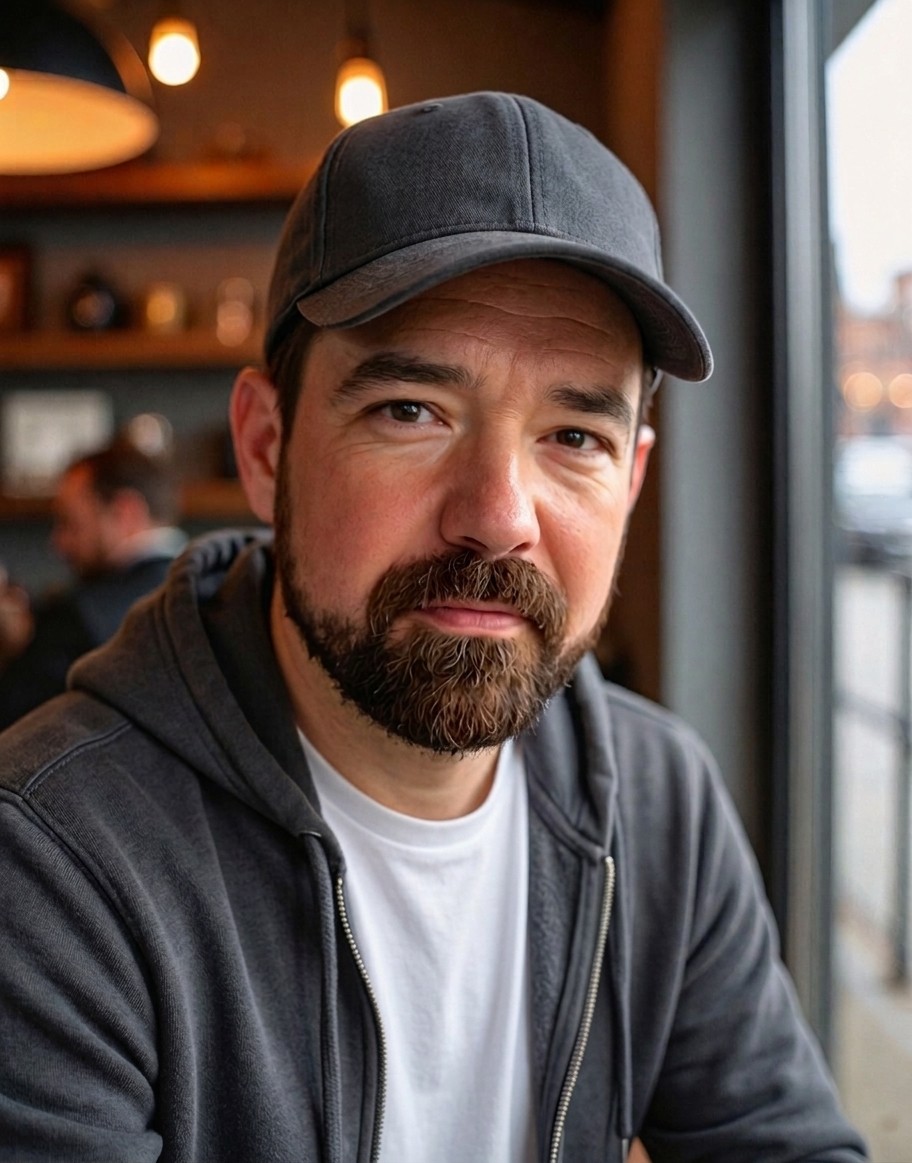
Lenny Hunt is a Certified Grief Coach, public speaker, and content creator known for his creative approach to healing after loss. Drawing from personal experience, he helps people navigate grief with practical tools, fresh perspectives, and hope, empowering them to rediscover purpose and joy.
