Sarah Loses Joel To A Motorcycle Accident


 Apple Podcasts
 Spotify
 Castro
 RSS Feed
 On Episode 9 of Season 9 of The Surviving Siblings Podcast®, host Maya Roffler is joined by Sarah, a surviving sibling, who shares the story of losing her older brother Joel in a tragic motorcycle accident after years of struggling with mental health, addiction, and life on the edge.
Sarah takes us back to her childhood growing up in Kingston, Washington, a small town surrounded by nature, ferries, dirt bikes, and the kind of freedom that defined a typical ‘90s childhood. Joel was two years older than her, and from the very beginning, she was chasing after him—rollerblading behind the bikes, following him into adventures, and looking up to the older brother who always seemed fearless. Their childhood was full of camping trips, exploring the Pacific Northwest, and spending long days outside together. Joel loved BMX riding, dirt bikes, and adrenaline-fueled hobbies that would continue shaping much of his life into adulthood. But as they entered their teenage years, everything shifted.
After their parents’ divorce, the family dynamic completely fractured. Sarah moved to Virginia with their mother while Joel returned to Washington with their father. What followed was nearly a decade of separation during some of the most formative years of their lives. During that time, Joel began struggling deeply.
What started as partying and rebellion in middle school quickly escalated into legal trouble, drug use, instability, and involvement with the juvenile justice system. By 16, Joel had become a father himself—growing up far too quickly while still trying to survive his own pain. Sarah shares what it was like watching her brother’s life unfold from across the country—feeling disconnected, worried, and unable to fully understand the depth of what he was carrying at such a young age.
When Sarah eventually moved back to Washington as a teenager, their relationship transformed. Without years of typical sibling rivalry, they found themselves reconnecting more as friends than anything else. Joel welcomed her into his world, introducing her to the friends who would later become lifelong connections for her too.
Years later, after Sarah returned to Washington again to start a family of her own, she and Joel finally got back the time they had missed. Holidays, barbecues, late-night conversations, and everyday moments slowly rebuilt the sibling bond they had always wanted.
And then, in March 2022, everything changed.
Sarah opens up about the loneliness that came after Joel’s death—the lack of parental support, the confusion of grieving differently than the people around her, and the overwhelming responsibility of organizing Joel’s cremation and memorial almost entirely on her own. From writing the obituary and creating the memorial slideshow to officiating his service herself, Sarah carried the emotional and logistical weight of honoring Joel while barely holding herself together.
She also shares the darker realities of grief that many surviving siblings quietly experience: depression, isolation, suicidal ideation, anger, and the deep ache of feeling abandoned not only by loss… but by the people who are supposed to help carry it with you. As the conversation unfolds, Sarah reflects on what ultimately helped her begin healing—finding the right therapist, joining the Surviving Siblings community, and realizing she no longer had to carry her grief entirely alone.
One of the most powerful moments of the episode comes as Sarah shares how, four years after Joel’s death, she finally honored him in the way she had always wanted to. Through a memorial ferry release in Washington State, surrounded by family and flowers, she released Joel’s ashes into the water during a quiet sunrise ceremony that brought both grief and peace together in the same moment.
In This Episode:
(0:00:00) – Meet Sarah + Remembering Joel
Sarah shares her childhood growing up with her older brother in Washington State and their adventurous ‘90s upbringing.
(0:03:00) – Divorce + Family Separation
How their parents’ divorce split the family apart and separated the siblings for nearly a decade.
(0:05:00) – Early Trouble + Addiction
Joel’s struggles with rebellion, legal trouble, and substance use beginning in middle school.
(0:06:00) – Becoming a Father at 16
How Joel’s life changed dramatically after becoming a teenage parent.
(0:10:00) – Reconnecting as Adults
Sarah moves back to Washington and finally begins rebuilding a close relationship with Joel.
(0:15:00) – Becoming Family Again
How holidays, barbecues, and everyday moments helped them reconnect after years apart.
(0:20:00) – The Day Everything Changed
Sarah receives the phone call that Joel had died in a motorcycle accident.
(0:21:00) – The Motorcycle Crash
What happened during the police pursuit on Interstate 5 and the tragic collision that ended Joel’s life.
(0:26:00) – Not Seeing Him + Delayed Goodbye
The emotional reality of not viewing Joel’s body and waiting weeks for his cremation process.
(0:31:00) – Planning the Funeral Alone
How Sarah organized Joel’s cremation and memorial service while grieving deeply herself.
(0:43:00) – Finding Support Through Community
How therapy and the Surviving Siblings community became part of Sarah’s healing journey.
(0:48:00) – Releasing Joel’s Ashes
The emotional ferry memorial ceremony that helped Sarah finally honor her brother in the way she always envisioned.
(0:52:00) – Final Reflections on Grief + Survival
Why grief is cyclical, why their story continues through us, and the importance of asking for help.
This episode is sponsored by The Surviving Siblings®
Connect with Sarah:
-
Tik Tok: https://www.tiktok.com/Mompadthai1
-
Email: sarahraynor31@gmail.com
Connect with Maya:
-
Podcast Instagram: https://www.instagram.com/survivingsiblingspodcast/
-
Maya's Instagram: https://www.instagram.com/mayaroffler/
-
Twitter: https://x.com/survivingsibpod
-
Website: thesurvivingsiblings.com
-
Facebook Group: The Surviving Siblings Podcast
-
YouTube: The Surviving Siblings Podcast
-
Patreon: https://www.patreon.com/TheSurvivingSiblingsPodcast
[00:00:00] Welcome to the Surviving Siblings podcast. I'm your host, Maya Raffler. As a surviving sibling myself, I knew that I wanted to share my story, my brother's story. I lost my brother to a homicide in November 2016, and after going through this experience, I knew that I wanted to share my story and his story.
And now it's your turn to share your stories Today, I have, of course, another surviving sibling with me. This is a very special guest. Sahra is with us today, and Sahra is going to tell us about her story losing her brother Joel. But Sahra's been in our community as well, and so I've gotten to know Sahra very well.
So these episodes are always super special to me personally. So Sahra, [00:01:00] it's awesome to do this with you. Welcome to the show. Thank you. I am happy to be here. Yeah. It's mixed feelings, right? Happy to be here, but- Yep. Yeah. 'Cause you listen to the show, and that's how you found me, and that's how we connected.
Mm-hmm. And then you got involved in our community, and I've had the privilege of getting to know you and being with you as you've been processing and going through your grief experience after losing Joel. So take us back. Tell us a little bit about you and Joel. Tell us about your childhood, your dynamic, and, uh, we'll go from there.
Let's learn a little bit about you guys. Yeah. So we grew up in a town, Kingston, Washington. Um, it's not necessarily rural because you have the ferry system going over to Seattle, so you have access to the city. But it is a small little town. We grew up in a neighborhood, typical '90s childhood, uh, you know, [00:02:00] playing outside, riding bikes coming in when the streetlights, you know, turned on.
He was my older brother. He was two years older than me, so I was always, uh, chasing him around. You know, everybody would be on their bikes, and I would be rollerblading behind them, "Wait for me," you know. Um, but yeah, we grew up doing a lot of camping. You know, Washington State is beautiful, so our dad- Beautiful.
Yes. Beautiful. You know, I always t- I'm like, I'm always telling Sahra, I'm like, "Please share your pictures." It's gorgeous. I'm always jealous. Yeah. Yes. Yeah. So always exploring the area that we lived in. Lots of dirt biking. Joel did BMX. Um, that was a pretty big part of his personality dirt biking and obviously bikes into the future.
But yeah, it was, you know, typical '90s childhood. The g- the good old days, as we call it. Yeah. Right? Like, you know, played outside. You knew when to come home for dinner. [00:03:00] No cell phones. Yeah. I miss those days, Sahra. I do. Yeah. Me too. So, um, take us into kind of like, you know, as I relate to you too, I've...
I'm flip-flopped. I'm the older, as you know, and if you guys didn't I'm two years older than my brother. But very much the same. Like, we loved to be outside, playing, all of that. I was a super tomboy, so I relate to you, like wanting to hang with your brother and, like, do all those things. But- How did that, how did your relationship continue as like you guys went into like middle school and high school?
What did that look like? Yeah, so our upbringing is a little different. Um, my parents divorced in 1999. My mother is from Virginia, and my father is from Washington. So, I was about nine, Joel was 11. We started off, you know, doing the two weeks here, two weeks there. But eventually my mom decided to move back to Virginia, and she asked us if [00:04:00] we wanted to go with her.
So of course, we wanted to go with mom, you know. But we ended up getting there and Joel was only there for a few months. He started, kinda getting into a little bit of trouble, you know, hanging out with girls, partying- Yeah ... smoking marijuana. Mm-hmm. You know, so, he, he, he was always a bit of a troublemaker, so my mom decided to send him back to my dad.
So growing up, me and Joel were actually separated for quite a bit of time. I have gone back and forth between Washington and Virginia for about half of my life, and, so we probably spent about 10 years separated.
Okay, so you guys are living in, in separate places now. Like, this is a lot that's happened for you guys. Like, moving and then he moves back.
You're staying with mom, he goes back to Washington, right? Mm-hmm. That's what's happening, Sahra. Yeah. Okay. So when he goes back to Washington, what is his life like? Does he continue to kind [00:05:00] of be this troublemaker, or does that, like, you know, is dad whipping him into shape, or is he just kinda running wild?
Like, I've heard stories so often from people where it can go one way or the other, and it's really dependent on the parent that you're with. So what was that, what was his experience like? And here you are on the other side of the country, so you're not even seeing all of this on a day-to-day, right?
Yeah. So he you know, really kind of fell out of school. He continued to be a bit of a troublemaker. He you know, got involved- And he's, like, in high school at this point? Is this what's happening, or what age- Um, this is about m- middle school age. Middle school. Um- Oh, wow, so he's really young- Yes
like, kind of raising hell. Okay. Yes. Okay. Yes. Hanging out with the wrong crowd, all of that. So that's kind of when the, involvement with authorities and things kinda started taking place. He would take my dad's cars, you know. In middle school? Yeah, [00:06:00] yeah. Joel- Whoa. He, okay, he's a wild child.
The drug use kind of started to get a little bit more harder than just smoking weed, I think. You know, yeah, the divorce affected us a lot, you know? And our parents weren't really they weren't really there, you know? Like, we didn't have the typical support of parents who, you know, you need to get through school, you need to go to college, you need to learn this.
This is, you know, life. When my parents divorced, the whole family dynamic kind of just crumbled, and my parents were off doing their thing, and me and Joel just kind of, um, had our freedoms, you know? So yeah, no school all of that. So, when Joel was 16, he actually had a child, uh, just a couple weeks before he turned 17, actually.
So- Wow ... uh, growing up kind of moved pretty quickly for Joel. [00:07:00] I'd say. Yeah. In every way. I mean, he was growing up fast in middle school, and then this will really catapult you forward, Sahra. Like- Yes ... wow. So what, what did that look like, and what was that like? Because here you are in Virginia- Yeah
learning about this, right? And so- Yeah. I mean, I was, like, 14- Right ... and I remember him calling me and saying, "Hey, you're gonna be an aunt." And I was so young I didn't even know how to, like, process that. I'm like, "Okay." You know, so yeah. Being a father for Joel kind of looked a little bit different. He was so young.
The woman that he was with was 18. When you're 16 and you have a kid, I mean, you don't really know what to expect, right? You don't know what you're doing. You don't... They weren't prepared. They were not prepared. And the family dynamic that she came from was also not the best, you know?
So they [00:08:00] lived together for a short period of time but ultimately they didn't end up staying together. My nephew Gage just kind of stayed with the mom up until the last couple of years of Joel's life. But yeah, I mean, he was a great father, you know, for, for what it was, for being so young.
So what was that like for him? Because, yeah, 16, 17, and so was he working, Sahra? Like, did he, like, did he go back to school? Did he work? Like, what was the dynamic? Because I'm sure at that point, life got pretty real pretty quick for him. Yeah. So what was he, what was life like, like after this all came to fruition?
So like I said, he was kind of in and out of the system, you know. He was getting in trouble. That never kind of ended for him. He got his GED in juvenile hall. So, you know, as far as jobs, it was more like handyman. We come from a family of mechanics, and that's one thing that my father did teach him.
So he knew [00:09:00] how to wrench cars. So he would do that for money. But he didn't really have a stable job up until probably about four years before he died. He was always just kinda like doing things here and there but not consistently employed. Yeah. Yeah, so that's like a, that's a big part of his story. If you've lost a sibling, trust me, I know exactly how you feel. I'm Maya. I'm the host of the Surviving Siblings podcast, but I'm also the founder of Surviving Siblings Support. I know that going through this experience is extremely difficult. Whether you've lost a brother like me, a sister, or perhaps more than one sibling, trust me, we know exactly how you feel.
So that's why I started our Patreon account. You can click below to find out more about our Patreon. If you join our Patreon group, it'll give you just a little bit of extra support [00:10:00] that you need along your journey as a bereaved sibling, or as we like to call it, a surviving sibling. We offer monthly support groups.
We offer a free copy of our grief guide that is actually found on Amazon. It's called The Grief Guide for Surviving Siblings. We also offer direct messaging to our community and to me for extra support, and we have incredible events. We have workshops throughout the year that you'll get access to, and you'll also have access to our summit that happens annually and so much more as you'll connect with a community of surviving siblings that understand the journey, the journey of losing a sibling.
You can click below to join us today and also check out some additional VIP features that we offer. I hope to see you in the group, and until then, keep on surviving, my surviving siblings.
what is your relationship like today with Gage? Like, is that in, in a... You've talked [00:11:00] about it a little bit before, but what would you share now openly about that? Our relationship is great. Um, I mean, we'll get to that part eventually, but after Joel died, I ended up kind of taking him under my wing for a year, because with his parental dynamic and, you know, not coming from the most stable backgrounds, I thought that it was very important for him to see you know, what a normal, stable life looks like.
You know, we were able to, help him out in some ways that his parents weren't able to. And so I was very grateful that I got to have him in our home for a year after Joel died so that we could you know, set a good influence for him. But our relationship's great. I see him all the time.
I didn't get to see him so much when, you know, he was a child because I was back and forth. Yeah ... but yeah, things are good now. That's awesome. And I think that's something, you know, it's interesting, I'm sure you've heard this just as much as me, like in our group and on TikTok and different places like that, it's such a unique [00:12:00] thing because when you have a sibling who dies, right?
That's why you listen to this show. Yeah. Some of us have siblings that have children and some of us don't. And so when you're someone like me who has a brother who, you know, did not have any children, you always wonder and kinda wish that they did. But when it's like your situation with Gage, they're both bittersweet situations, right?
Because you know that that child doesn't have their mom or dad anymore, in your case, dad, right? Because it's your brother. And so it's tough, but I know there's also this beautiful side of it where you've got a piece of your brother, right? Like walking around- Oh, yeah ... with him every day. He looks exactly like him.
Yeah. He looks exactly like him. And the age gap isn't that big actually between us. Right. You know? Right. Yeah, 'cause- No, it's not. Yeah, he's about to be 22, you know? So I- You could be siblings too, technically- Yes ... right? Yes. So it's like you could technically be this and you could technically be that. So yeah, it's probably an interesting dynamic.
Yeah. We're able to [00:13:00] talk openly with each other about, you know, his father's death and all of that stuff, you know. He's more of a friend I'd say, that I'd be able... we can communicate in that dynamic, more so than, you know, a little person. I think that's really, like, that's really special.
And I know we'll talk more about that, but I just was curious for you to share at this point since we talked about it. So tell us a little bit about your transition back to, like, Washington because you were in Virginia, you did life with mom. Your brother was always in Washington- ... for the most part, right?
And then you're in Washington now. So walk us through that because I think that will kind of lead us into obviously your brother's passing and story. So how did all of that transpire? Yeah. So I've gone back and forth quite a bit. I moved there when I was, nine. Nine, 10. And I ended up coming back to Washington when I was 17, and then I left again when I was [00:14:00] 22.
When I came back to Washington when I was 17 Joel's friend group just kinda like welcomed me. I didn't really have any friends here, you know, so it was very nice. That's when our friendship kind of took off. Me and Joel were separated for so long in our teenage years that we never really had the dynamic of kinda like rivalry.
You know? Right. Sibling rivalry. Like, we were detached. So- We were always excited to see each other, I suppose. So when I came back when I was 17, they welcomed me in, and a lot of the friends that I have today were Joel's friends. So fast-forward, I decide to go back to Virginia because that's where my friends are.
That's where I went to high school. Right. So, you know, I wanted to be around my friends. And I gave that a shot for another five years. And then in 2017, I moved back here. I went to culinary school in Vancouver, [00:15:00] Washington, but I was living in Portland, and that's where I met my husband.
And that's where, where my, daughter was conceived. And, you know, I wasn't here very long before that happened. I was here for, you know, maybe a year. But ultimately Portland wasn't the place for us to be financially, so we needed, you know, we needed help. We were you know, having a baby.
We needed to go back to where we were stable. Yeah. New parents, new life. Yeah. Yeah. Did you move closer to Joel at that point? Is that kind of how that evolved? Yeah. Yeah. So we I brought Devin, my husband, up here to Kitsap County, where I'm from. And that is kind of when me and Joel's relationship really took off.
He was always reaching out. I mean, we were having barbecues, you know, we were doing holidays, very involved in each other's lives, up until the end. Yeah, I think that him and I were kind of seeking the things that we missed out on in [00:16:00] those last couple of years. You know, we didn't do Christmas together or Thanksgiving or anything like that.
We always, you know, we didn't get to do that. So I think, a part of him was seeking that out in me and the same for him. So we made it a point to get together quite a bit. Yeah, so it, it was really nice. We got to do the things that we missed out on together and formed a pretty strong bond. He was one of my greatest friends.
Yeah. Yeah. I, I think it's just so important to talk about all of, like, these parts of your story because it is a unique aspect of your story 'cause you didn't lose all these years, right? Yeah. And so I'm sure that was super appealing to, like, start building your little family and, like, you know- Yeah
you had Gage, right? So, like, kind of bringing it all back together, I'm sure you can sit back now- Yeah, a lot of it was- Yeah ... a lot of it was out of our control, you know? Yeah. I mean, I think we always [00:17:00] kind of, uh, craved a relationship with each other, you know, but the, what our parents, their choices kind of pulled us apart.
So the last couple years of his life, we spent a lot of time together. Which I'm sure, again, I'm sure you look back on that now and you're just, like, so grateful for every single moment. Yeah. But what did your parents think about this? This, the fact that you kind of all came back together and created this little, like, nucleus and you were spending time together, like, what was that like for, like, your parents?
Like, did they participate in this at all, or were they supportive of it, or was it just kind of like you and Joel were doing your own thing? What did that look like? Me and Joel were doing our own thing. Like I said before, when my parents divorced, our family dynamic kind of just, combusted. Yeah
my parents are, I would say, estranged. I'm pretty estranged from my mom, and Joel was as [00:18:00] well. My relationship with my father is a lot better than my mother, and recently him and I have been able to connect, and it's been really nice. But no they were not really a part of the holidays and the barbecues and all of that stuff.
Yeah. Which I'm sure is why, again, you, like of course you miss Joel, but like that is such, you know, like you had all these beautiful moments and like reconnection and like building this and now- he's, you know, unfortunately not here. Mm-hmm. So take us to, take us forward in time and take us to what happened to Joel.
Okay. Tell us a little bit about that. So Joel grew up on dirt bikes and getting in trouble for driving cars too fast, and that continued into his adult life. Like I said, he was in and out of the system. And you know, he used drugs. He did. And [00:19:00] he struggled with mental health which is a huge part of his story. I believe he was diagnosed with borderline personality disorder.
I'm not 100% sure, but I'm, you know, 99% sure that that was what it was. He never took, consistently took the medication for it, so, with the drug use you know, methamphetamines and things like that, it was pretty much a recipe for disaster for him. So it has a lot to do with him being in and out of the system.
So what happened basically was... at the time of Joel's death, I was working as a pastry chef. I had worked, you know, a very early morning shift, and I got off work at probably 11 o'clock, and I came home [00:20:00] to take a nap. At that time, my daughter was pretty young, and I was exhausted. So I came home, and I took a nap, and I'm pretty sure I put my phone on silent.
Uh, and I probably woke up about two o'clock, looked at my phone, and I had seven missed calls from my mother. And that's not typical, you know, with the estrangement. So I call her back, and she says I got a call and Joel was in a motorcycle accident, and he's dead
And like I said, "No, he's not."
And yeah, I mean, that was it. I said, "No, he's not." And immediately just looked at my husband and [00:21:00] said, "Joel's dead." And you were shocked, of course. Yeah. Yeah. Yeah. And, and what-- Just so everyone knows, what, what month, what year are we in for this, Sarah? This is March 6th, 2022. Yeah. So what had happened is that Joel was on his motorcycle.
He was evading the police on I-5. If you live in the area or you've ever been to Seattle, I-5 runs all the way from Seattle to California, basically. It's the main interstate. So he was riding around from Seattle back to Kitsap County. And he was doing 105 miles per hour on his motorcycle. He was evading the police.
We have a law here that prohibits police from pursuing a chase if the motorist [00:22:00] is putting people in danger. So- Right. Yeah. So he, you know, they backed off. He's veering through traffic. It's, like prime time 5:00 PM traffic, I believe. You know, just 105 miles per hour, just going for it through cars.
And he went to go on the side, I believe, to go around the cars and ran straight into a tow truck, and it was instant. He made the news. And it's pretty crazy because the morning that we found out they hadn't identified him, but after, you know, after we found out I had spoken to my aunt and she said, " I saw the news report this morning," you know?
Wow. Oh my gosh. Yeah. So, yeah, very instantaneous lucky for him, you know, but very tragic and traumatic, Yeah. So S- Sahra, tell us [00:23:00] why, like, I mean, there's, this is the hard thing about sudden loss is like, I mean, this is the hard thing about all loss, right? We'll never have all the answers.
But in these types of situations, like, you might not have all the answers, but why was he evading the police? Like, was he in trouble for something at the time? Was he just speeding and he didn't wanna get pulled over? Like, why was that initially happening? And I, yeah, I mean, I'm sure everyone's curious about that, if you don't mind sharing that part too.
Yeah. I think it's easy to imagine what was going through him, his mind at that point. You know, yeah, I spoke before about him being in and out of the system his whole life. You know, he had unpaid, debts to courts. Mm-hmm. You know, in and out. And I think that he was just speeding, and the cops were gonna pull him over again, you know?
And so he was probably like, "Oh, shit, I gotta go," you know? Didn't wanna get caught that's what I imagine was going through his mind, but I'll never really know. [00:24:00] That's the hard part. Yeah. Mm-hmm. You'll never know 100%. Yeah. You know, and, um, yeah, the drug use as well, so. Yeah. So what-- So this happened on March 6th.
You didn't get the call until March 7th. What was that timeline? 'Cause you had- yeah ... like rush hour traffic in the morning or at night, or it was- It was in the evening. Okay. I believe when it happened, he was in rush hour traffic. It was in the evening. He backed up Federal Way for about five hours.
We never really got like reports for it. But yes, he died on March 6th, and I found out on the 7th. I think they were trying to identify and figure out who to call. It's kind of strange that they called my mother because she's in Virginia, but I think she may have been listed as an emergency contact, so.
Right. That was my next question, like why did they call your mom? 'Cause I know that about your story, and then she called you. That part in our stories [00:25:00] I've always related to because they called my mom, and at first I was like, "Why'd they call my mom?
I live like up the road from him. Like, why didn't they call me?" Yeah. But it's just whatever number they can get in whatever way, breaking into a phone or seeing. And you know, and like- Yeah ... your siblings typically have like Mom in there, like, right, and then we're in as a name. So it's not all... Like, there's so many different reasons why that can happen, so I get that now.
Yeah. Yeah, so- The next day ... yeah, I didn't find out until the next day. And you know, in hindsight, I mean, there's really nothing that I could've done, you know, with- Yeah ... the traffic and all of that. I mean, I wasn't gonna be able to drive to him, you know? Right. I mean, I guess I could have, but you know, there wasn't really anything that could've been done.
And unfortunately, with the impact and him making... He made contact with three cars [00:26:00] after he ran into the tow truck. You know, We weren't not allowed to see him, but we, it was suggested that we not see him. So that was really hard. Yeah. I mean, I definitely want you to share your perspective on that, Sahra, because I think a lot of siblings that listen to this show, and just also just people who have lost someone in general, you don't get that.
You know, I... The idea of closure to me now is 10 years after m- losing my brother, is very different. Like, I know there's no such thing as, like, true closure, right? But we are taught, you know, if we see someone or we get to say goodbye to someone, you know, all these, like, then it will feel like closure. But I'm curious, like, how did that make you feel that you never saw, like, his body?
Do you think, in your opinion, it made it feel more surreal like it didn't happen? Like, how did that affect you personally? I think I always [00:27:00] expected something like this to happen with Joel, so I was able to accept it. But I did have a hard time not seeing him. It's something that I almost regret not going to do because even though I, you know, couldn't physically see him, I would've loved to have sat there- Yeah
with him. Yeah. Yeah. I accepted it, you know. I felt a lot of guilt for not going to him. For some reason, they couldn't get him to the funeral home for, like, 20 days or something. He sat in the morgue for quite some time before he was able to come back to where we were, you know?
And you know, when he did come back and we were in the funeral home you know, I'd like to talk about, [00:28:00] you know, what happened my story with all of that. But the funeral director told me that he would tell Joel that I was taking care of him. Aw.
That's beautiful, Sahra. Yeah. Yeah. 'Cause I didn't, I didn't get to see him. Right. I feel like sometimes we have these, like people that come into our life during these really, like, difficult experiences and, like, that was obviously, like, a good person that came into your life during that. Like, that's really sweet.
Yeah. Yeah. Yeah, so, you know, it's hard. So what happened? So the funeral- Yeah ... director is telling you that this is all happening. Did you guys, like, you obviously decided to cremate Joel. Yeah. But, like, what was all of that like? I mean, 20 days is such a delay. [00:29:00] Like, did your mom come in town? Did your
family come in town? What did all of this look like in your experience? Yeah. So yeah, my mom was in Virginia. She flew in. Like I said, our relationship is not the greatest. Um- Yeah ... I think her intention was to come in, and comfort me. But with the issues that I have with her, she's not necessarily the comfort that I wanted at the time.
My parents hadn't seen each other in 22 years, so Wow. Yeah. Yeah. Like I said, everything just split when the divorce happened, so they hadn't seen each other in 22 years. She flew in and, at that point, everybody kinda gathered at my house. It was the first time they had seen each other in that long.
It was, you know, a little awkward to meet under those conditions. But you know, we all just kinda sat [00:30:00] around, and talked about what had happened. And then we went to, you know, when Joel finally came to the funeral home my mom, dad, and I went to the funeral home. I wanted to bury Joel. It's hard when you don't have those conversations.
You- Yeah ... don't really think that this is gonna happen, you know? So me and Joel never had the conversation of, you know, "If I die, what do you want?" You know, what, what songs do you want to play at my- Yeah ... at my, service, or I wanna be cremated, or, you know, , the ways that they would wanna be honored.
We didn't have those conversations. I wanted to bury him. Joel was a metalhead. He was a guitarist, you know, and appreciated I guess I would say, you know, the m- darker, more melancholy things, so I kind of romanticized the idea of burying him, you know, [00:31:00] But that wasn't in the cards because it costs about $30,000 to bury somebody.
So I was all prepared for that, but then, you know, money was an issue. My parents weren't really able to provide anything in those aspects. My father was able to provide a little bit. My mother was not able to provide at all. And I thought that it was very important to honor Joel in the best way that I could.
So I, and I just so happened to have money in my savings account, and I spent it on the cremation and the service that we had for him. We had a memorial service at the funeral home. And I'm really glad that, uh, we did that. But so when it comes to Joel's death certificate and handling all of those things, ultimately it was, it was [00:32:00] me, which is a little bit different.
A lot of families have, uh... I guess I wouldn't say a lot of families, but it was just kind of a different dynamic with my family. Usually, you know, when you lose a child, the parents take care of things. Yeah, you were very parentified in this situation. Yeah. Yeah. Um, but it, it was me in this situation that provided.
I officiated his funeral service. I made sure everything was put together. I took him home with me. So yeah, it was, it was all me. Yeah. It, it was a very parentifying experience for you, like I would imagine. Like you, I can relate to that definitely. And I mean, being, officiating a s- like while you're grieving is a very out of body experience.
Yes. I was a wreck. Right? Right. I was- Like how did you... Talk to us about that. [00:33:00] This is a big part of your story. How did you do that? Because I think pe- when people, like, when you're in group, and we'll talk about that in a little bit and you're- Mm ... sharing with people, people are always super impressed with that part of your story.
They're like, "Sahra, how the heck did you do that? Like, tell us about that." Like- I- ... th- there's a bit of compartmentalization that has to happen to make that work. Yeah. I mean, I didn't, I didn't really know what I was doing, you know? Like I said before, we didn't really have those conversations. And it's sudden loss, you know?
So I wasn't prepared at all. And you know, I just, I knew instinctually that I had to take care of him. So you know, I spent a lot of time making a slideshow and going through music that he liked and making a playlist, and it was really cool because, uh, the funeral home was okay with us playing metal, you know?
So I, I- Well, that was your brother, so thank goodness, right? Yeah. Yeah. Yeah. But yeah, I just [00:34:00] remember like- Like just trying to come up with these things and being totally disassociated from reality. I officiated it, but I was a wreck, you know? Like, I stood up there, I said one little snippet and I said, "I'm gonna play a song."
You know? I didn't have the capacity to say a long, you know, thoughtful message about my brother. I was so mentally not well that I just didn't, I didn't have the capacity to, perform in that way. So I stood up there, I cried and I said, "I wanna play this song for my brother." And then, you know, I just stood up there and welcomed everybody to come say, you know, s- say something, you know, about Joel.
And it was beautiful. Did your parents speak? I'm always curious if parents speak when it's about- Yeah. My mom spoke. [00:35:00] She told a story about Joel's childhood and, my dad tried but his girlfriend ended up reading, the poem that he wanted to read for him. Yeah. He couldn't, he couldn't hang.
He was, yeah, not doing well. And that's okay. And that's okay. Not all of us can. That's okay. So what did life look like for you after? After everybody kind of went home, you know, you took Joel's ashes back with you. Like, what did life look like for you afterwards? Lonely. Very lonely. My mother had said some things to me while she was here that really just, you know, put the icing on the cake as far as our relationship went.
So I ended up going no contact with her for the, third or fourth time in my life. And [00:36:00] my dad was dealing with it in his own way. Like I said, I did Joel's service. I took Joel's remains with me at the end of the service, and I'm not sure if there's was some resentment there or what, but I lost my brother and I didn't have parental support.
Luckily, I have an amazing aunt and I have a couple amazing aunts actually, and, my grandmother has been a big support and, my couple of my cousins that I'm pretty close with. Um, but none of, not all of them are physically here. So really you know, I felt like I was grieving my brother and my family at the same time.
I felt very alone. I have an amazing support system in my husband, you know? But Joel was the person [00:37:00] that I would call when I was feeling, you know, oh, mom and dad, you know, like I didn't have- Yeah ... all of the things that transpired after he died within my family dynamic, I wasn't able to really express to somebody that would understand.
So very, very lonely. Very I was very depressed. I was, you know, dealing with suicidal ideation. Luckily I had people to call on because I also struggle with mental health issues. But I'm adamant enough to where I seek help. So yeah, I just was not doing well at all. There was a period of time where I would ask my family, you know, "Joel, what are we gonna do with Joel's remains?"
You know? And I never would [00:38:00] get a response really. So that made me feel lonely too. It made me feel like... I was very confused. I was confused how I was grieving differently than everybody else. I didn't understand how my parents could kind of just disconnect from it and disconnect from me. I just didn't understand.
And, you know, I had a spot in my house for Joel's cremains with his, you know, a little altar. I had his guitars above it and, you know, it sat there and I looked at it every day and just wanted to do something for him. I wanted to do something for him, you know, to honor him. And anyway, yeah, just lonely.
Never getting a response about that. Never really getting checked in on, never having a support system in my parents, not having people drop off food. [00:39:00] You know, some people have people that check in on them and bring them things. It wasn't that way in my case. I did have people checking in on me, but not frequently.
So really, yeah, I had my husband and that's, yeah, and that's really lonely. And I connect, you know I connect with this part of your story too, where you're looking at the people around you and you're like, "How am I grieving this so intensely, and how am I going through this so deeply?" And like, do you g- like, you know deep down they're grieving too.
But like when you're in such fresh grief and they're not grieving in the, or they're not showing their griefly, grief, griefly, grief as intensely as you are, you're like- Mm-hmm ... what is, you just wanna shake everybody. You're just like, "Why is everybody not grieving exactly like me? Like, why aren't you..."
Like it's- Yeah ... everything feels so out of control that you, like, almost wanna control everyone else's grieving. And it's like you, when it's a loss like [00:40:00] our brothers, right? It's like, it's such a deep loss, and then you're looking at your parents and you're like, "But this is your son." Like, that's a huge loss.
Like, you know, so it's just, you start to kind of spiral, and I've always connect, like as we've gotten to know each other, Shay, I've always connected with that aspect many aspects of your story, but that aspect of your grief, because it's just like this disbelief that's happening. So on top of your own pain and on top of all the loneliness and things going on, you're also just like trying to figure out like, how?
What? Like, you're almost becoming this like detective and therapist and analytical research person, and like, it's just too much sometimes. Like, it's just a lot. Yeah. It's very heavy. I felt like I had lost a piece of myself. Like- Yeah ... and so yeah, I didn't, I didn't realize until later on that I think that was my anger phase.
Yeah. Because I wasn't angry, you know, like in a physical sense. I wasn't [00:41:00] really comprehending it that way. But I do think that I was angry and you know, recently, you know, in the last year I've had conversations with my parents about why they don't, they don't feel the loss as much as I do. You know, Joel was a troublemaker.
He put my dad through quite a bit of things, you know- Mm-hmm ... when it came to being in the system and the drug use and because he lived with my dad for quite a time, you know? I mean- Yeah ... yeah, because he didn't have your typical, you know, graduate, get a job, all of that stuff. He had a kid, so my dad was kind of his support system, but at the same time, Joel was kind of abusing that.
So unfortunately, you know, I imagine there's a sense of relief there. You know, but it's just strange to me. Yeah, I... and my mom, you know, admitted [00:42:00] that they didn't have a relationship. I mean, Joel didn't come to Virginia after he went back to Washington when he was a teenager. He never came back.
They would talk on the phone, but you know, she didn't have a relationship with him, so it was really hard for me to understand the concept of how do you not feel as heartbroken as I do? Like, if my daughter died, I would be totally dismantled. Yeah. Totally. You know? Like, you don't, you know, how do you not think of him as a child, you know?
Even if, you know, he did cause trouble and he was a pain up until the day he died, you know, how do you not reminisce on tiny hands? Yeah. You know? And I think, like, you have such a depth and understanding because you are a mother, right? So you can look through that lens and look at that and have that, [00:43:00] that kind of just belief of, like, not being able.
Like, you do understand, so that's why you can understand. Like, you know? It's like- Mm-hmm, yeah ... yeah. Like, it's, it is wild, and I connect so much with your story on that. And, you know, Sarah, as you know, like, we're not alone in our stories, with the parents, you know, in our lives- not grieving in the way that we would think that they, you know, they do.
I wanna talk about, like, where you are now a- with this experience, because I've known you for a few years now. I think we're going on our second year of knowing each other. Mm-hmm. Yeah, it's, like, two years now. So. And so we met because you found our group. Yes. And I have loved having you a part of our group, and thank you for, you know, it's anonymous, so you don't always have to share, but you've always been so open and wanted to share about it.
And I just, again, have loved having you in our group. But what was, like, what made you wanna be a [00:44:00] part of our group, and, like, what has that experience been like for you? And then I definitely also wanna talk about something really big you did, what do we, what do we have? S- only two months ago. Yeah. So we've, we've got a lot to share here.
Mm. So but start with that. Tell me a little bit about what made you wanna join the group, and then, like, what has the experience been like for you in being in our community? Yeah. So yeah, uh, the first two and a half years I w- I was alone. You know? And I am an avid TikToker, uh, and that's how I found the Surviving Siblings, how I found Maya.
Um- Yes ... I was scrolling and looking intensely for people that felt the way that I did, you know? I didn't have anybody to talk to about it. And you were doing a live, and I came in and I wasn't expecting anything from it because, you know, they move so quickly, the comments and everything, but you actually answered my question and I was like, okay.
You know me, I try, I try to get those questions. Yeah. You know how I [00:45:00] am. Yes. Yeah. No. Yeah. So you, you actually, uh, interacted with me, and that was awesome, and, uh, you started talking about the podcast and so immediately I was like, okay, like I need some kind of resource, you know? And I started listening to the podcast from episode one and then, you know, just yeah, just went through that pro- process.
I actually went to the summit before I joined the group.
I went to the summit. It was kind of funny 'cause I was trying to use my phone and it wasn't working well, and I wanted to get as much as I could out of it. But I was like working and trying to do all of that. But anyway, I was like, this is something I really wanna be part of, so I joined the group, and I was utilizing the group for about a year straight.
I... It was so nice to just meet people who had similar experiences, [00:46:00] similar traumatic experiences in an open environment with no filter. You don't really have to hide your emotions. Everybody there is just so kind and has something that resonates, uh, in their story and in yours in yours as well.
It's just, it's just a great environment. It's not... It, it's therapy in a way, you know, to just be able to release, to just have, uh, time set aside for you to just say what's on your mind. It's not a you know, typical process. It's just what's on your mind today? What's been on your mind for the last month, you know?
And you don't have to filter. You can say exactly how you feel and just talk openly and there's always somebody there. Every- everybody in there is amazing. You know, people, uh just share with you or give you praise for [00:47:00] being open. It's just great. It's, it's an amazing resource, especially if you're, you're an only, you know?
Yeah. If you don't have the support system at home, if you're having a hard time finding a therapist, because that's difficult just yeah, it's a great place to be I'm, I mean, I'm so glad you joined. It's been a pleasure having you in our group. And I think what, for me, why I love it is, one, like you said, like we've created this space where it, it feels safe, it feels open, you can be unfiltered.
Like, because you just don't know what you're getting into on social media and all these... You know what I mean? And there's... It's great. Like, I love doing our TikTok Lives. I love meeting you guys there. But I knew that we had to build something that was really private and safe and unfiltered, and everybody can just, you know, like, you know some of the people in our group.
Like, some people are really intense and serious, and some people really just like to listen. And then there's some people that are more jokesters, and then there are some people that are a little dark, right? Yeah. So it makes me happy though, because they can come and [00:48:00] be who they are- Yeah ... and talk about the most painful thing that they've been through, and that's, you know, I'm so glad that that's what you got out of it.
But I think the, the coolest thing that I see is when people come to me and say, "Maya, I'm actually doing really good." Mm-hmm. "Like, I know I've got this resource, but I'm doing really good." And there's, you've done some really cool things while you've been a part of the group, and I wanna make sure we talk about that before we close the episode, because- Mm-hmm
this was a huge moment in your grief experience. You know, you were four years in, and it now makes even more sense to me now that we've done this episode together because I don't know if I remembered that part of your story that you really, really wanted to bury Joel. And so in your own way, you did.
Do you wanna share with everyone h- what you decided to do and, and you were kind of talking it through, through a couple of sessions with group, and then you were like- Yeah ... "I'm gonna do this," and you shared it with us, and it was so beautiful. Will you share that with [00:49:00] us- Yeah ... Sahra, what you decided to do?
Yeah. Yeah, digressing, you know, I always wanted to do something to honor Joel with his cremains. And through therapy for a year and group for a year I kind of gain- gained the courage to do what I wanted to do. I was waiting around for other people. I was reaching out to other people in my family to say, "Hey, do you know of a spot where we should put Joel?
Do you wanna do this?" And I wasn't getting responses. And so finally, four years in, with the help of the people in the group and my therapist just saying, "Hey, just do it. Just do it. If they wanna come, they can come." You know? So I made the decision that the day after Joel's four-year anniversary, I would, uh, release his cremains off of the, uh, Washington State ferry system.
We have many ferries here they go everywhere. But I chose the one that goes from Bainbridge [00:50:00] Island to Seattle. So they offer a service, it's a memorial service. You pay $150. They slow the boat down for about five minutes. You put your loved one in a biodegradable urn, and, uh, you go to the back of the boat, they slow it down, and you get to have five minutes to say what you wanna say or, you know, just do what you'd like to do.
So we did that. I tossed him off the ferry, and we threw flowers, and it was beautiful. It was a beautiful day. It was 8:00 AM in the morning. I was a little worried about the, uh, gloom of the Pacific Northwest, but- You never know with Seattle, right? What weather you get at 8:00 AM. Yes. Yes ... the sun came out and the water was blue, and it was beautiful.
It was a beautiful moment that I got to share with my family the people that did come. It was just for us. I didn't invite friends or anything like that. I just [00:51:00] wanted it to be the people you know, just family. A quiet release
I mean, it turned out beautiful. And I just have to say, like, Sahra, you shared it, you shared it on social, but you also shared it with us. And like, again, that's like another beautiful thing about us having this community. It's like we're all there for you, like in supporting you with it. And I'm so glad.
I'm just... Like, I'm so glad you did it, and I'm so proud of you and just all of, like, you going to therapy and, like, coming, being a part of our community and, like, I'm so glad you found our summit and this all evolved the way that it did. Yeah. Because I think, you know- I would not be where I am if it wasn't for the group.
Yeah. For sure. And, and- And finding the right therapist. Yeah. Like, I found the right therapist. She's, she also has a you know, she's also a surviving sibling which- That's so, so awesome to find. Yeah. And very rare to find. Yeah, it's cool. And so I remember you sharing that with me privately. You were like, "You're not gonna believe [00:52:00] this.
I have this therapist, and she's a survivor." I'm like, "That is perfect." It is. That is literally perfect. Yeah. Yeah. It's been perfect after searching and, yeah, through the group. I don't think that I would be in such a good place today if it wasn't for those two things. Yeah. Yeah. Yeah. Well, Sahra, thank you so much for sharing Joel with us, and thanks for doing the episode.
I I know we've, like, chatted about doing the episode, but it felt like after you did the ferry, and the memorial, and just, like, where you are, this was a really good time to have you on and share. So thanks for being here. Any last pieces of advice that you would give our siblings that listen to the show?
And then also where are you comfortable with people reaching out to you? Like social, email. If you can close with that too, that would be cool. Um, yeah. I guess the one thing that I would like to share, or a couple things actually, is that- Yeah ... grief, I feel, is [00:53:00] a, It's cyclical. It's not a straight line.
And it returns in seasons, and anniversaries, and small moments. And their story doesn't end when their life did. You know, it carries on, uh, through your memories, and your mannerisms, and your love, and your survival. And seek help if you need it. You know, seek out you know, therapy or, you know, if you, if, if it, if it tears you apart like it did me, just reach for anybody that you can, you know?
It doesn't have to be a mental health specialist. It can be, you know, family or friends or just anyone. Just, you know, ask for help if you need to. That can be the hardest thing to do. I'm not breathing. It's hard, but [00:54:00] it has to be done. Yes, it does, Sahra. Very well said. Where are you, uh, comfortable with people reaching out to you?
Do you prefer email, a social handle? What's best for you, Sahra? I mean, it doesn't really matter. I mean, you can reach out to me at my email. I do have, uh, two, uh, TikTok accounts. Okay. Yeah. We- so we'll link your TikTok accounts in the show notes, and then also we'll put your email here as well.
If you guys connect with Sahra's story, which I know many of you will, you can feel free to reach out to her. Sahra, thank you so much for sharing it. Thanks for being a part of group and being a part of our community. It's been awesome getting to know you, and I'm glad we finally got to do the episode together. Thank you so much for listening to the Surviving Siblings podcast. If you enjoyed this episode as much as I did creating it for you, then share it on your chosen social media platform, and don't forget to tag us @survivingsiblingspodcast so that more [00:55:00] surviving siblings can find us. Remember to rate, review, and subscribe to the podcast.
And don't forget to follow us on all social media platforms. We're on Instagram, Twitter, and TikTok @survivingsiblingspodcast. All links can be found in the show notes, so be sure to check those out, too. Thank you again for the support. Until the next episode, keep on surviving, my surviving siblings.
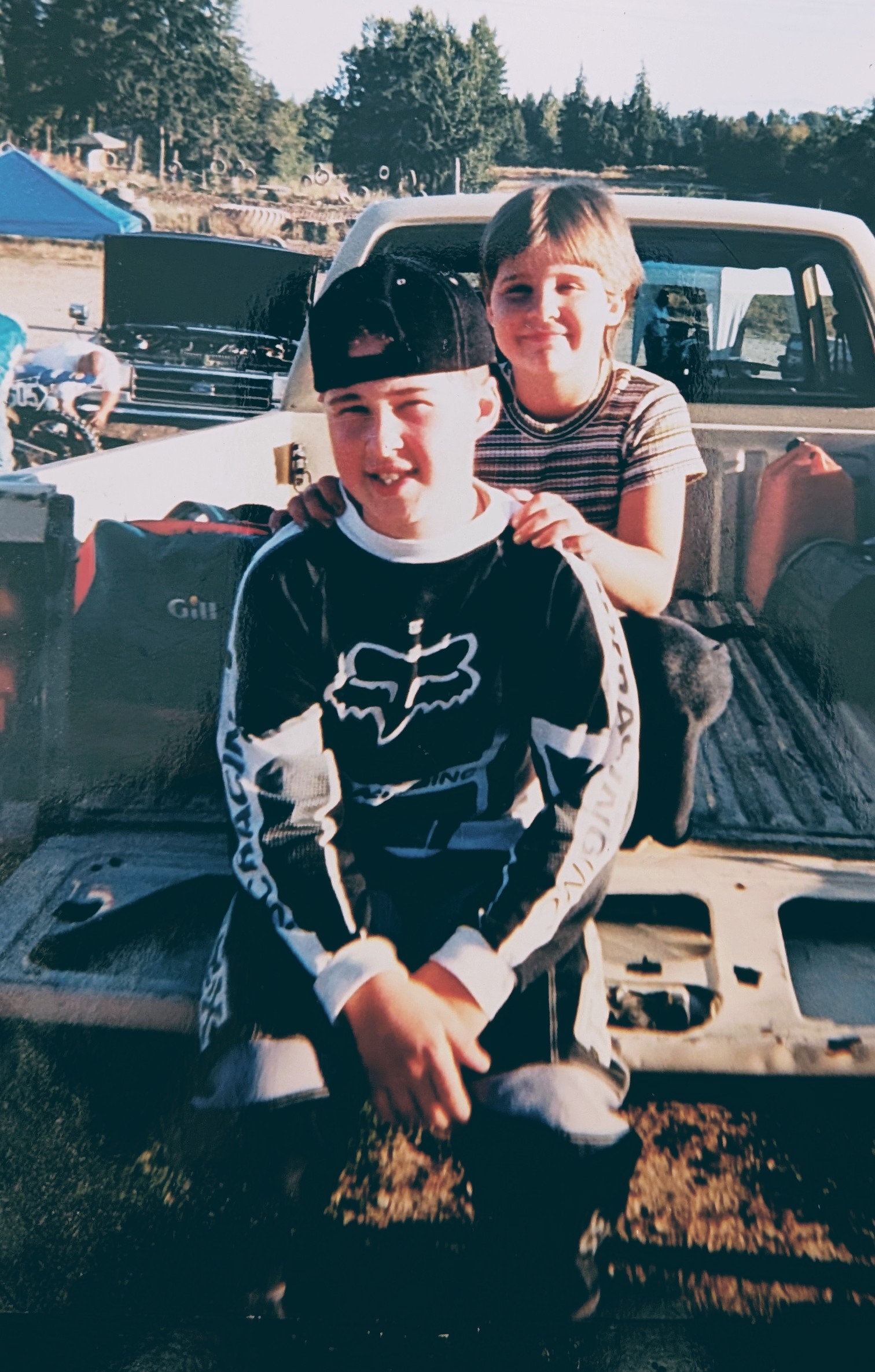
Sarah Lives on the on the Olympic Peninsula in the beautiful Pacific Northwest, just outside of Seattle, Washington. She is a former Pastry Chef, but relinquished her industry duties, for a more accommodating lifestyle to raise her daughter in.
She enjoys the solitude of her life in the woods with her family and cat, and spends most of her time reading, drinking tea, traveling, and analyzing life after loss.
Sarah lost her brother Joel suddenly in 2022 to a motorcycle accident. It changed her life drastically, her values and how she perceives what it means to travel through this lifetime without her other half.
